
Inside: why home isn’t just where you recover from your life, and a look at the New Home Economy that’s quietly changing everything.
There are ways to thrive with less that really feel like less. You can set your thermostat to 65 in winter and you would survive. You would save money and you would be okay. Or. You could start a fire, keep everyone together in one warm room in the evenings, head to bed with your dog for company and draw the canopy curtains around you. You will save money and you will, almost as a side effect, be happy.
A Shift is Happening (Or Already Did)
The economy. Everyone talks about it. It drives government decisions, personal decisions, housing decisions, and more. For most of us, it’s just a bunch of acronyms and numbers on a screen. GDP up, interest rates down, Dow Jones numbers. Credit defaults. Pretty much boring and abstract.
No logins, No guilt, no Overwhelm
Heirloom Homemaker Email Series

Create a beautiful home life based on routines. We’ll start at the beginning and build you up. Over 2000 women have gone through this and loved it. I promise you will too.
And the truth is, the real economy exists in every individual household. Are we doing better than we were last year?Are we eating well?Do we have enough free time? Do we take enough trips? Do we need a new car and can’t afford one? Do we have things we want but can’t get? Have we gotten too many things we wanted and can’t pay for?
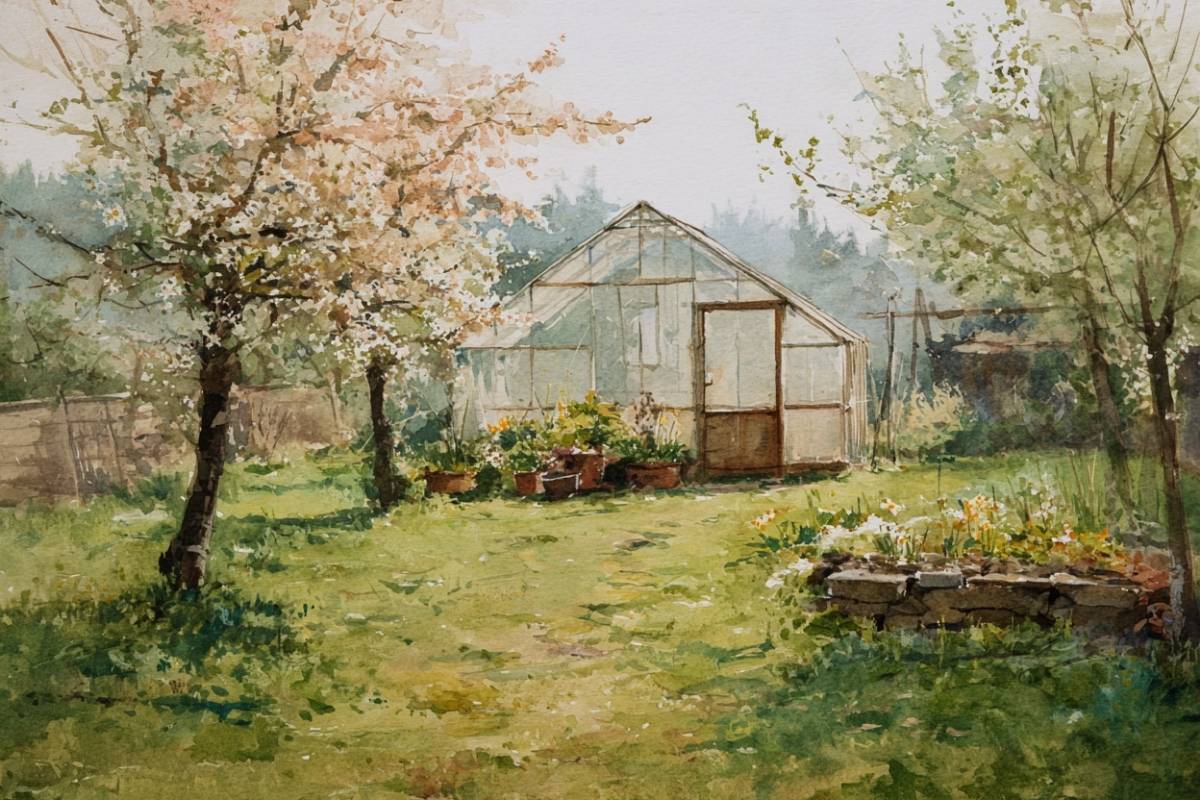
And this economy is much less abstract and much less numbers-based, and that’s a good thing. because you can do things like cut back on work hours, sell your car, do things that will look bad on a spreadsheet, but will pay real dividends in your actual life.
And the shift towards this has already started. You can see it in the interest in things like sourdough and back to the land and canning and gardening. Not just hobbies, but strategies.
The New Home Economy is all about your family and your home. It’s measured in every decision to make something instead of buy it, to grow something instead of order it, to stay home and build something that is genuinely, stubbornly yours.
It isn’t homesteading, exactly (though it might include a few chickens!). It isn’t prepping, though it doesn’t hurt to have a full pantry. It isn’t a retreat from the world so much as a turn toward what’s real and within reach and yours to control.
You can decide that home is not where you recover from your life. Home is your life. And it is worth building.
Down with “More is More”
For years (for decades!) we’ve known that more is better in a way we know that the sun comes up in the morning. One vacation a year is good? Then two is better. And three better still. We’ve endured horrible airports, traffic, lines, stress, packing, unpacking, hoarding rewards points for some dubious purpose, crowding airport lounges for free poorly made martinis, all in the name of more and thus better.
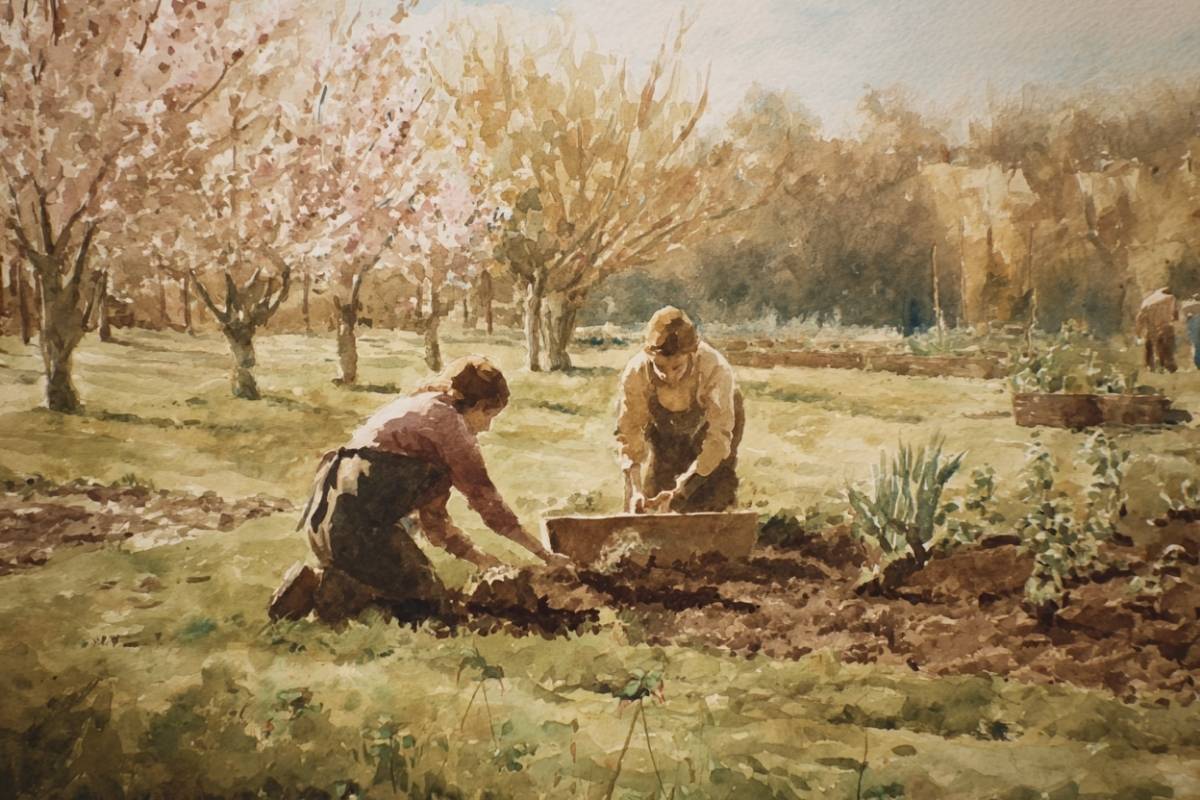
But what if we… didn’t? What if we, for spring break, rented a rototiller and plowed up a big sunny spot in our backyard and planted seedlings we had grown ourselves starting on some dreary February day. What if we checked them and watered them and waited…. waited… waited… in the manner of an obsessive concert ticket buyer, not because we would die without the tomatoes, but because something in us would die without the mission?
Turning Home Into a Place of Production
For most of our lives, home has been a place of consumption. We bring things into it…. groceries, packages, takeout, streaming subscriptions, stuff. It absorbs our money and gives us shelter in return. A place to sleep between the parts of life that, you know….actually matter.
But home was never meant to be just that. For most of human history, home was where things were made. Food was grown and preserved and cooked from scratch. Clothes were mended. Skills were passed down at kitchen tables. The home wasn’t a refuge from the economy…it was the economy. A producing, generating, self-sustaining unit that gave back as much as it took.
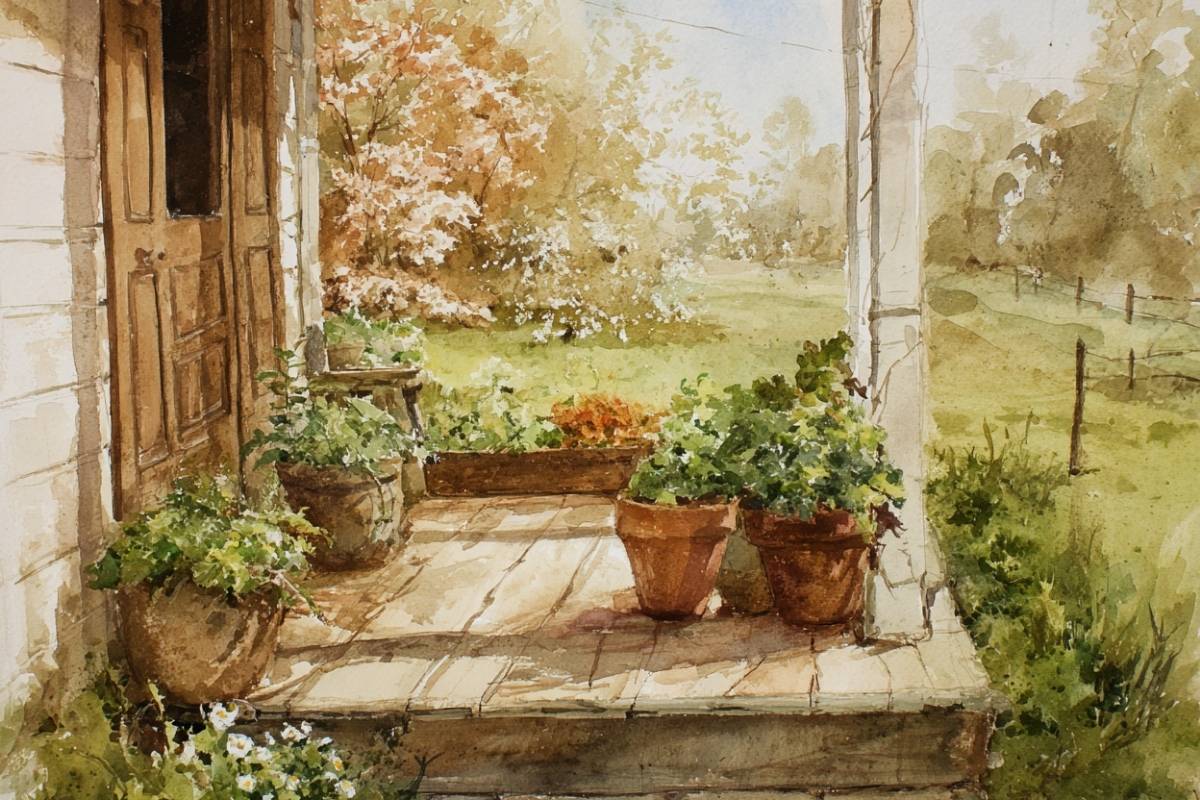
That version of home didn’t disappear because it stopped working. It disappeared because the consumer economy needed us to stop doing it.
And here’s the thing. Deep within your Wall-E character self (the one who hasn’t grown a tomato or baked a loaf of bread or mended anything in years) the instinct is still there.
How to Thrive, Not Survive
There is so much you can do to change your mindset, but here’s where to start.
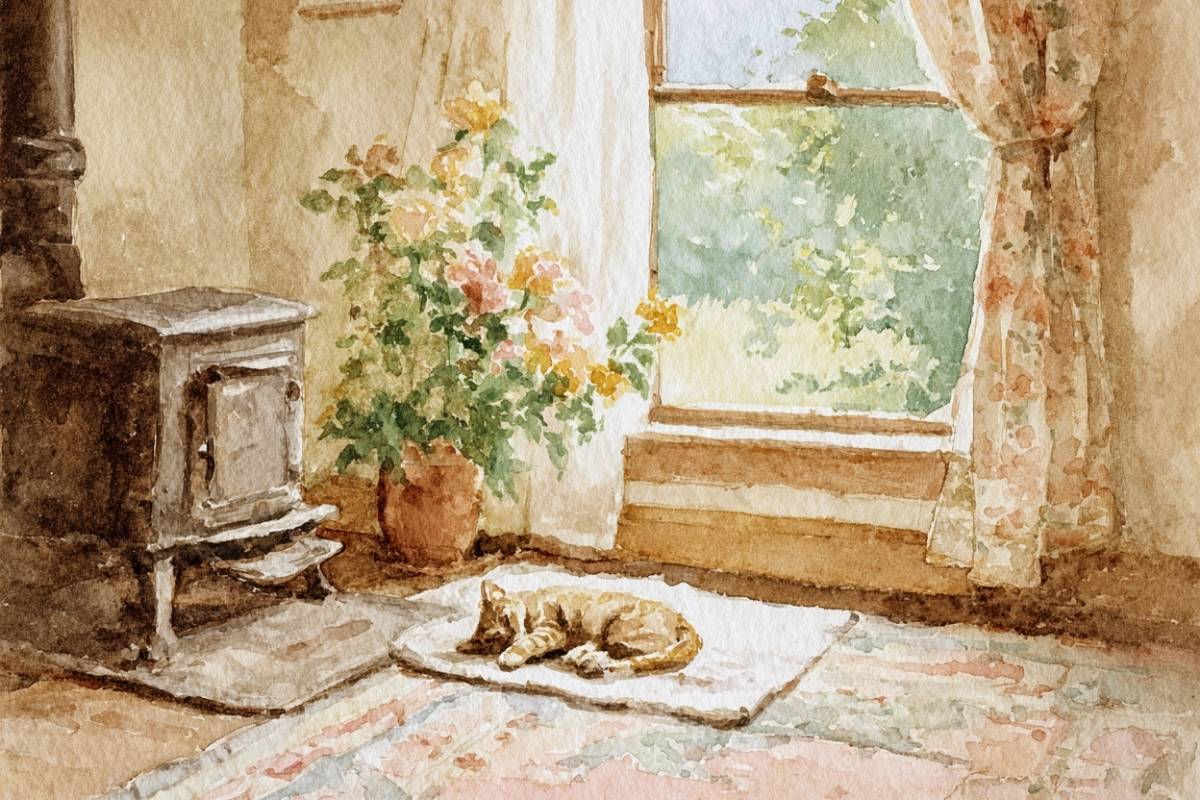
- Stay home more, and like it. If you’re constantly pulled away from your home out of boredom, frustration, or anything else, you’ll never see it as the happy hub it can and should be.
- Reduce your dependence on outside inputs. This can be done in big and small ways. It can mean buying 10 pounds of flour instead of 5 so that you have to go to the grocery store less often. It can mean composting all your food so you don’t have to buy fertilizer. It can mean growing your own apples so you don’t have to buy those anymore. Tiny changes add up over the years and make you less reliant on the outside world. This helps you resist things like inflation, shortages without any pain.
- Rely less on technology. Energy gets more expensive every year and that will probably never change. Besides that, social media is addictive, apps are annoying, and a paper and pencil are good for the soul.Let it go as much as you can.
- Do it yourself, even when the math doesn’t work. You’ll never save money sewing your own clothes. But focusing just on that is entirely missing the point. Anything that turns you productive will save you so much in so many incalculable ways.
- Live below your means. No widget or iced coffee is worth the financial stress and anxiety of being over your head. Never, ever, ever. I promise.
I know a life of sacrificing consumption and travel of restaurants feels like giving something up. There are so many good restaurants, and beautifully exotic cities, and awesome cute polos in the world. But right in front you in the ability to create (actually create) the things you want and need in your home. All you have to do is stand up.




Beautiful article! I’d love to know where you find all the gorgeous art on your blog? Thanks and have a great day!
Hi Laura,
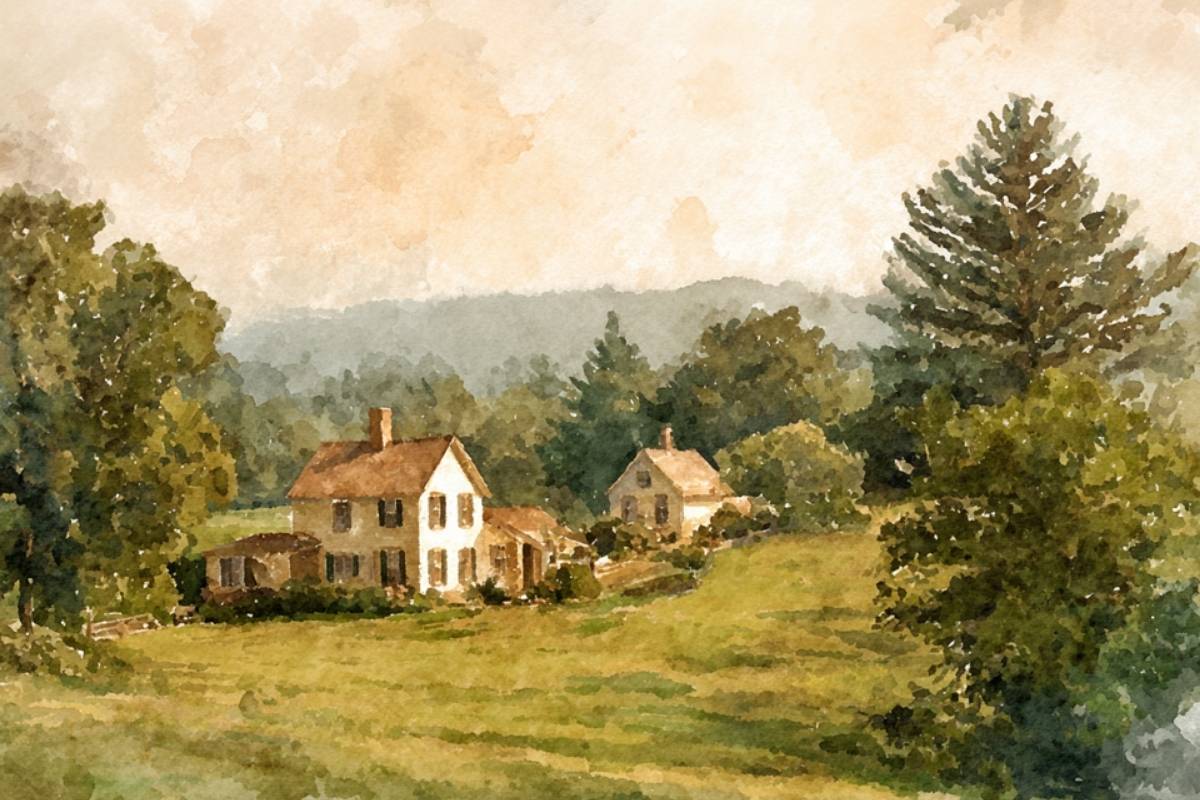
My daughter makes all these for me using an AI program called Midjourney. She usually takes a cell phone photo, uploads it, and then it transforms it into a watercolor. You’re welcome to download these and use them for prints, greeting cards, anything like that. There’s no copyright on them, but the file size isn’t always the highest quality.
Home is my happy, blissful escape from the world and the everyday chaos of the world. We don’t watch the “news” in our home, unless something super significant or concerning happens in the world, as it is such a source if negativity. For down time and relaxation, or even when cooking. baking, crafting, etc., we listen to audiobooks or read actual analog books, and listen to 1940’s music through our antique radios that we have put Bose speakers inside of so we can enjoy them. We also recently found a 1940’s coffee percolator that still works! It is so nice to have those slow moments in the morning while the coffee is percolating to just be and savor the moment and be present. (And the coffee tastes AMAZING!)
When home is sanctuary, as it is for us, it is amazing.
We do keep out home at 65° during the winter to conserve energy and save money. In the summer, we keep the air at 78°, for the same reasons. These little tweaks really add up.
Recently, we decided to slow down out shopping and only buy useful items that we truly need. This is already making a difference.
Next we will be going through out home room by room to declutter and gift or donate items we no longer need or use to allow sour home to breathe.
Thanks for the post! Have a lovely day!
Thank you for this! What excellent advice. After having a pretty tumultuous several years, a lot of very stressful times, I’ve needed to re-center and re-focus. About 5 or so years ago, I found Jesus, and He has helped me through these very hard times. Him, and very good reads like this one. Thank you. It is a good thing to be reminded of HOME and what our homes really mean to us. To not get distracted with things such as social media (I gave that up years ago- so toxic) and look at what is REAL. Thank you! Your daily morning emails are a blessing to me!! 🩷🩷🩷
thank you so much Jennifer! I appreciate it more than you know!
I needed this read today. I do much of this and sometimes when it gets difficult or overwhelming (especially trying to save money on groceries, or saving my sanity with sewing, crochet or crafts which always cost so much)I wonder why I’m doing it all. This shifted my perspective back to where it needs to be. Thank you. ❤️
hi Cristina, keep it up, you are doing a great job. and even if you don’t do everything yourself you’re still doing a great job. 🙂
I really love this article! I think you nailed the energy of the interest driving a lot of trends we see these days. ALSO!! I tried your recipe for white bread last week, and it was fantastic, so thank you for that!
hi Mariel! thank you so much. And I am super happy you tried the bread, thanks for telling me!
Okay, this: “Do it yourself, even when the math doesn’t work. You’ll never save money sewing your own clothes. But focusing just on that is entirely missing the point. Anything that turns you productive will save you so much in so many incalculable ways.” I have always calculated my time at an hourly rate, as an attorney. But you point out something I need to remember… there are SO many ancillary benefits to doing things myself, and (more importantly?) learning how to do things myself. For example, sewing that hole in my coat will give a sense of accomplishment far beyond taking it to a seamstress or the dry cleaner, plus the benefits of the mental focus of sewing.
Thank you Katie!!!
thank you suzan! and this always makes me think of optimizing for efficiency and outsourcing everything and then having to turn around and exercise, which is of course, purposely INEFFICIENT! thanks so much for your comment 🙂
Well said👍😊
thanks Raquel 🙂
Beautifully said.
We’re on the right track ,be more present. Find happiness at home.
Thank you,Katie
thank you Mrs. Mac!