
How to Organize a Home With (Almost) No Storage

Inside: No basement, no attic, no garage? You can still get organized. Here’s how to find storage where there isn’t any… and when to just let it go.
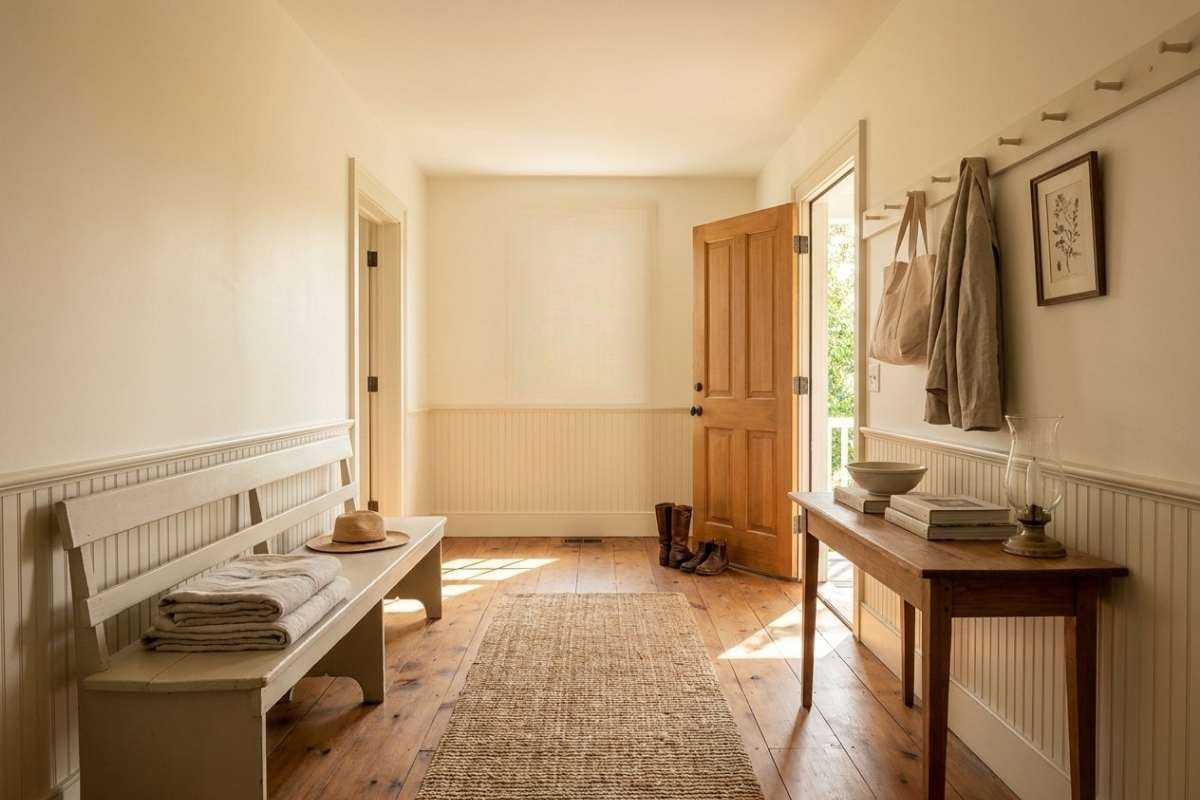
You want to buy in bulk. You want to stock up when things go on sale. But…there’s just nowhere to put anything.
So how do we get around it? We can!
Store Things Where You USE Them
Sounds obvious, right? But if you’ve ever lived in a house with a big basement, you know how it goes. Things get carried downstairs “for now” and never come back up. The stockpot lives two floors away from the stove.
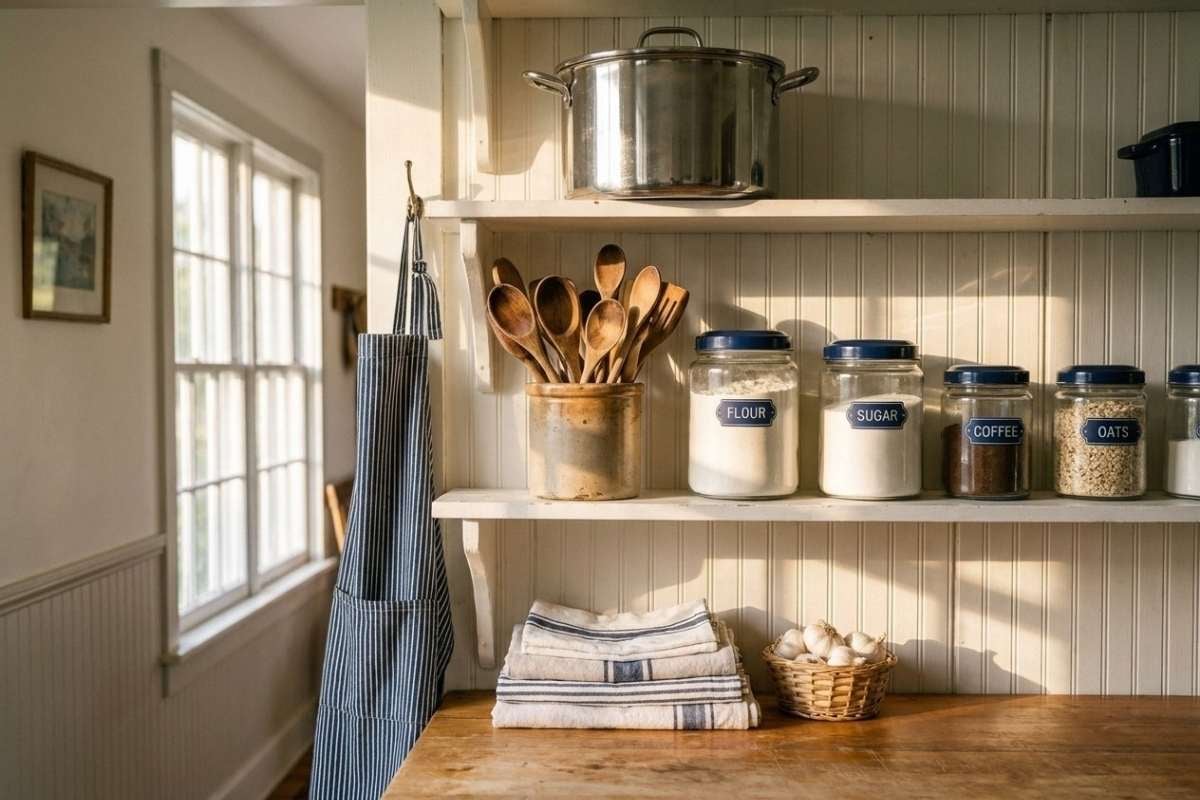
When you don’t have much storage, you can’t do that. And honestly? That’s a gift. Your home forces you into the system that organizing experts charge money to teach. Baking supplies near where you bake. Cleaning supplies near where you clean. Everything at your fingertips, because there’s nowhere else for it to go.
No storage graveyard means no graveyard. The stuff you own stays in the rooms where it earns its keep.
So before you mourn the basement you don’t have, look at what you’re already doing right. You probably know where everything in your house is. Plenty of people with three thousand square feet can’t say that.
Get Critical: Junk Is Taking Up Your Storage
Before you go looking for new storage, look at the storage you already have. What’s actually in it?
You will be surprised by how many shelves, inches of closet space, open shelving, and drawers are taken up by things you just do not need.
A drawer of cookie cutters you never use could be cleared out for all the spatulas you DO use, which could then make room on your counter for that stand mixer you didn’t think you have room for. Freeing up space anywhere, in any way, is always useful. Be ruthless!
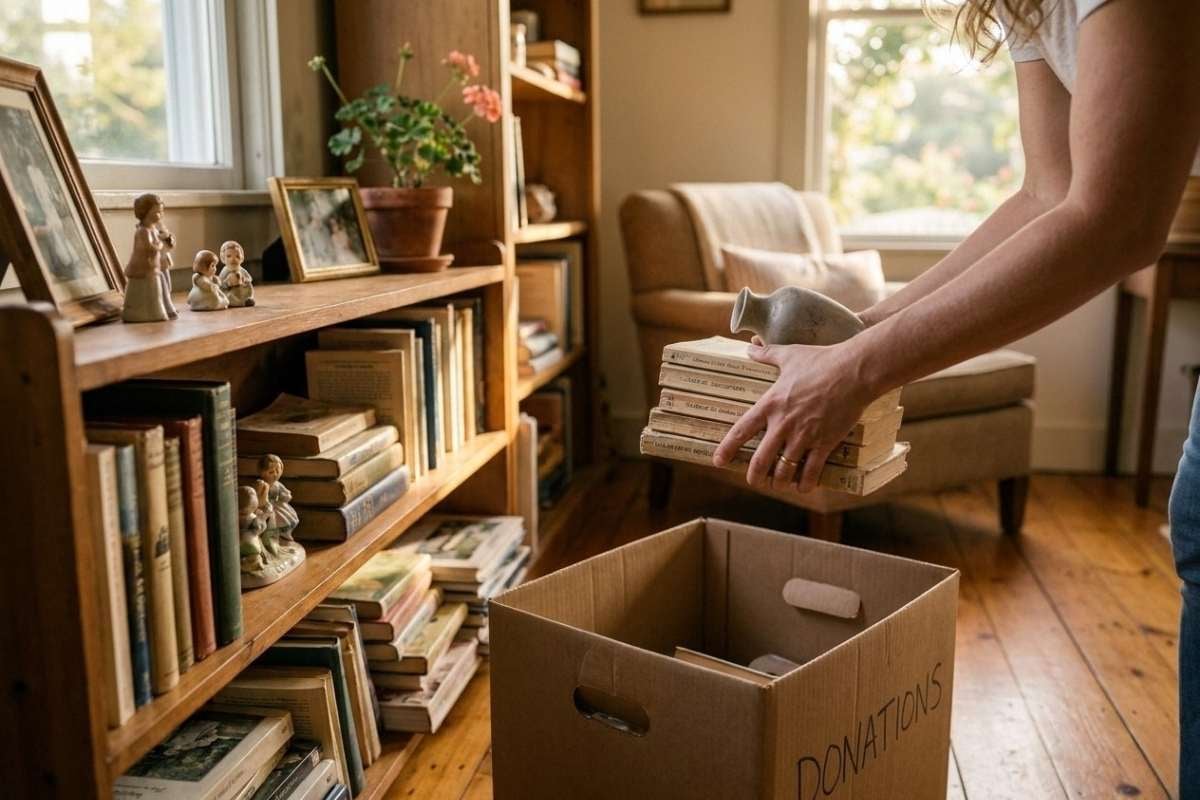
So walk through your house and be super critical. Not “could I use this someday” critical. REALLY critical. Every shelf of stuff you don’t touch is storage you’re already paying for but not using.
Let Storage Be Part of the Room
Stop trying to hide everything. If you don’t have a basement to shove things into, then your storage gets to live out in the open. Let it become part of the room.
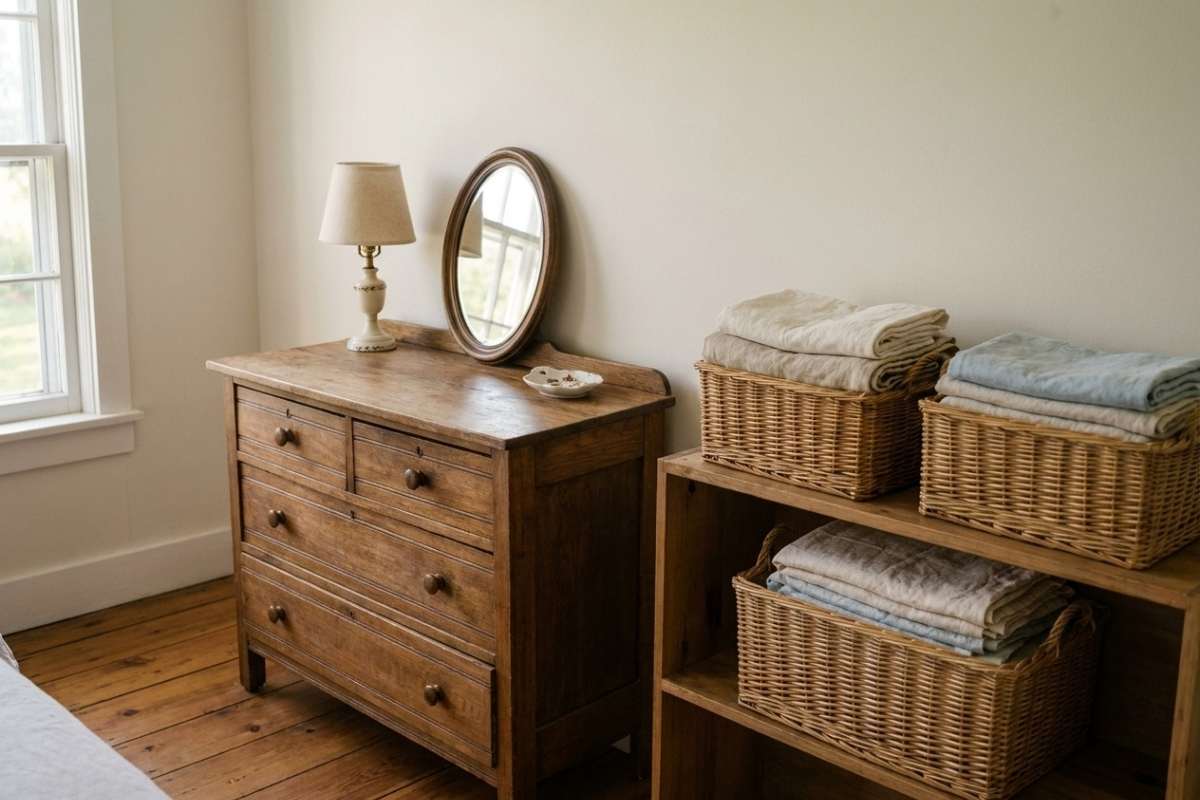
I mean things like a vanity with real storage drawers, not a decorative table with skinny legs. Baskets on open shelves that actually hold practical stuff, not just look pretty. When you’re choosing furniture, pick pieces that work for your living space.
If the basket of linens on the shelf looks like it belongs there, you’ve got it right. If you’d be embarrassed for a guest to open it, that’s a cramming situation, not a storage solution.
Find the Storage Hiding in Your House
A lot of homes have more storage than you think. It’s just hiding behind the drywall.
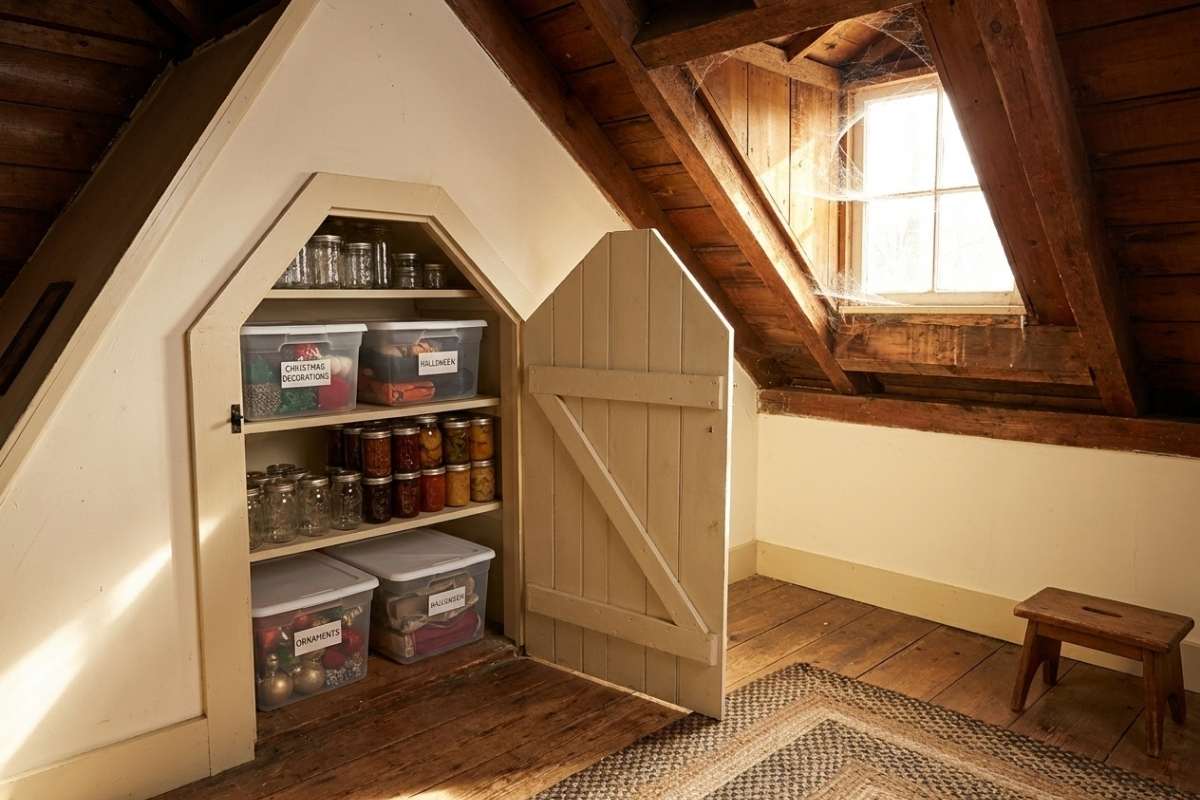
Unused attic and eave space is the big one. Plenty of houses have dead space along the eaves where you could cut in a little access door and put a shelf or a small crawlspace behind it. No, you won’t be able to stand up in it. But for holiday decorations, off-season stuff, or the canning supplies you use twice a year? It’s perfect.
Save This Post
You'll join my email list which you will love. And if you don't, unsubscribe in one click. ❤️
Walk your house and look for the spots where the ceiling slopes, where a knee wall meets the roofline, where a closet stops short of the actual footprint of the room. There’s often a few square feet back there doing nothing.
Of course, this requires a budget or serious handiness. But it might surprise you!
Now, Try the Organizers
Every organizing article on the internet starts with the same advice: buy an over-the-door organizer and hang things from your walls. I resisted putting it first because it’s not the answer to everything.
But there IS a time for it. Once the junk is gone and things live where you use them, an organizer solves a real problem instead of just holding more clutter.
The rule is simple: buy the gadget for a specific problem, not because it’s on sale and looks useful. An over-the-door rack in the pantry for spices and packets. A hanging shoe organizer in the coat closet for hats, gloves, and sunscreen. Hooks on the back of the bathroom door for towels that have nowhere else to go.
Small, flat, frequently-used things are what these do best.
Barter for Storage Space
Somebody you know has a shed, a barn, or a basement corner they aren’t using. And you probably have something they’d like. If you keep chickens, could you trade a dozen eggs every week for the right to store your canning jars in their shed? Maybe you bake, or garden, or can watch their kids for an hour on Tuesdays.
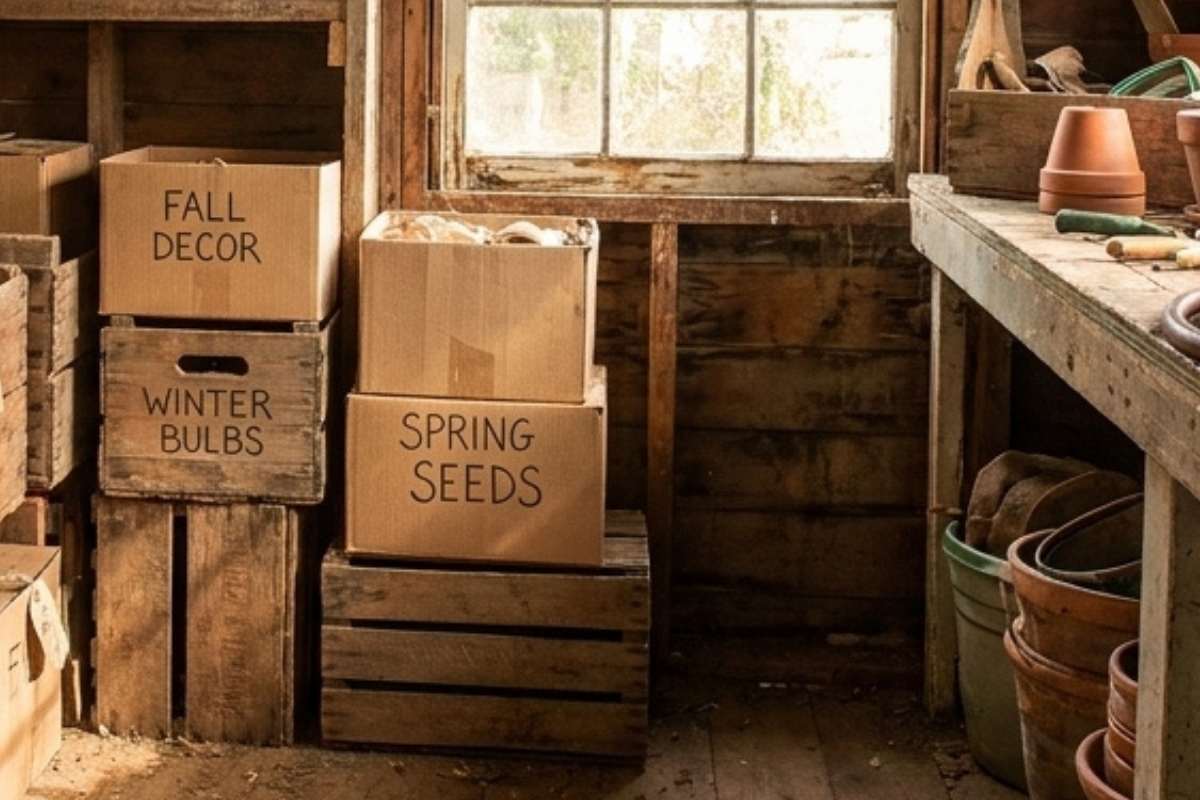
This isn’t as strange as it sounds. People traded like this for most of human history. Your neighbor’s empty shed and your extra eggs are both going to waste otherwise.
Obviously this works best for things you don’t need often. Don’t barter for space to store your everyday dishes. But seasonal stuff, extra equipment, the overflow from a good sale? That can live somewhere else, and everybody wins.
Make sure up front you establish when and how you’ll be getting your stuff. Just something like “hey, I’ll text you a day before I need it if you wouldn’t mind leaving it unlocked for me”. Saves a lot of awkwardness later.
Make Everything Beautiful
If your things are going to live out in the open, they have to be pretty.
That means no decorative quilt draped over the rocking chair while your comfy ugly one hides in a box near the couch. Condense to ONE. The quilt you actually use should be the quilt worth looking at.
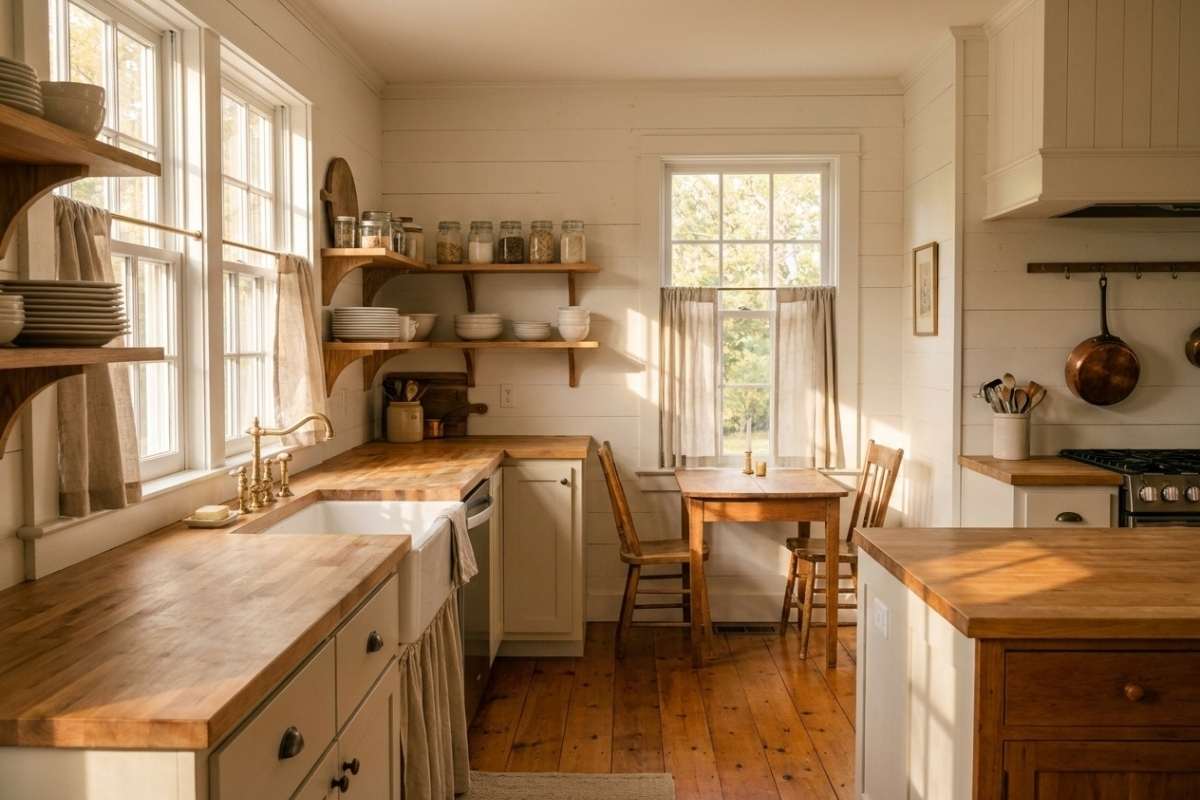
This is the rule for a low-storage house: everything has to be beautiful and useful whenever possible. Not one or the other. Both. The mixing bowls on the open shelf, the basket holding your knitting, the crock of wooden spoons. They all earn their spot twice.
Best of all, once your useful things are also your beautiful things, you don’t really need decor anymore. Your decor is your functional life, sitting right out where you can see it.
If You Really Don’t Have Storage, That’s Okay
Maybe you’ve tried everything on this list, and you still don’t have room to stock up. That’s okay.
It just means you can’t buy a hundred cans of tomatoes when they go on sale. You buy them when you need them.
And honestly? There’s a real upside to living this way. You can’t accumulate junk, because there’s nowhere to put it. Everything you own is at your fingertips. Let the stockpile go, and enjoy the house you actually have.

More to explore