How to Step Back from Consumer Culture

Inside: What you buy is not who you are. Here are nine real-life ways to live like you believe it.
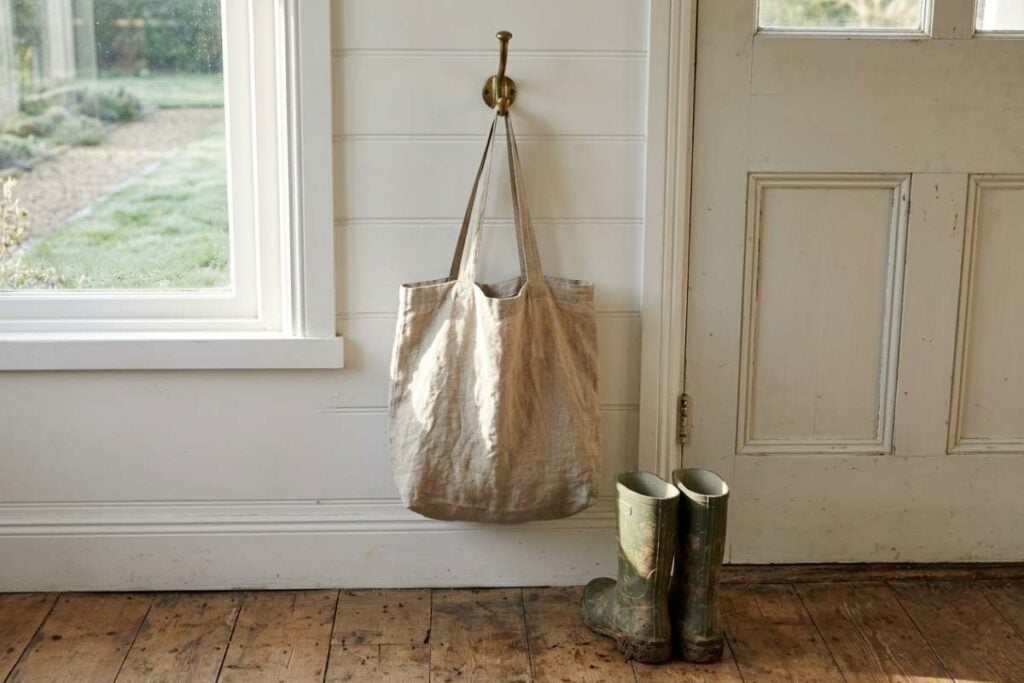
First, we have to establish something. Consumerism is not about buying less, or owning less, or spending less. Consumerism doesn’t mean “shopping a lot”. It means that consumption becomes your life, your north star, your religion, in a sense. It means you buy that super cute tote bag not because you need or even just want a new bag, but because you think it will make you happy.
And that’s the trouble. There’s nothing wrong with tote bags, or wanting tote bags, or having a lot of tote bags. Which is why articles about consumerism that focus on minimalism and budgeting don’t quite get it. They’re skirting the heart of the issue, which is this: buying things doesn’t make you happy. Never has, never will. And one level beyond that… so now what?
See the mechanism first
1. Catch yourself at “I need it”
When you hear yourself say “I need it,” stop and ask the sharper question: do I actually need this, or do I want to feel a certain way? Most of the time it’s the second one. The tote bag isn’t really a tote bag…it’s organized, or put-together, or the version of you who finally has it all handled.
When you start picturing another version of yourself on the other side of a purchase, be careful. Danger zone. Name the feeling you’re chasing and you’ve already loosened its grip, because a feeling is something you can find a dozen other ways, most of them free.
2. Unsubscribe from every marketing email for 30 days
Marketing emails exist for exactly one reason: to manufacture a want you didn’t wake up with. Every “ends tonight” and “we saved your cart” is a small, engineered nudge toward feeling like you’re missing out.
Unsubscribe from every retailer in your inbox, and give it a month. Watch what happens to your wanting. The things you stop being reminded to want, you mostly just stop wanting. It’s almost embarrassing how well it works.
3. Curate your feed like it’s your living room
You’d never invite someone into your home every single evening to walk you through everything you don’t have yet. But that’s the job a lot of the accounts in your feed are quietly doing.
Unfollow the ones that leave you feeling behind…the endless hauls, the people whose entire personality is acquisition. Keep the ones that make you want to do something rather than buy something. You get to decide what’s allowed to influence you.
Change the script you’re running
4. Swap “I can’t afford it” for “it’s not in my priorities”
“I can’t afford it” is the language of deprivation. It puts you outside the window, nose pressed to the glass, wanting in. “It’s not in my priorities” is the language of someone who has decided what matters and is spending accordingly.
It’s a tiny swap, and it changes everything, because it’s true: you’re not being denied anything. You’re choosing. And a person who’s choosing doesn’t feel the constant tug of every nice thing she walks past. You could have all those tote bags, for sure. But suddenly you’re feeling like you could take ’em or leave ’em because suddenly they’re just tote bags.
5. Get specific about how you want life to feel
Pick three words for how you actually want your days to feel… peaceful, creative, connected, whatever’s true for you. Then, when you catch yourself reaching for something, hold it up against them. Not “will this make me peaceful?” (nothing you buy will!) but the more honest question: what would?

Save This Post
You'll join my email list which you will love. And if you don't, unsubscribe in one click. ❤️
It’s a redirect, not a filter. Can you clean your fridge out and feel more put together? Make a phone call you’ve been dreading and feel productive? The wanting was pointing at something real, it was just aimed at the checkout by mistake.
6. Stop keeping score
We’re taught, early and often, that money is the scoreboard. Your salary, your car, your renovated kitchen tells everyone (yourself included) how well you’re doing. Fall behind on any of it and the feeling creeps in that something must be wrong with you. Like… you’re losing, and everyone can see it. 1-7. Losing.
But none of this is true. Money is just money: what it pays for, not a grade on your life. Not a scoreboard. The day you stop reading your balance and your belongings as a verdict on your worth, a startling amount of the wanting simply goes quiet.
Fill the space buying used to fill
7. Quit shopping as your default entertainment
Somewhere along the way, “I’m bored” started to mean “let me scroll a store.” Browsing became a hobby. The trouble is that scrolling or window shopping is designed to create new wants in your heart. That’s the entire point of it. That’s why they let your kids sit on Santa’s lap for free.
So, pick a different default for a restless hour. A walk, a book, a phone call. You’re not banning yourself from shopping; you’re just refusing to reach for it the way you’d reach for a snack you’re not even hungry for. It’s not about the things you might buy; it’s about the wanting that they’re trying to sneak in.
8. Walk through your house and fix three things (and then aim higher)
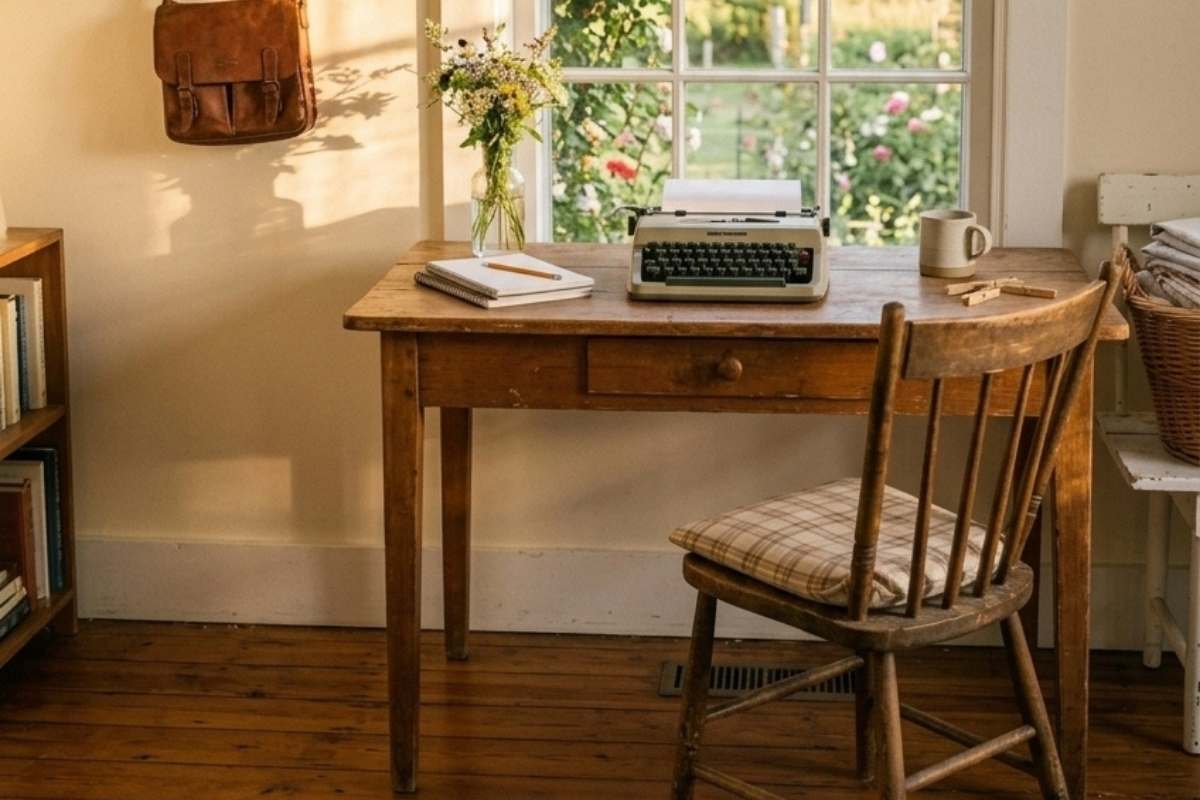
Spend 15 minutes walking slowly through your home and write down three small annoyances you can fix without spending a dime. The drawer that sticks. The lamp in the wrong corner. The shelf that’s quietly become a junk pile. Then fix them.
And here’s the magic: there was a gap between what you had and what you wanted, and you closed it with action, not a purchase. Now scale it up. Because we don’t just buy to fix sticky drawers. We buy at the big stuff too. Lonely? Maybe some new clothes. Bored with life? A vacation will fix it. Kids feel distant? A little treat to win them back.
But if the small gap wasn’t really a shopping problem, what are the odds the big one is? More often, the honest answer isn’t spend more. It’s there’s something I’m not doing. A call I’m not making. A habit I’m avoiding. A conversation I keep buying my way around. I know. It’s something you don’t want to do. Try.
9. Try the 60-day reset
For 60 days, only buy to replace what’s genuinely broken, lost, or used up. That’s it. Not a vow of poverty, not forever.
Here’s why it works when nothing else does: it takes away the exit. For every other tip on this list, you can nod along and keep shopping. This one closes the escape hatch. The bad day comes, and you can’t fix it with a cart. You’re bored, and the store is off the table. That ache you usually paper over with a little purchase? For 60 days you just have to sit there and feel it.
You didn’t get. You gave.
When the tote bag arrives, it feels like getting, right? Something showed up at your door, and the cost barely registered. A few numbers nudging down on a screen. A tap. A swipe. Pixels. Easy.
So what if it won’t make you happy? So what if it was just a feeling you were chasing, a gap a bag was never going to close? It’s a few dollars. You have a few dollars. Who cares.
Well, you should care.
Because money was never what you spent. Money’s just the stand-in. What you actually spent were hours of your one short life, traded for a thing now sitting in your closet. You didn’t get a tote bag. You gave away a piece of your week, your year, your life, and a bag showed up in the spot where that time used to be. For…what?
The thing is, the wanting was put in your heart for a reason. It was never the problem. It was just (through careful design!) pointed at a shopping cart. Feeling it is a feature, not a bug. But you need to follow it past the checkout to whatever it was actually after. I don’t know what you’ll find on the other side of it. But it’s worth finding out. And I hope you spend the rest of your life on that.







































interesting and good points…as someone who can’t leave anything undone, I would gently point to the fact that “doing” (look and fix three things in your home that bother you etc) can be just as addictive as “consuming” and sometimes burn you out in a different (physical health resources rather than financial resources) way…
resting and just being seems to be the thing I struggle with the most and either consuming (or most especially doing) is where I tend to go to -with not great health results.
Yes, thank you for the great reminders and for the time you spent to write this!
thanks yvonne 🙂
Excellent advice. Sometimes we forget that life can be so much more than scrolling or buying constantly. The line is definitely blurred between what we need and what we want. Thank you for the reminders and new ideas!
hi brittany! thank you so much for your comment 🙂