
Multigrain Sandwich Bread

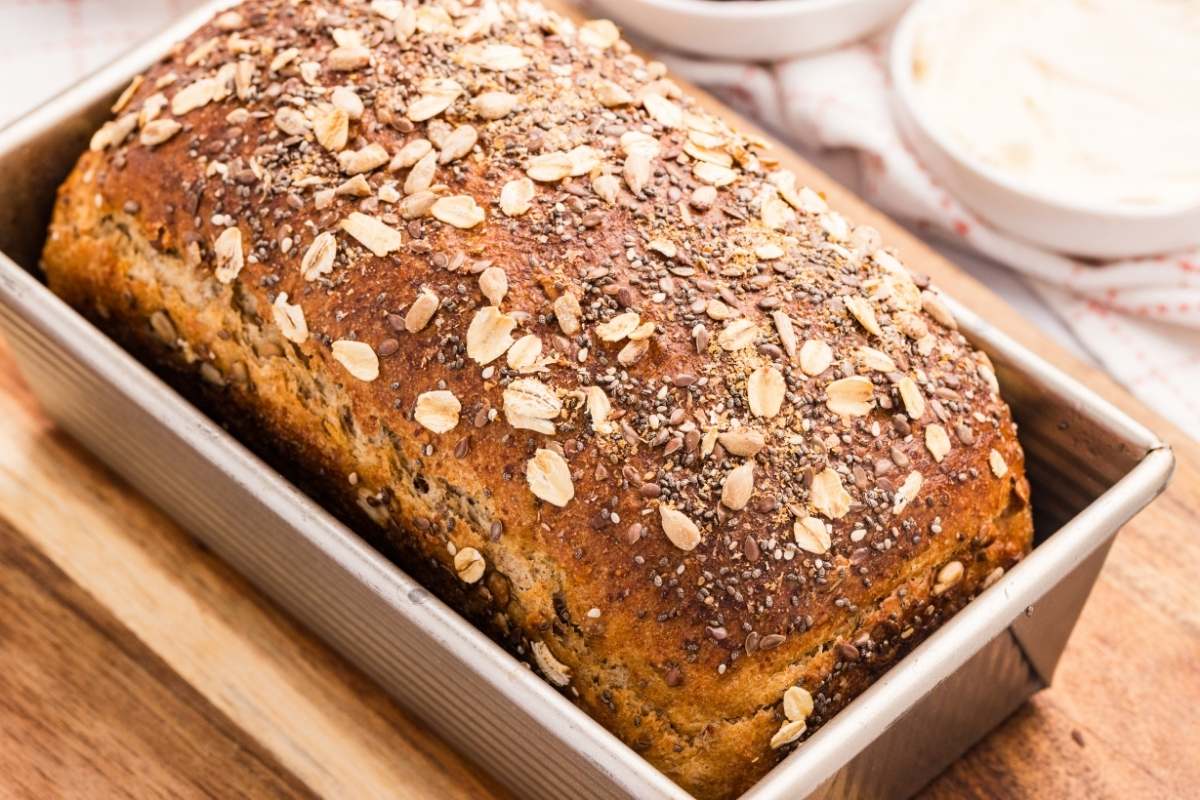
With oats, rye, and five kinds of seeds, this recipe is still soft and tender enough for sandwiches. You’ll get two beautiful, hearty loaves.
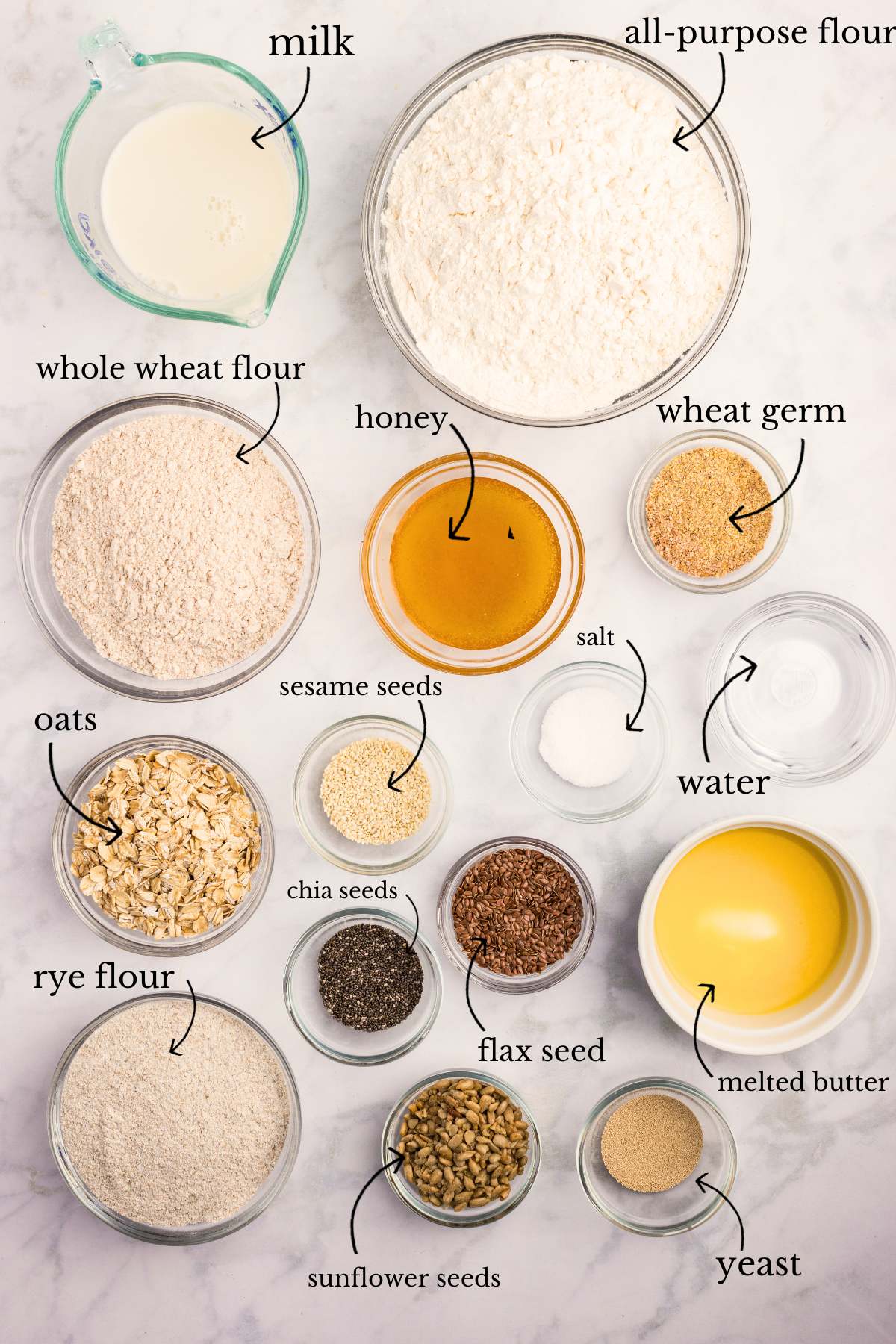
What You’ll Need
- 2¼ teaspoons (1 package) active dry or instant yeast (I always use SAF instant)
- ¼ cup warm water
- ¼ cup honey
- 1½ cups 2% milk (whole or skim will be find too)
- 2½ teaspoons sea salt
- ½ cup old-fashioned oats
- 1 cup whole wheat flour
- 1 cup rye flour
- ¼ cup unsalted butter, melted and cooled
- 4 cups all-purpose flour
- 2 tablespoons flax seeds
- 1 tablespoon chia seeds
- 1 tablespoon sesame seeds
- ¼ cup sunflower seeds. Raw is best, but roasted works.
- 2 tablespoons wheat germ. Look for it near the oatmeal or in the baking aisle. Bob’s Red Mill is the easiest to find.
Topping
It’s technically optional but I would never skip it. That seeded top is part of the charm.
- 1 egg + 1 tablespoon water
- 1 teaspoon flax seeds
- 1 teaspoon chia seeds
- 1 teaspoon sesame seeds
- 1 tablespoon sunflower seeds
- 2 tablespoons old-fashioned oats
Equipment You’ll Need
- Stand mixer with dough hook, or bread machine with dough cycle.
- Two 9×5 loaf pans
- Parchment paper
- Pastry brush.
Instructions
Build the dough
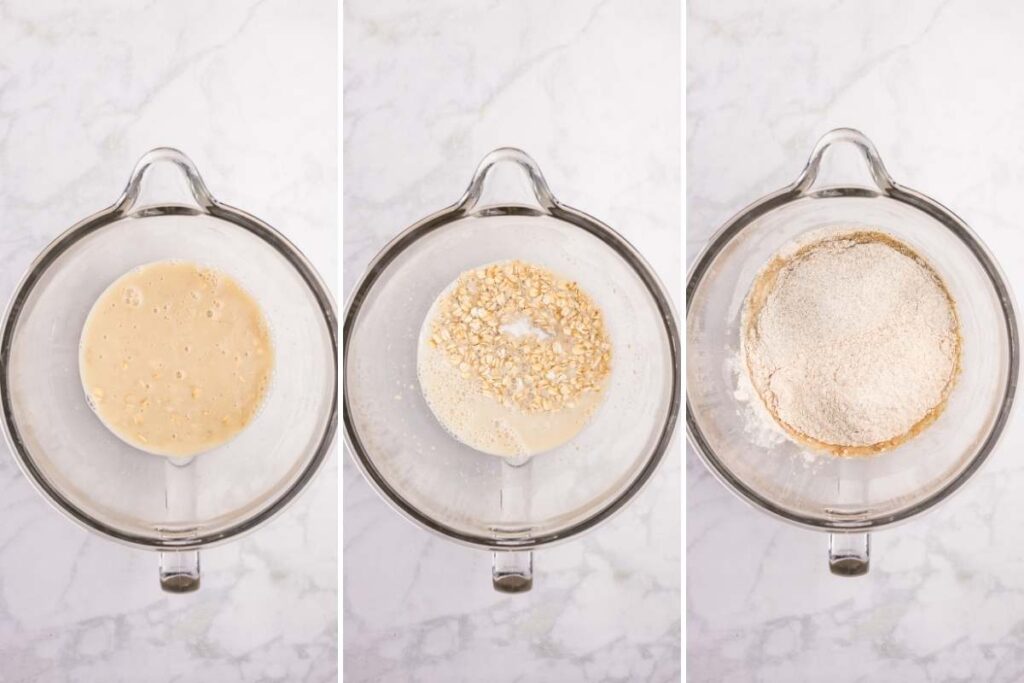
With the whisk attachment, add the milk, salt, and oats and stir to combine, then work in the whole wheat flour, rye flour, yeast and the melted butter.
Swap to the dough hook, add the first cup of all-purpose flour, then dump in all the seeds and the wheat germ.
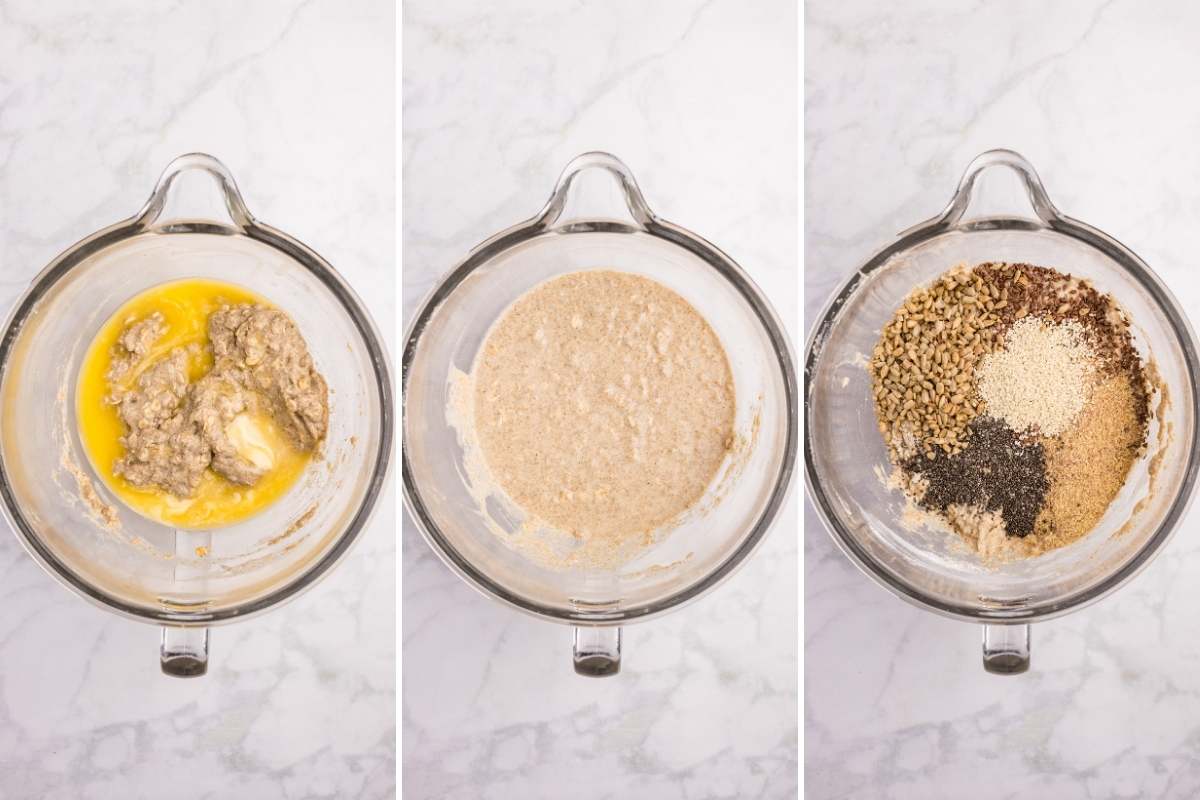
Now add the remaining all-purpose flour a half cup at a time. Whole grains drink up water differently than white flour, and the exact amount you need will vary. Stop adding flour when the dough pulls away from the sides but still feels slightly tacky to the touch.
A dry, stiff dough is the #1 reason multigrain bread turns out dense. Err on the side of slightly sticky. 😊
Knead
Knead for 5-7 minutes in the stand mixer, or 8-10 by hand. You’re looking for a smooth, elastic dough that bounces back when you poke it. With this much whole grain in the mix, it won’t be quite as silky as a white bread dough, that’s fine.
First Rise
Transfer to a lightly greased bowl, cover, and let it rise for about 90 minutes, or until doubled. Watch the dough, not the clock. On a cold kitchen day it might take longer, and that’s okay.
Shape the loaves
Lightly grease two 9×5 loaf pans (parchment paper sling optional, but it makes getting them out later a breeze). Turn the dough out, divide it in half, and shape each piece into a loaf.
To shape, pat each half into a rough rectangle about the length of your pan, then roll it up tightly from the short end and tuck the seam underneath. Don’t overthink it — you’re just forming a log. Drop them seam-side down into the pans, cover, and let them rise for another 45 minutes until puffy.
Top the loaves
While the loaves do their second rise, preheat the oven to 425°F and mix your seed topping in a small bowl. Whisk the egg with a tablespoon of water for the egg wash.
Save This Post
You'll join my email list which you will love. And if you don't, unsubscribe in one click. ❤️
Brush the tops of the risen loaves with egg wash, then sprinkle the seed mix generously across the top. The egg wash is what makes the seeds actually stay put. Don’t skip it!. Press the seeds in very gently with your fingertips, but don’t mash them down or you’ll deflate the loaves.
Bake
Bake at 425°F for 20 minutes, then drop the heat to 375°F and bake another 20-25 minutes. The loaves are done when they’re deeply golden and sound hollow when you tap the bottom (or, if you have an instant-read thermometer, when the interior hits 190-200°F).
If the tops are browning faster than you’d like, tent them loosely with foil for the last stretch. Pull the loaves out, turn them onto a cooling rack, and let them cool completely before slicing.
Storage Instructions
Cool the loaves completely before storing Once cool, keep the loaves in a bread bag or airtight container at room temperature for 3-4 days.
For longer storage, freeze. I like to slice the loaves first, then wrap tightly in plastic wrap and slide into a freezer bag with the air pressed out, you can pull out a slice or two at a time straight into the toaster. Frozen this way, the bread keeps for up to 3 months. A whole unsliced loaf freezes well too if you’d rather wrap it that way, just thaw it on the counter still wrapped so the crust doesn’t get soggy from condensation.
How We Eat This Bread
- Toasted thick and topped with butter and honey for breakfast.
- Turkey and cheddar sandwiches with sprouts. (A personal fave.)
- Grilled cheese, especially with sharp cheddar and a slice of tomato.
- Egg salad or chicken salad sandwiches.
Questions and Troubleshooting
Can I use instant yeast instead of active dry?
Yes, it works perfectly and is my preference.
Can I substitute the rye flour?
Yes, use an extra cup of whole wheat flour. You’ll lose a little of that earthy rye depth, but the loaf will still be great.
Can I knead this by hand instead of using a stand mixer?
You can, but I’ll be honest…under-kneading is the #1 reason homemade bread turns out dense. If you’re hand kneading, go a full 8-10 minutes at least and check for windowpane (a small piece of dough should stretch thin enough to see light through it). Watch the dough, not the clock.
Can I refrigerate the dough overnight?
Yes. Shape the loaves after the first rise, cover them, and refrigerate overnight. Pull them out 45-60 minutes before baking so they come to room temp and finish their second rise.
Why did my bread turn out dense?
Almost always too much flour or not enough rise time. Also keep in mind this is never going to be like an all-white flour loaf. It has a different, heartier texture.
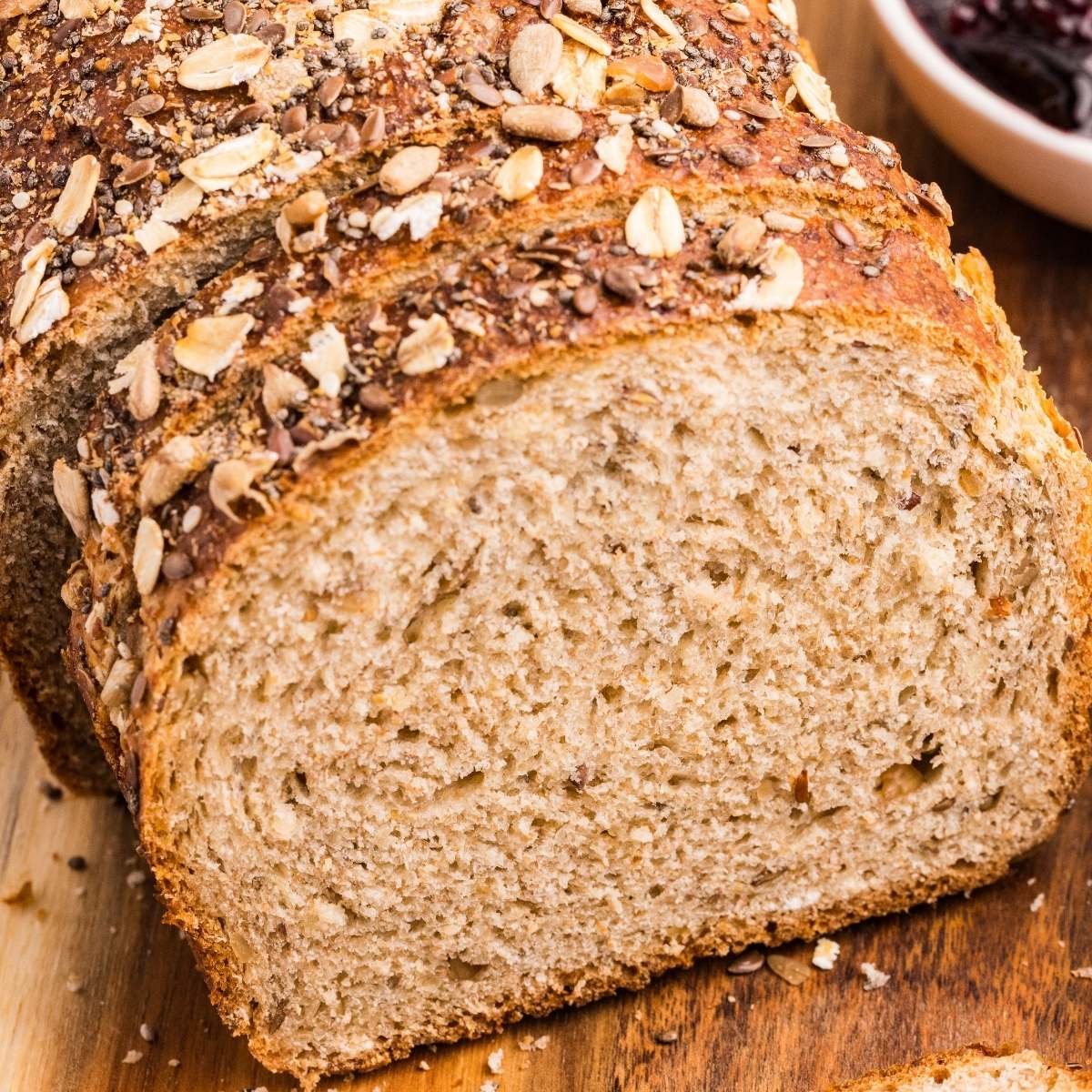
Multigrain Bread
Equipment
- stand mixer with dough hook
- Two 9×5-inch loaf pans
- Pastry brush
- cooling rack
Ingredients
For the dough
- 2¼ teaspoons active dry or instant yeast
- ¼ cup warm water
- ¼ cup honey
- 1½ cups 2% milk
- 2½ teaspoons sea salt
- ½ cup old fashioned oats
- 1 cup whole wheat flour
- 1 cup rye flour
- ¼ cup unsalted butter melted and cooled
- 4 cups all purpose flour
- 2 tablespoons flax seeds
- 1 tablespoon chia seeds
- 1 tablespoon sesame seeds
- ¼ cup sunflower seeds
- 2 tablespoons wheat germ
For the optional topping
- 1 egg beaten with 1 tablespoon water for egg wash
- 1 teaspoon flax seeds
- 1 teaspoon chia seeds
- 1 teaspoon sesame seeds
- 1 tablespoon sunflower seeds
- 2 tablespoons old fashioned oats
Instructions
- Mix all dough ingredients. Stir in the milk, salt, and oats until combined. Stir in the whole wheat flour and rye flour until incorporated. Pour in the melted, cooled butter and stir to combine.
- Slowly add all-purpose flour and seeds. Swap the whisk for the dough hook. Add 1 cup of the all purpose flour and mix to combine. Stir in the flax seeds, chia seeds, sesame seeds, sunflower seeds, and wheat germ. Slowly add the rest of the all purpose flour, ½ cup at a time, until a soft, slightly tacky dough forms.
- Knead the dough. Knead with the dough hook for 5-7 minutes, or 8-10 minutes by hand, until smooth and elastic.
- First rise. Place the dough in a lightly greased bowl and let rise for 90 minutes, or until doubled in size.
- Prepare the pans. Lightly spray 2 loaf pans with baking spray and line with parchment paper if desired.
- Shape. Turn the dough out onto a clean surface, divide it into 2 equal pieces, and shape each into a loaf.
- Second rise. Transfer the loaves to the prepared pans, cover, and let rise for 45 minutes, or until puffy.
- Mix the topping. In a small bowl, combine the flax seeds, chia seeds, sesame seeds, sunflower seeds, and oats. Set aside.
- Preheat the oven. Heat the oven to 425°F.
- Topping. Whisk together the egg and 1 tablespoon water, then brush over the tops of the loaves. Sprinkle the loaves generously with the seed topping.
- Bake. Bake at 425°F for 20 minutes. Lower the heat to 375°F and bake for another 20-25 minutes, until the loaves are golden brown and sound hollow when tapped. An internal temperature of 190-200°F means they're done.
- Cool completely. Turn the loaves out onto a rack and let cool fully before slicing, or the crumb will be gummy.
Notes

Related Articles
See ALL
Use-What-You-Have Skillet Fried Rice
Strawberry Buttermilk Quick Bread (White Chocolate Glaze)
Thick and Soft Chocolate Chip Cookies
Terlingua Chili Recipe
Cast Iron Brussels Sprouts with Bacon and Cream
Moist Pumpkin Bread with Cream Cheese Frosting
47 Cozy Fall Recipes From a Farmhouse Kitchen
Classic Italian Chop Salad with House Dressing
Bold & Smoky Prairie Dust Steak Seasoning
Chicken and Biscuits Casserole
The Farmhouse Potato Bread Recipe That Will Become a Weekly Staple
Shrimp Alfredo with Garlic and Parmesan
See all
Related Articles
Triple Berry Coffee Cake {With Streusel Topping}
Chicken Saltimbocca
Smoked Sausage and Zucchini Skillet with Garlic and Butter
Cinnamon Rock Candy (aka Hard Tack)
Crispy Deep-Fried Onion Rings
How To Can Sweet Potatoes
DIY Habanero Hot Sauce (Canning Recipe)
Spring Farmhouse Desserts
Creamy Peanut Butter Fudge