
Italian Easter Bread

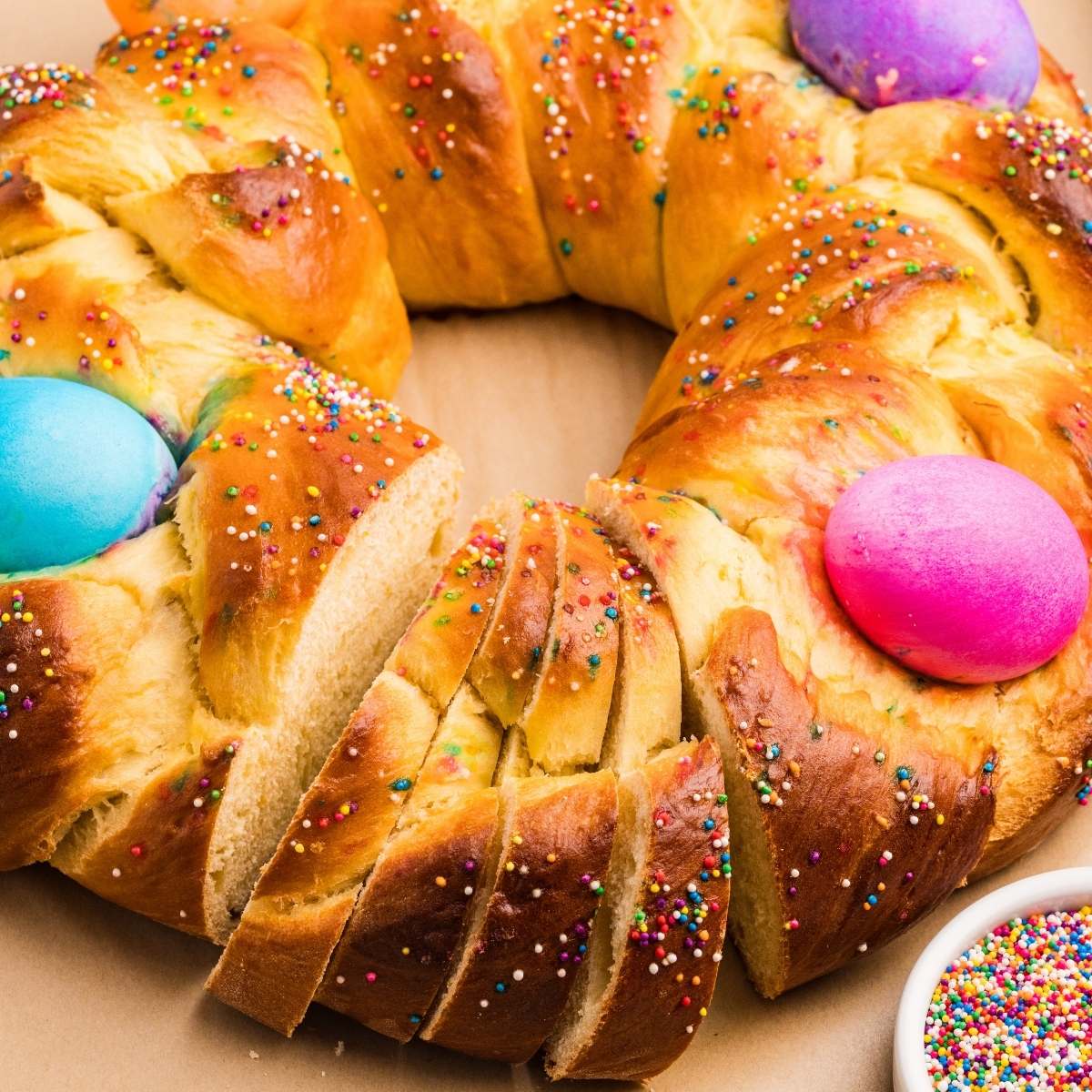
This is just a simple enriched dough braided around dyed eggs that cook right in the oven. The citrus and vanilla make the whole kitchen smell like a springtime holiday, and the eggs turn out perfectly hard-boiled by the time the crust is golden. If you’ve never made it, this is your year.
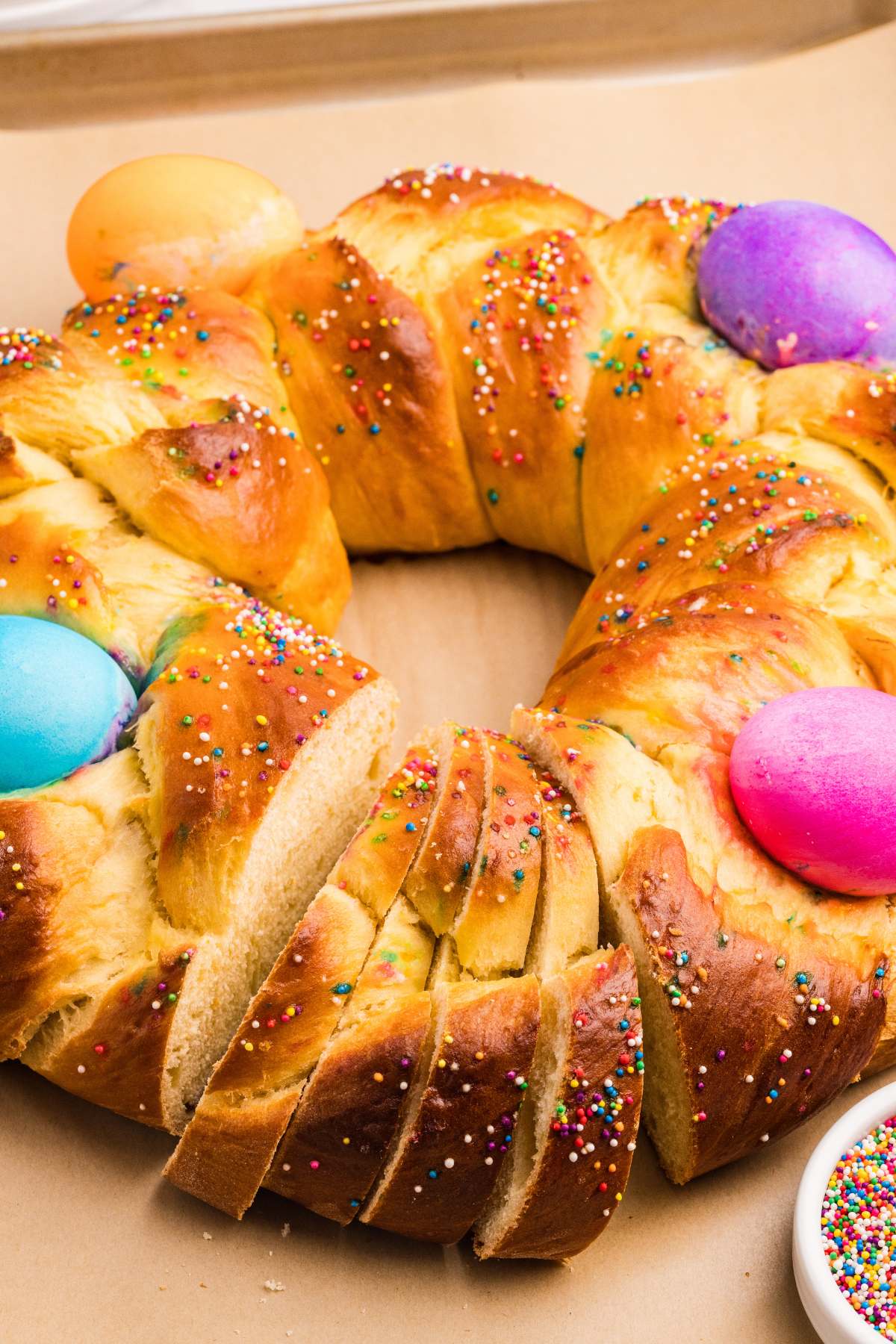
For all its impressiveness, this costs maybe $4 in ingredients, takes about 30 minutes of actual hands-on work, and comes out of your oven soft, fresh, and genuinely beautiful. The dyed eggs bake right into the braid (yes, raw…they cook while it bakes!), so you get breakfast bread and a centerpiece in one. It’s the kind of thing people photograph before they eat.
what You’ll Need
If you don’t have a stand mixer or bread machine to knead the dough, you can do it by hand but it takes a while.
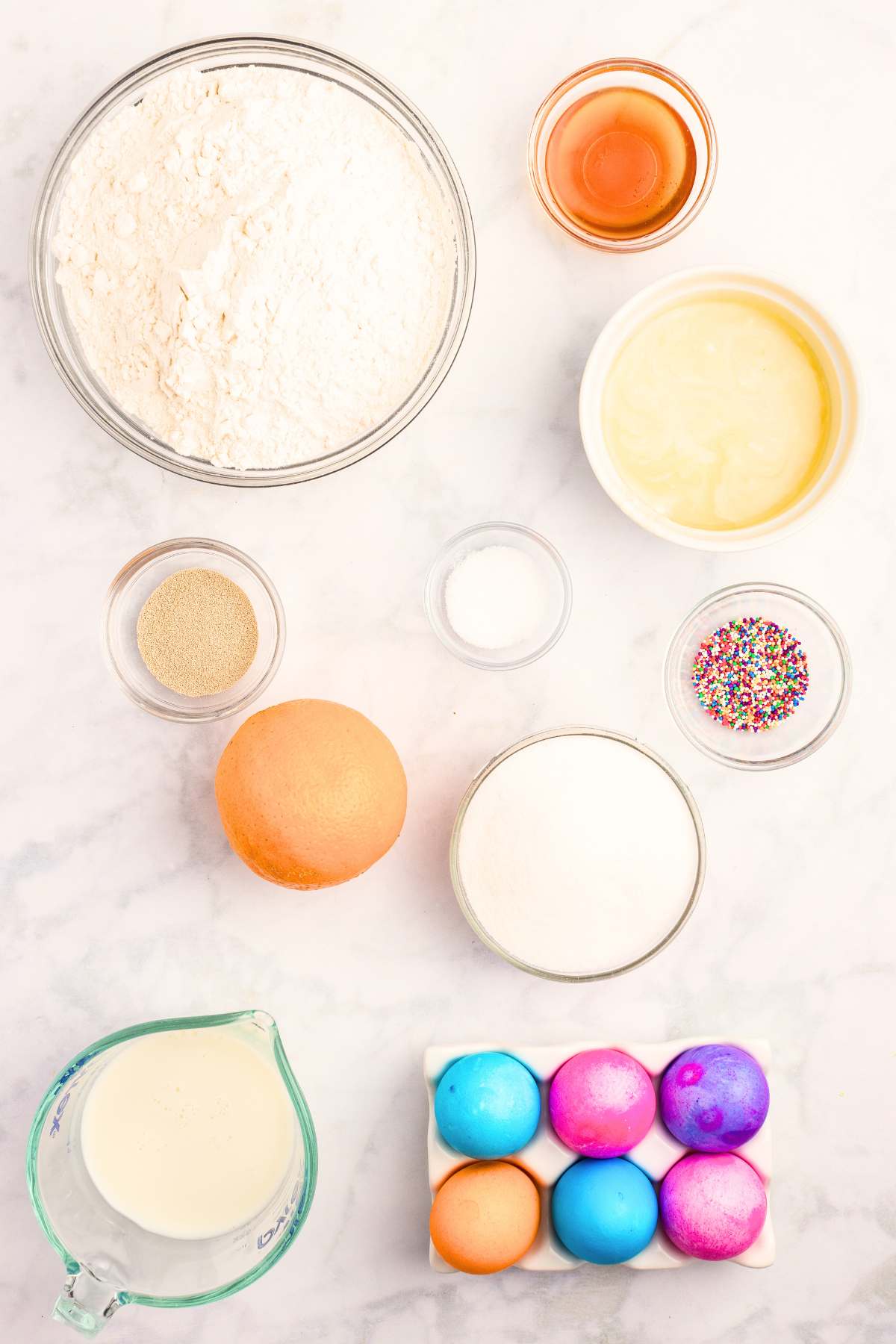
Scaling up: if you’d like to double this recipe to make one to gift and one to keep, you can. Just make sure your stand mixer can handle all the dough. Then divide it in half and bake as directed
Dough
- ¾ cup whole milk warmed to about 90°F
- ⅔ cup granulated sugar
- 2¼ teaspoons active dry or instant yeast (one grocery store packet)
- 3 large eggs, room temperature
- ¼ cup unsalted butter, melted and cooled
- 1 teaspoon salt
- 1 medium orange, zested and juiced (about 1 tablespoon zest + 4 tablespoons juice) lemon works if you prefer it, or use anise extract for a more Southern Italian flavor
- 1 teaspoon vanilla extract
- 4½ to 5 cups all-purpose flour bread flour works and will give you a slightly chewier texture; you may need a little less since it absorbs more liquid
Topping
- 1 large egg, beaten
- 4 raw eggs, dyed and completely dry – dye these at least 2 hours ahead so they have time to dry fully; wet dye will bleed onto the bread
- Colored sprinkles
Instructions
A note on yeast:
If you prefer to activate your yeast first, combine the warm milk, sugar, and yeast in your mixing bowl and let it sit for about 5 minutes until foamy. This confirms your yeast is alive before you add everything else. Once it’s bubbling, proceed with adding the eggs, butter, and remaining ingredients as written.
But I always add everything together and recommend that you do too!
Dye the Eggs
Before you start the dough, dye your raw eggs and set them aside to dry completely. This needs at least a couple of hours, so do it first thing or even the night before. Wet dye will bleed onto your bread, and nobody wants a pink streak across their loaf.
If you have access to naturally colored eggs, just skip this step! Your loaf will be natural looking and beautiful.
Make the Dough
Add the warm milk, sugar, yeast, eggs, melted butter, salt, orange zest and juice, and vanilla to the bowl of your stand mixer. Give it a stir to combine. Add 3 cups of flour and mix until you have a wet, shaggy dough, then continue adding flour about ½ cup at a time until the dough pulls away from the sides of the bowl.
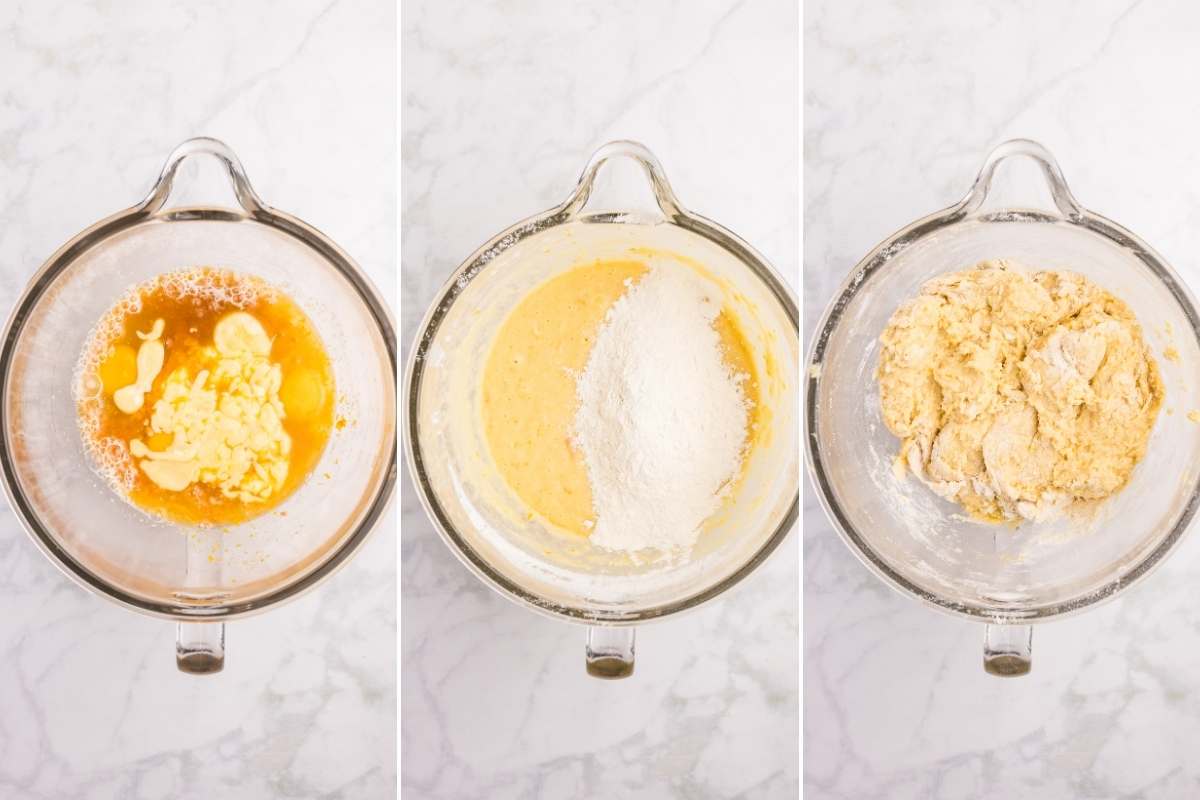
You’re looking for soft and slightly tacky. Not dry, not sticky enough to coat your fingers.
Knead
Switch to your dough hook and knead for 6-8 minutes, or turn it out and knead by hand for 8-10 minutes. You want smooth, elastic dough that springs back when you poke it. When the dough is ready, you should be able to stretch a small piece thin enough to see light through it without it tearing. This is called the windowpane test, and it means the gluten is fully developed.
First Rise
Transfer the dough to a greased bowl, cover with plastic wrap, and let it rise in a warm spot until doubled—about 2 hours.
Save This Post
You'll join my email list which you will love. And if you don't, unsubscribe in one click. ❤️
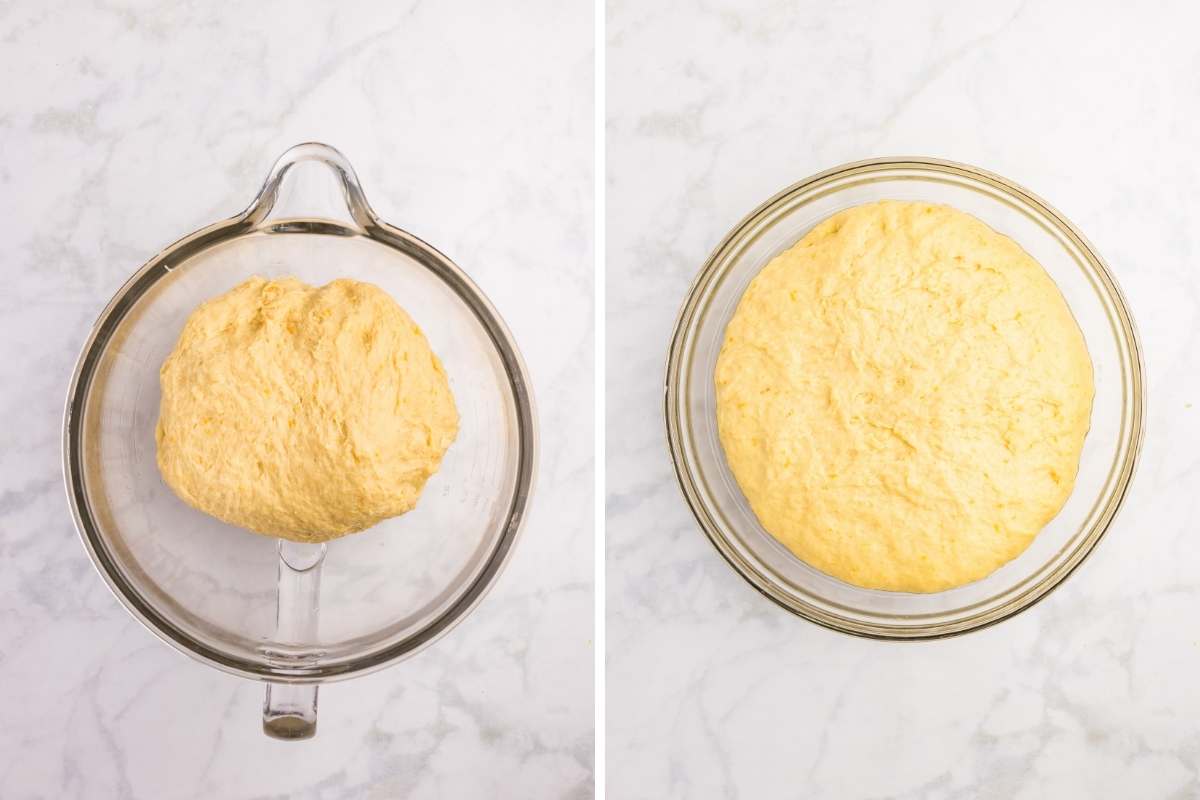
If your kitchen runs cold, turn your oven light on or briefly warm up your oven, then turn it off, and let it rise in there with the door closed.
Shape
Punch down the dough and turn it out onto a clean surface. Divide it into 3 equal pieces and roll each one into a rope about 18-20 inches long.
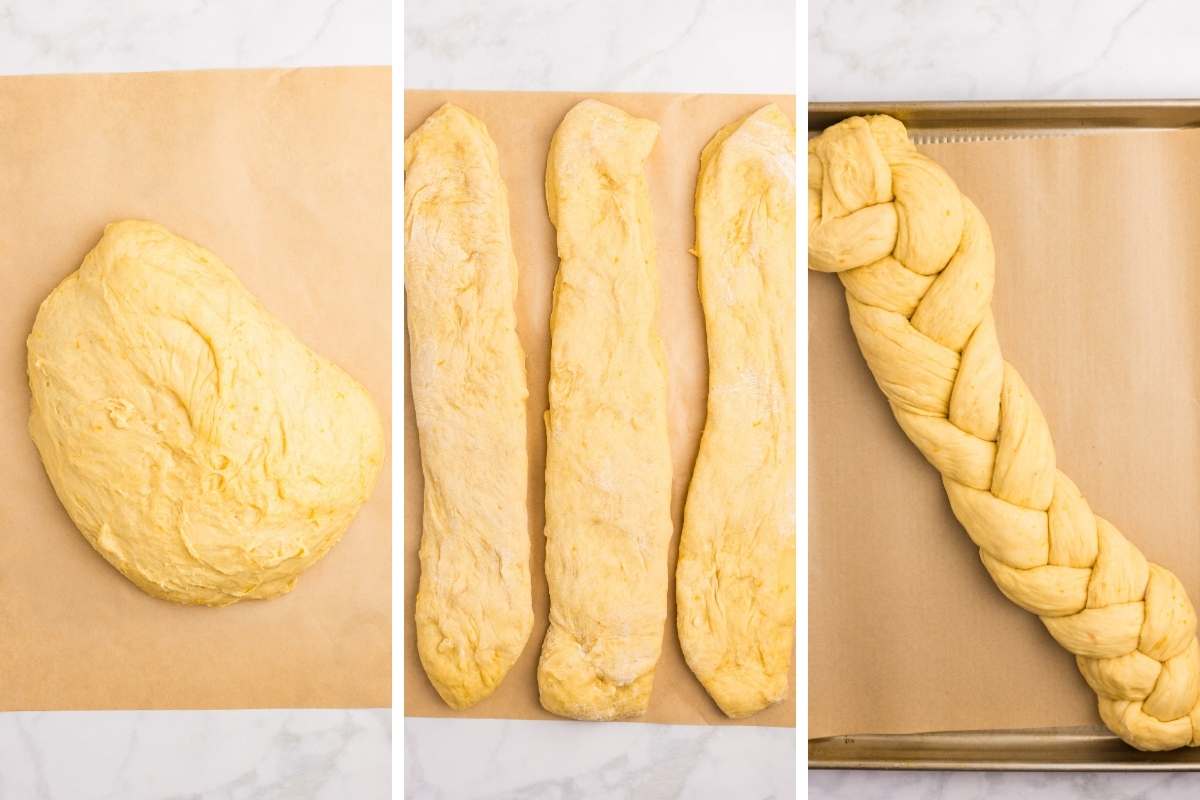
Braid the three ropes together, pinching the ends to seal, and shape into a ring or leave it as a straight loaf. Transfer to a parchment-lined baking sheet.
Second Rise
Cover the braid loosely and let it rise another 30-45 minutes until puffy.
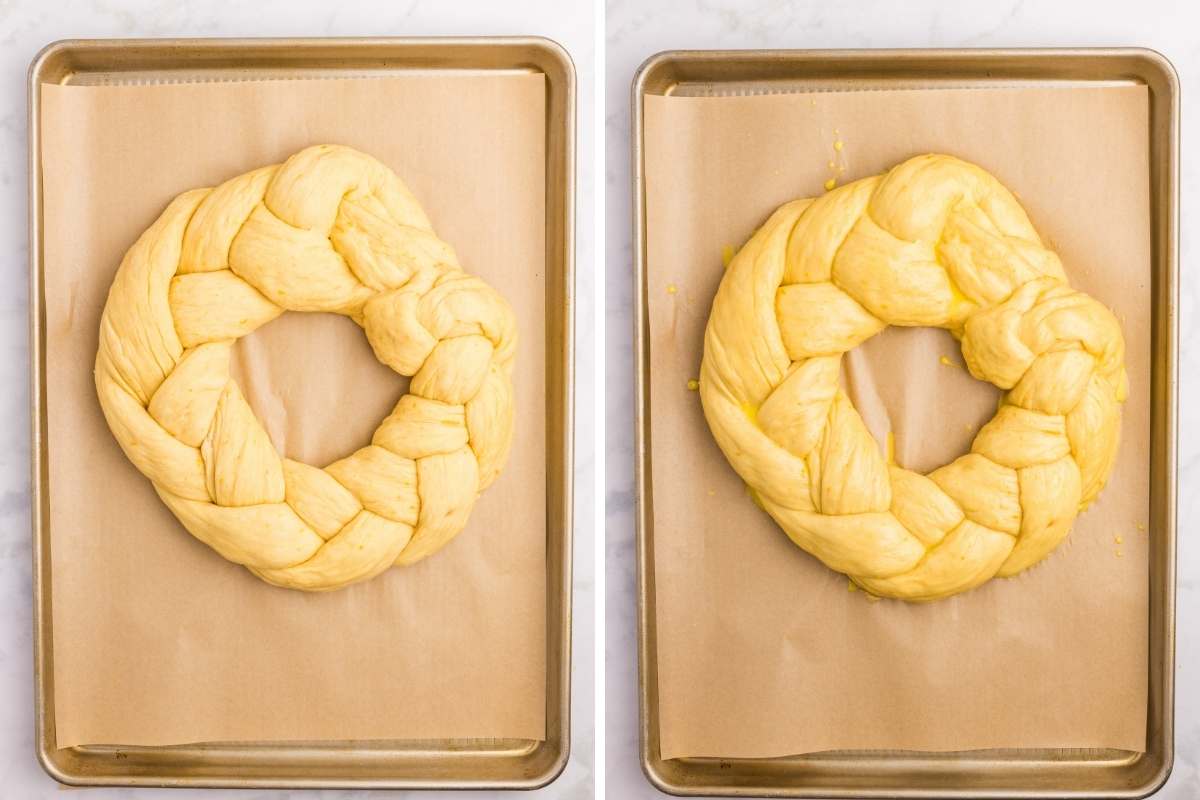
It won’t double again…you just want it relaxed and slightly puffed.
Bake
Preheat your oven to 350°F. Brush the dough gently with beaten egg, then nestle your dyed eggs into the braid—tuck them between the strands rather than pressing them deep into the dough. Add sprinkles if you’re using them.
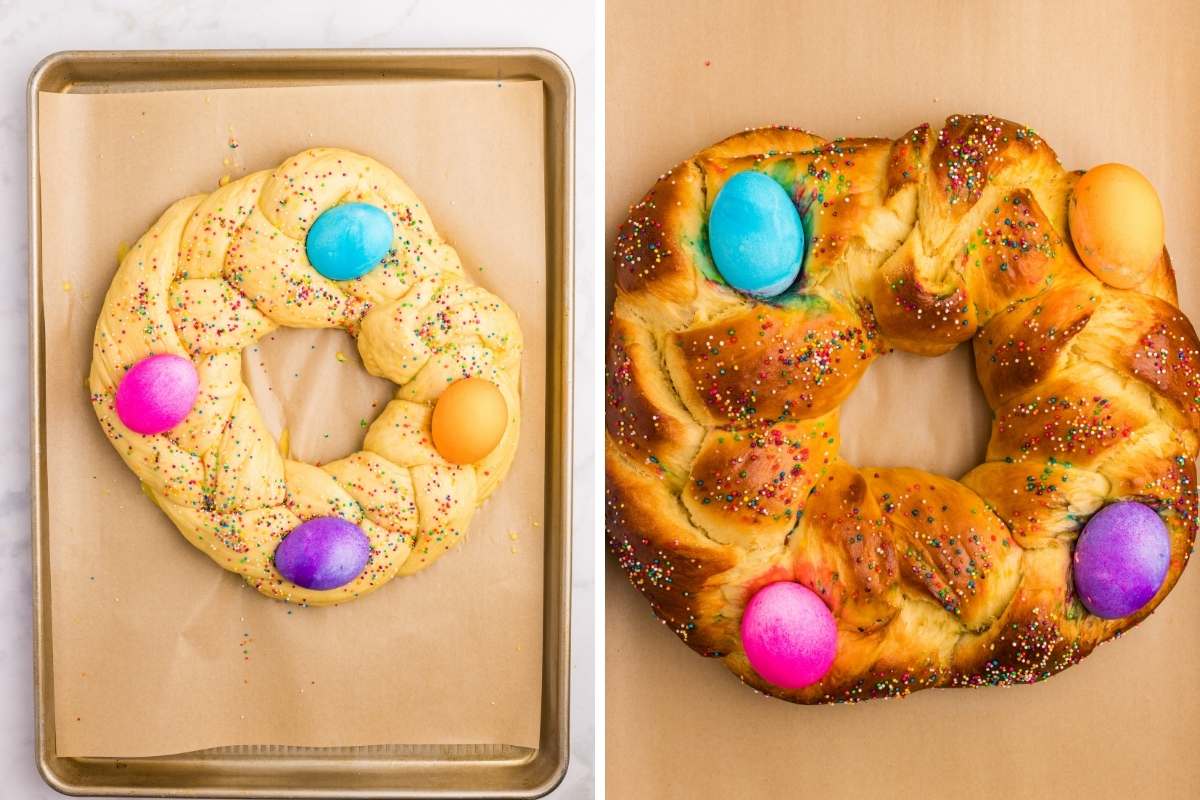
Bake for 35-40 minutes until deeply golden and the internal temperature hits 190°F. If it’s browning too fast, tent loosely with foil for the last 10-15 minutes.
Cool
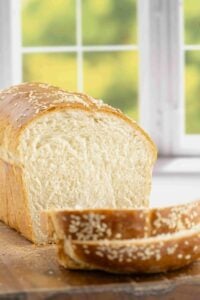
Let the bread rest on the baking sheet for 10 minutes, then transfer to a wire rack to cool completely before slicing.
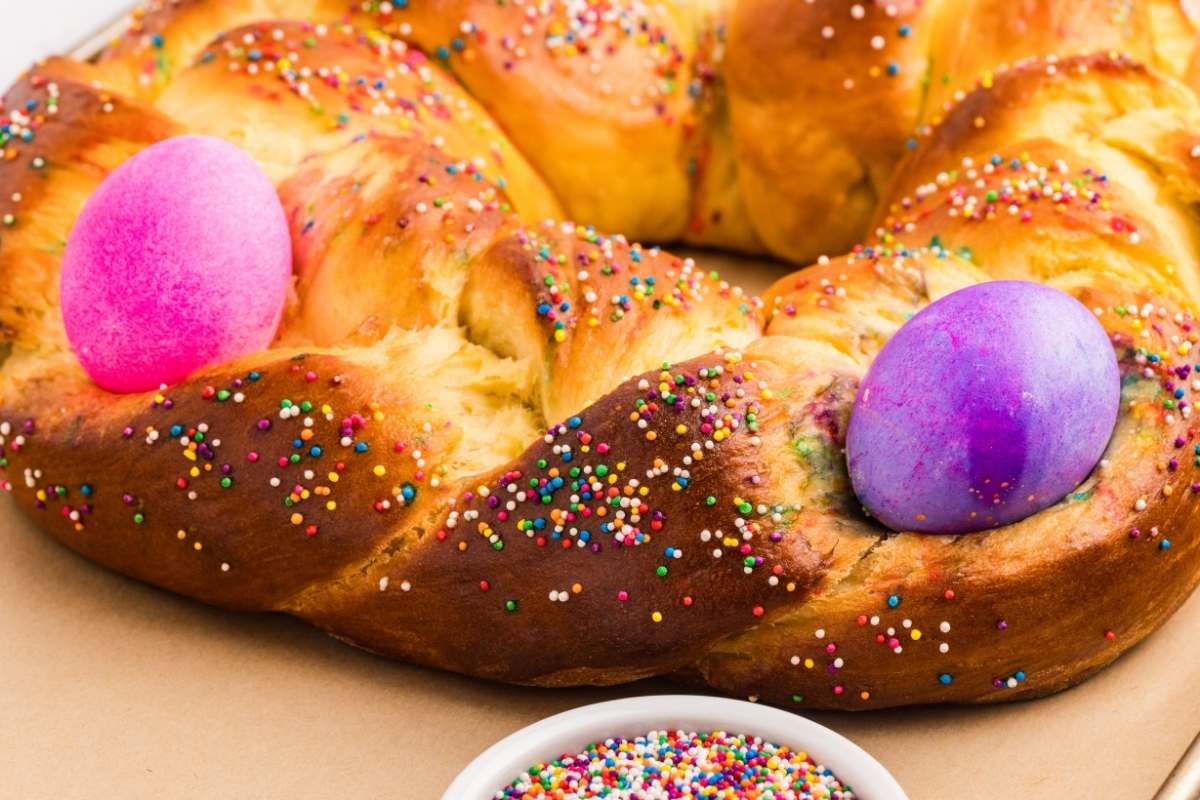
It’s hard to wait, but cutting into hot bread compresses the crumb.
Serve alongside all your favorite classic Easter recipes at brunch or dinner.
Storage Instructions
Honestly? This bread is best made the day you serve it. It’s a special occasion recipe, and the texture and flavor are at their peak fresh from the oven.
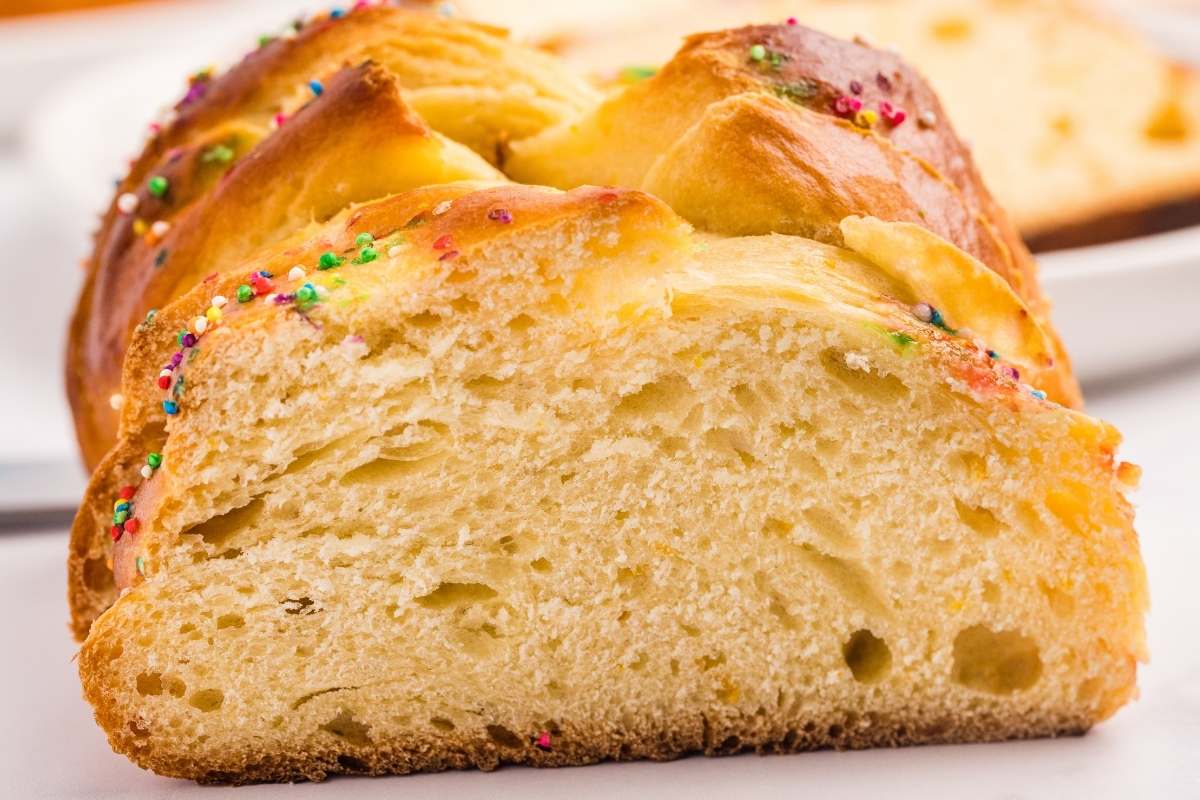
If you have leftovers, store them covered at room temperature for a day or two. It makes great French toast once it starts to stale.
Troubleshooting
This happens sometimes, especially if the eggs had hairline cracks before dyeing. Use your sturdiest eggs and let them come to room temperature before baking.
Yes. Divide the dough in half, make two smaller braids, and reduce baking time to 22-28 minutes.
They’re fully cooked, so yes. Just be aware of how long your loaf has been setting out at room temp.
Printable Recipe
Italian Easter Bread
Equipment
- 1 stand mixer with dough hook
- 1 microplane or fine grater
- 1 Baking Sheet
- 1 Pastry brush
Ingredients
For Dough
- ¾ cup whole milk warmed to about 90°F
- ⅔ cup granulated sugar
- 2 ¼ teaspoons active dry yeast one packet
- 3 large eggs room temperature
- ¼ cup unsalted butter melted and cooled
- 1 teaspoon salt
- 1 medium orange zested and juiced (about 1 tablespoon zest + 4 tablespoons juice)
- 1 teaspoon vanilla extract
- 4 ½ to 5 cups all-purpose flour
For Assembly
- 1 large egg beaten, for egg wash
- 4 raw eggs dyed and completely dry
- colored sprinkles optional
Instructions
- Dye the eggs. Dye your raw eggs and set aside to dry completely, at least 2 hours or overnight.
- Make the dough. Add the warm milk, sugar, yeast, eggs, melted butter, salt, orange zest and juice, and vanilla to a stand mixer bowl. Stir to combine. Add 3 cups of flour and mix until a wet dough forms. Add remaining flour about 1/2 cup at a time until the dough pulls away from the sides of the bowl.
- Knead. Using a dough hook, knead for 6-8 minutes until smooth and elastic. (Or knead by hand for 8-10 minutes.)
- First rise. Place dough in a greased bowl, cover with plastic wrap, and let rise in a warm spot until doubled, about 2 hours.
- Shape. Punch down the dough and divide into 3 equal pieces. Roll each into an 18-20 inch rope. Braid the ropes together, pinch the ends, and shape into a ring or straight loaf. Transfer to a parchment-lined baking sheet.
- Second rise. Cover loosely and let rise 30-45 minutes until puffy.
- Bake. Preheat oven to 350°F. Brush dough with beaten egg, nestle dyed eggs into the braid, and add sprinkles if using. Bake 35-40 minutes until deeply golden and internal temperature reaches 190°F. Tent with foil if browning too quickly.
- Cool. Rest on baking sheet 10 minutes, then transfer to a wire rack to cool completely before slicing.
Notes
Nutrition













I made this today for Easter and it turned out amazing! So soft and moist and the orange flavor and aroma was really nice. I couldn’t believe how nice the crumb came out. My guests loved it and we finished the whole loaf! I did skip the sprinkles and dyed eggs and I used a little less sugar than called for… but it’s a great recipe. Another win by this blog 🙌🏼
hi Jill! Thank you SO much for letting me know. the orange is my favorite part. happy easter