
Sea Salt Caramels

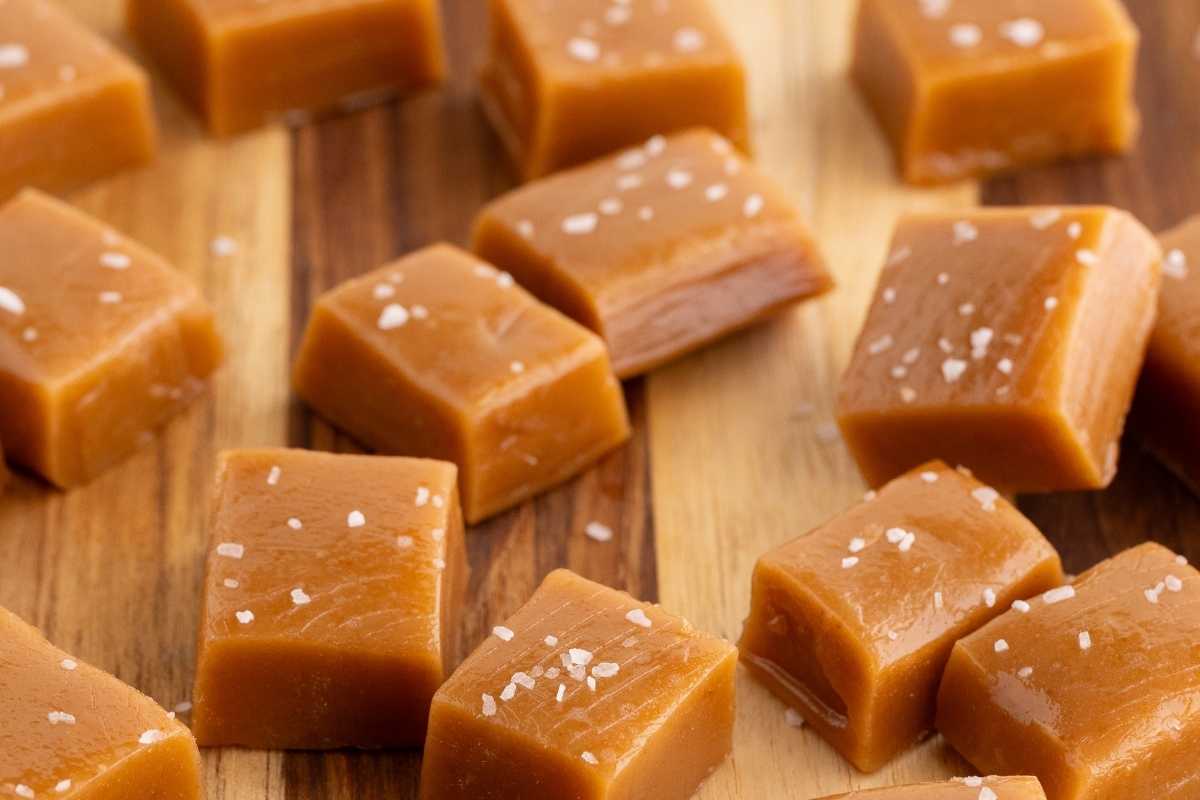
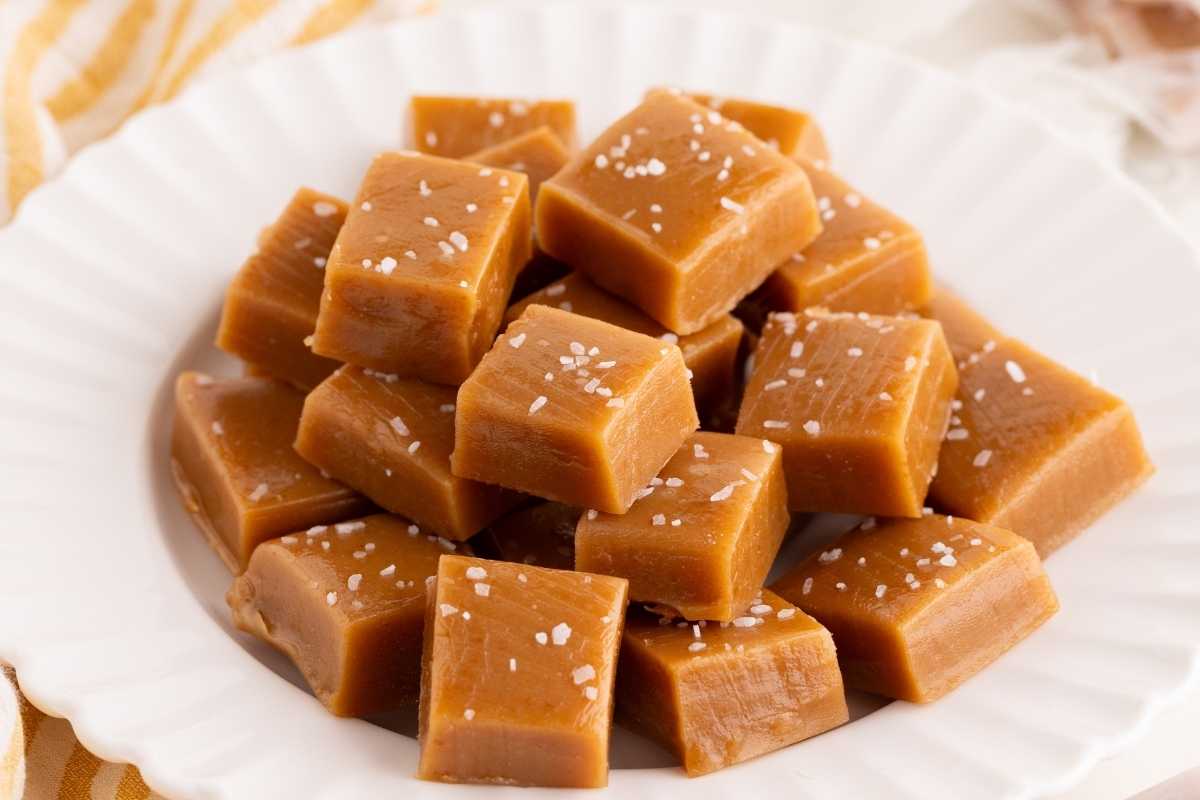
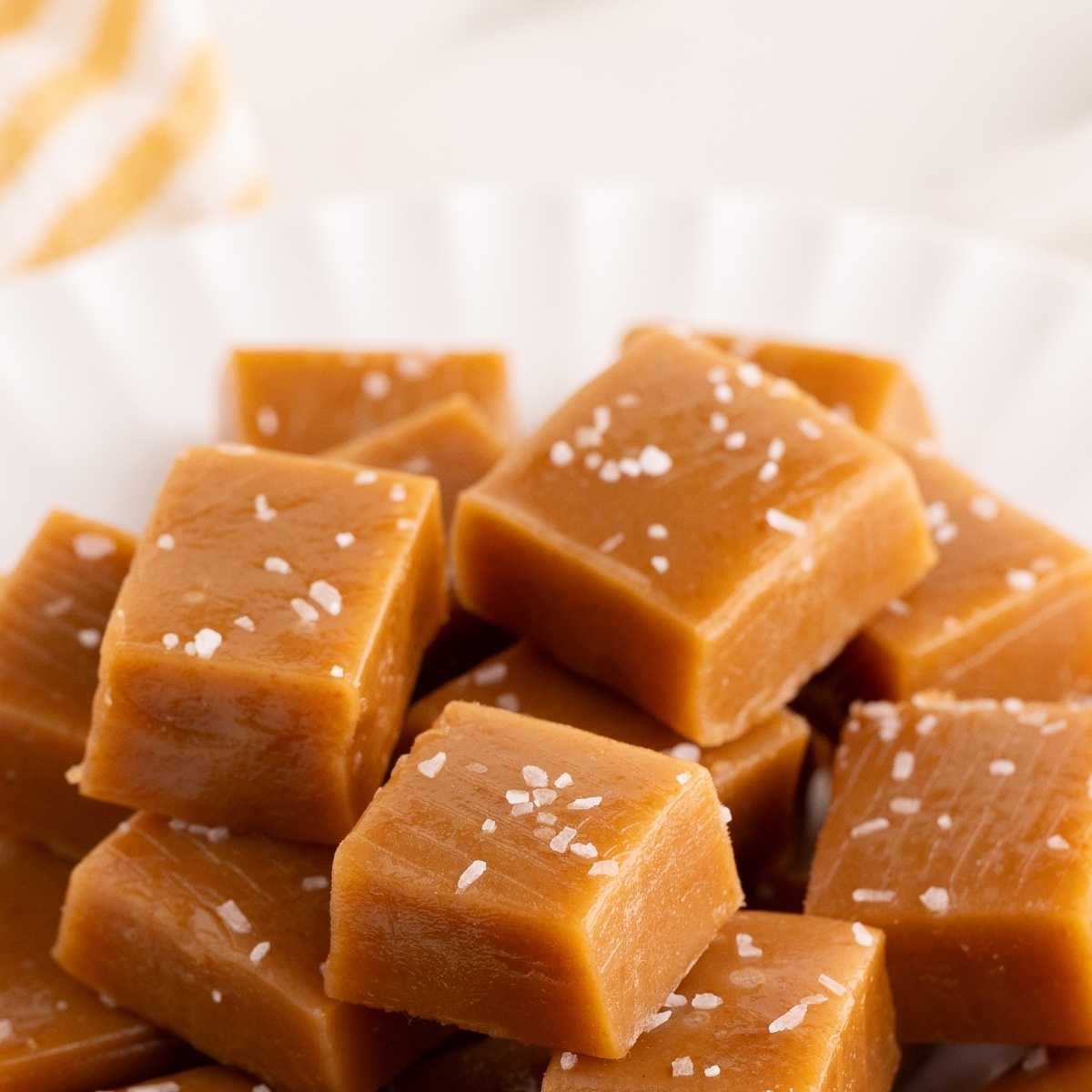
Buttery, deep honey-colored caramels with a scatter of flake salt on top. These are beautiful wrapped in wax paper for gifts or cut small for a cookie tray.
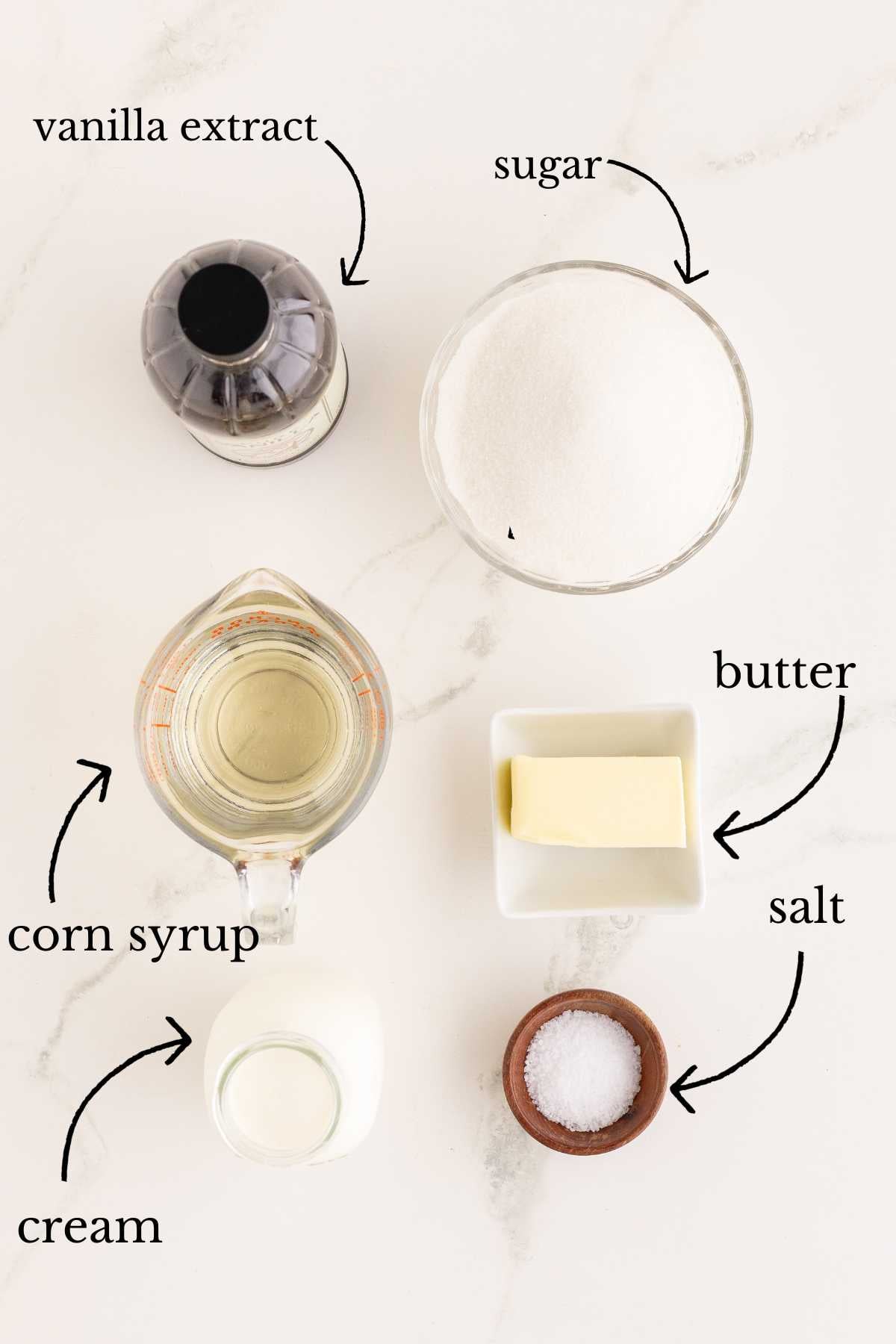
What You’ll Need
- 2 cups heavy cream
- 4 tablespoons unsalted butter. Salted works too, just drop the ½ teaspoon of salt in the pot to ¼ teaspoon.
- 2 cups granulated sugar
- 1 cup light corn syrup. Dark corn syrup works, but you’ll get a darker caramel.
- ½ teaspoon vanilla extract. Swap in almond, rum, brandy, or maple extract for a different flavor, or stir in a tablespoon of bourbon for a boozy version.
- 1–2 teaspoons flake salt. Maldon, fleur de sel, Himalayan, or flake kosher. Don’t use table salt here; you want the crunch.
Equipment You’ll Need
- Heavy-bottom 3–4 quart saucepan. Thin pots scorch sugar. Use the heaviest one you have.
- Candy thermometer. You can get away with the cold water test (see notes in the recipe card), but a thermometer takes the guesswork out.
- 8×8 pan
- Parchment paper. Leave a 1–2 inch overhang on two sides so you can lift the whole slab out to cut it.
Doubling caramel is trickier than it looks. You can’t just use a bigger pan and expect the same recipe. A doubled batch takes significantly longer to reach 245°F because there’s more mass to heat, and the deeper the caramel in the pot, the harder it is to read the temperature accurately. If you want more caramels, I’d honestly just make two separate batches back-to-back. Pour the doubled amount into a 9×13 pan instead of an 8×8 pan, or you’ll end up with caramels that are too thick to bite cleanly.
Instructions
Prep the pan first
Line an 8×8 pan with two pieces of parchment, laid crosswise, with a couple of inches hanging over each side. Do this before you start the caramel, not while it’s bubbling on the stove.
Caramel at 245°F does not wait for you to fuss with parchment paper. Get the pan ready and set it right next to the stove so you can pour the caramel the second it’s done.
Start the caramel
Into a heavy-bottomed 3-4 quart pot, add the cream, butter, sugar, corn syrup, and ½ teaspoon of salt. Give it a stir to moisten all the sugar, then set the pot over medium heat, stirring regularly until the butter melts.
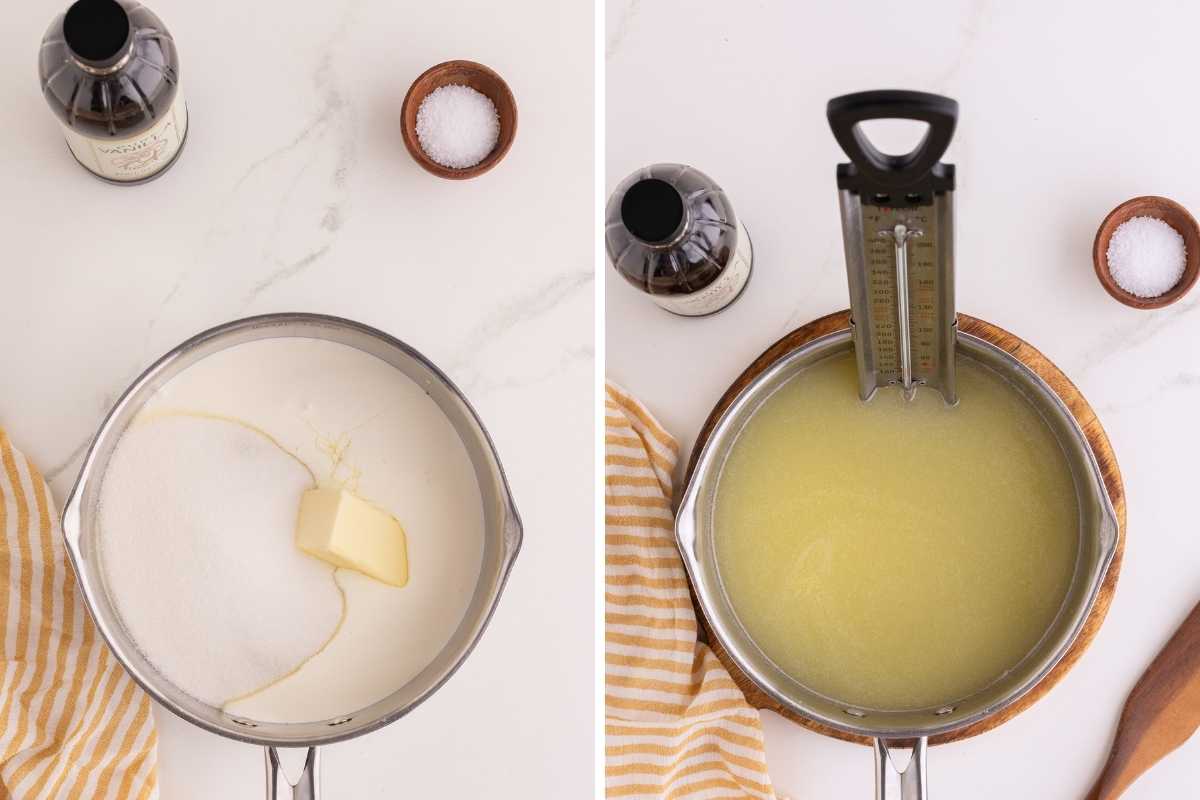
Use a bigger pot than you think you need. This mixture almost doubles in volume once it hits a real boil, and caramel boiling over onto a burner is a mess you don’t want to clean.
Cook to 245°F
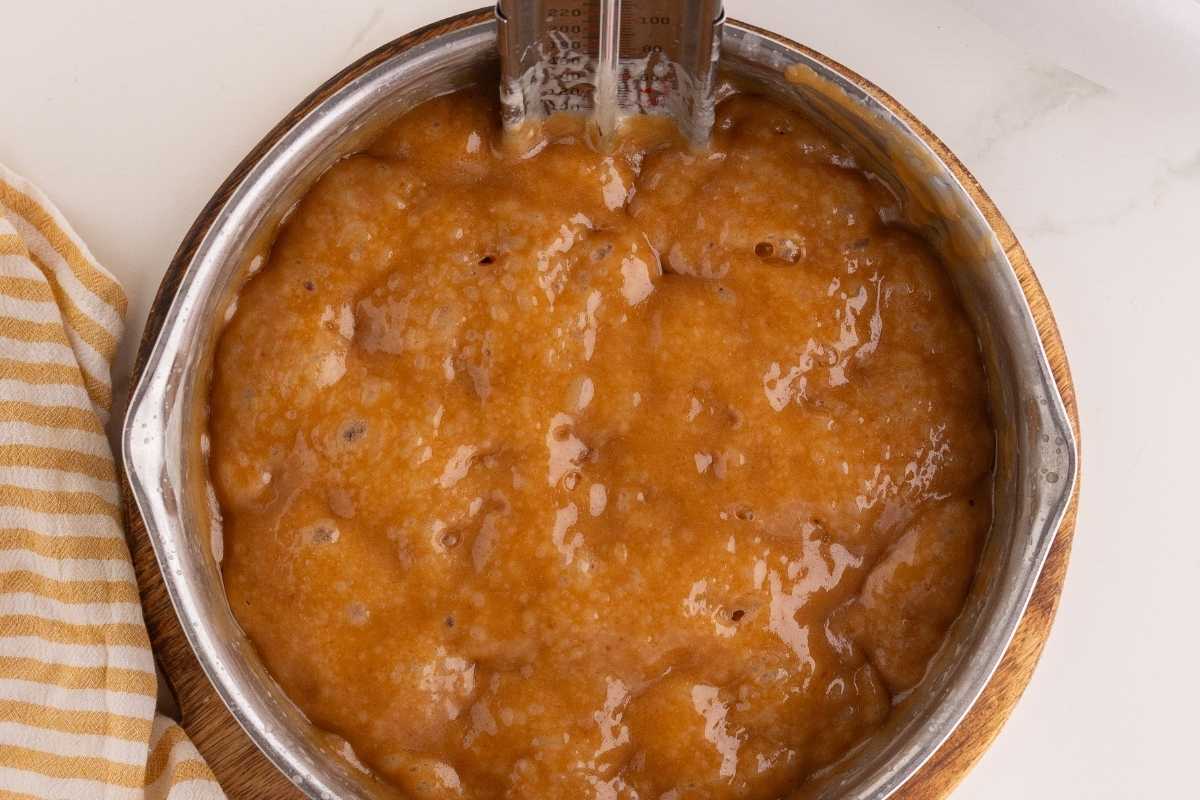
Once the butter is melted, bump the heat to medium-high until it comes to a boil, then drop it back to medium to keep a steady low boil going. Clip your candy thermometer to the side of the pan, and make sure the tip isn’t touching the bottom or you’ll get a false reading.
Here’s the part where people get impatient: it flies up to 220°F in what feels like no time, and then it just…sits there. The climb from 220°F to 245°F takes several minutes and feels like it’ll never happen. Don’t crank the heat. Stir regularly, watch the color deepen to a rich honey, and let it get there on its own time.
Watch the thermometer, not the clock. Somewhere between 30 and 40 minutes, it’ll hit 245°F — the firm-ball stage — and you’re done.
Pour and salt
Pull the pot off the heat and stir in the vanilla. It’ll bubble up dramatically, which is normal. Pour the hot caramel into your prepared pan and let it sit for 10-15 minutes to set up just slightly.
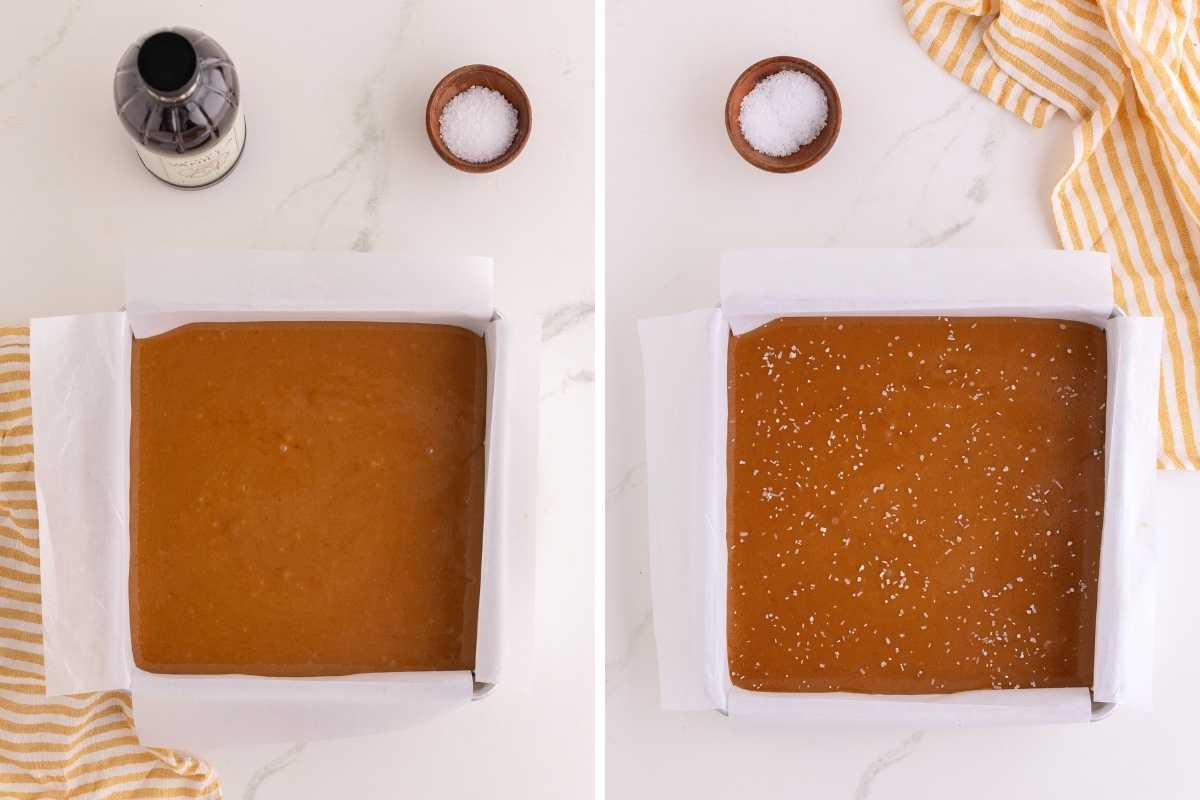
Now sprinkle the flake salt over the top — ¼ to ½ teaspoon, depending on how salty you like them. Doing this after a short rest keeps the salt sitting on top instead of sinking in and dissolving. Let the caramel cool at room temperature for 2-3 hours before you touch it again.
Save This Post
You'll join my email list which you will love. And if you don't, unsubscribe in one click. ❤️
Cut into squares
Once the caramel is cool and firm, lift the whole slab out of the pan using the parchment overhang and set it on a cutting board. Peel the parchment away from the sides.
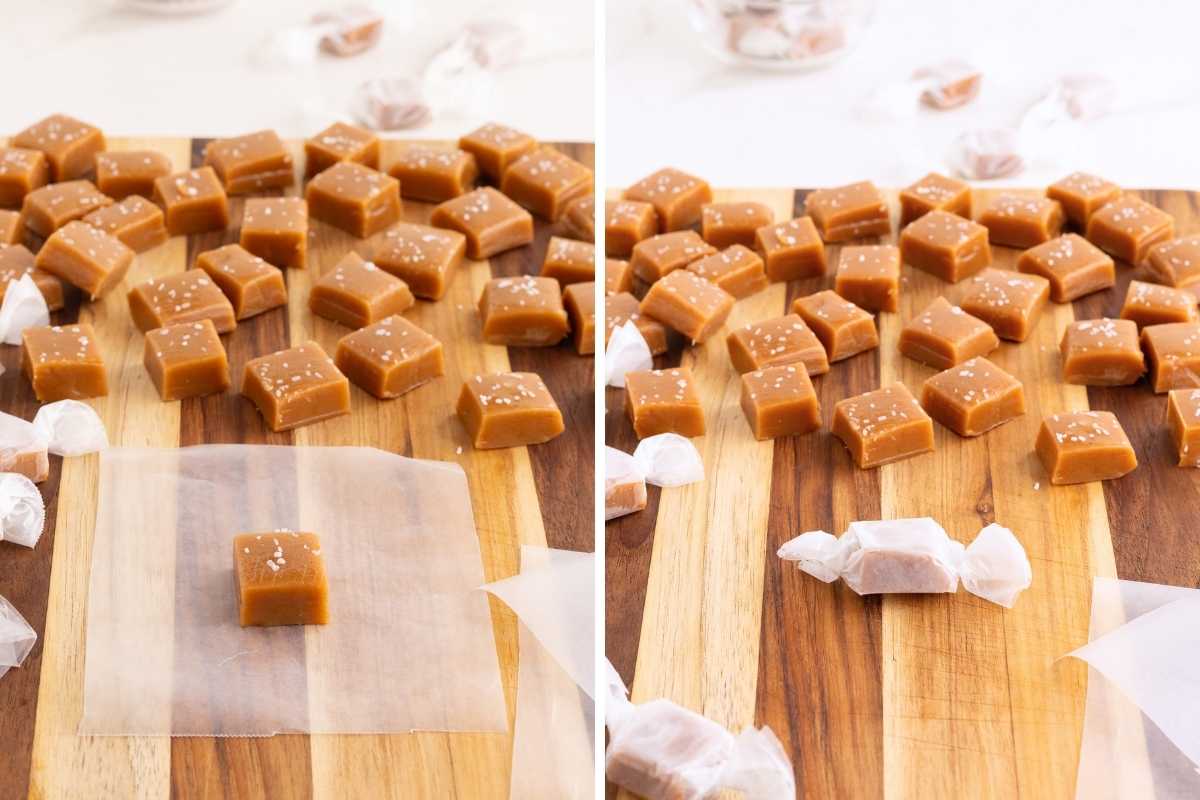
With a sharp knife, cut the slab into eight 1-inch strips, then cut each strip into eight 1-inch segments. That gives you 64 caramels. If your knife starts to drag, wipe it with a damp cloth between cuts, or rub some oil or butter over the blade.
Storage Instructions
Wrap each caramel in a 4×4 square of parchment or wax paper if you’re gifting them or planning to keep them around for more than a few days. Otherwise, they’ll stick together in the container, and you’ll have to pry them apart. If you skip the wrapping, layer them between sheets of parchment.
Store wrapped caramels in an airtight container at room temperature for up to 2 weeks, or in the fridge for up to 4 weeks. If your kitchen runs warm in the summer, go straight to the fridge. Caramels get sticky and start to slump when they’re too warm.
Variations
- Bourbon caramels: stir in 1 tablespoon bourbon with the vanilla at the end.
- Maple caramels: swap the vanilla for ½ teaspoon maple extract.
- Almond caramels: swap the vanilla for ½ teaspoon almond extract.
- Espresso caramels: whisk 1 teaspoon instant espresso powder into the cream before adding it to the pan.
- Chocolate-dipped: once cut, dip half of each caramel into melted dark chocolate, then sprinkle with more flake salt.
Questions and Troubleshooting
Do I really need a candy thermometer?
Highly recommend it. You can use the cold water test (drop a teaspoon of hot caramel into ice water and check for a firm but pliable ball), but a $10 thermometer takes all the guesswork out.
My caramels came out too hard. What happened?
You cooked them past 245°F. Next time, pull them off the heat right at the firm-ball stage. The temperature climbs quickly at the end. If it already happened, score the slab into squares and enjoy them as hard caramel candy.
My caramels are too soft and won’t hold their shape.
Undercooked. The mixture needed to reach a true 245°F, or a firm ball, in the cold-water test. You can scrape it all back into the pot and cook it a bit longer; it’ll be fine.
Can I swap dark corn syrup for light?
You can. Your caramels will be a little darker in color and slightly deeper in flavor. Nothing wrong with that.
Can I flavor these differently?
Absolutely. Swap the vanilla for ½ teaspoon of almond, maple, rum, or brandy extract. Or stir in a tablespoon of bourbon at the end for a boozy version.
Why did my caramel crystallize into a gritty mess?
Usually, it’s from stirring too aggressively once it’s boiling, or sugar crystals on the side of the pan falling back in. Stir gently and don’t scrape the sides down after it starts boiling.
More homemade Holiday Sweets
- 51 Old-Fashioned Christmas Candies
- Classic Vanilla Fudge Recipe (From Scratch)
- Old-Fashioned Soft Caramels
- Soft and Chewy Christmas M&M Cookies
Sea Salt Caramels
Equipment
- 3-4 quart heavy bottomed saucepan
- Candy thermometer
- 8×8 inch cake pan
- Parchment paper
Ingredients
- 2 cups heavy cream
- 4 tablespoons unsalted butter
- 2 cups granulated sugar
- 1 cup light corn syrup
- ½ teaspoon vanilla extract
- 1-2 teaspoons flake salt for topping
Instructions
- Prepare the pan. Line an 8×8 cake pan with two pieces of parchment paper, leaving a 1-2 inch overhang. Set aside.
- Combine the ingredients. To a heavy bottomed pot, add the cream, butter, sugar, corn syrup, and ½ teaspoon of salt. Stir to moisten all the sugar, then place the pan over medium heat, stirring regularly until the butter is melted.
- Bring to a boil. Once the butter has melted, increase the heat to medium-high. When it comes to a boil, reduce the heat to medium to maintain a low boil. Clip the candy thermometer to the side of the pan, making sure the tip does not touch the bottom.
- Cook to firm ball stage. Continue to cook the mixture, stirring regularly, until the temperature reaches 245°F on the thermometer, or the firm ball stage, 30-40 minutes. The mixture will darken slightly to a deep honey color.
- Add vanilla and pour. Off the heat, add the vanilla extract and stir to incorporate. The mixture will bubble. Pour the hot caramel into the prepared pan.
- Salt and cool. Cool for 10-15 minutes, then sprinkle with ¼ to ½ teaspoon of flaked salt. Continue to cool at room temperature for 2-3 hours.
- Cut the caramels. Lift the cooled caramel out of the pan using the parchment overhang and place on a cutting board. Using a sharp knife, cut into 8 one-inch-wide strips, then cut the strips into 1-inch segments for 64 caramels.
Notes
Nutrition

Related Articles
See ALL
Homemade Caramelitas
Deep Fried Cajun Chicken Tenders
Grandma’s Chocolate Meringue Pie Recipe
Lemon Poke Cake
16 Beautiful Christmas Cake Recipes to Sweeten Your Holiday Season
Southwest Barbecue Chicken Salad with Creamy Cilantro Ranch
Creamy Sausage and Tortellini Soup
Strawberry Texas Sheet Cake
Easy Maple Nut Fudge Recipe
Soft Italian Sub Rolls (Beginner-Friendly)
Baked Tortellini with Cream Sauce
Maple Bar Donuts
See all
Related Articles
Classic Creamy Macaroni Salad (Family Favorite!)
Easy Deep Fried Coconut Shrimp
Old-Fashioned Scalloped Corn with Cracker Topping
Apple Pie Nachos with Cinnamon Sugar Chips
Cold Cucumber Chicken Salad
5 Ways to Make Your Christmas Home Extra Cozy {A Different Approach}
American Flag Sheet Cake (From Scratch with Fresh Berries)
Our Favorite Homemade Pizza Dough (Thin Crust)
Homestyle Cast Iron Skillet Green Beans