
How to Deep Clean a Cast Iron Skillet

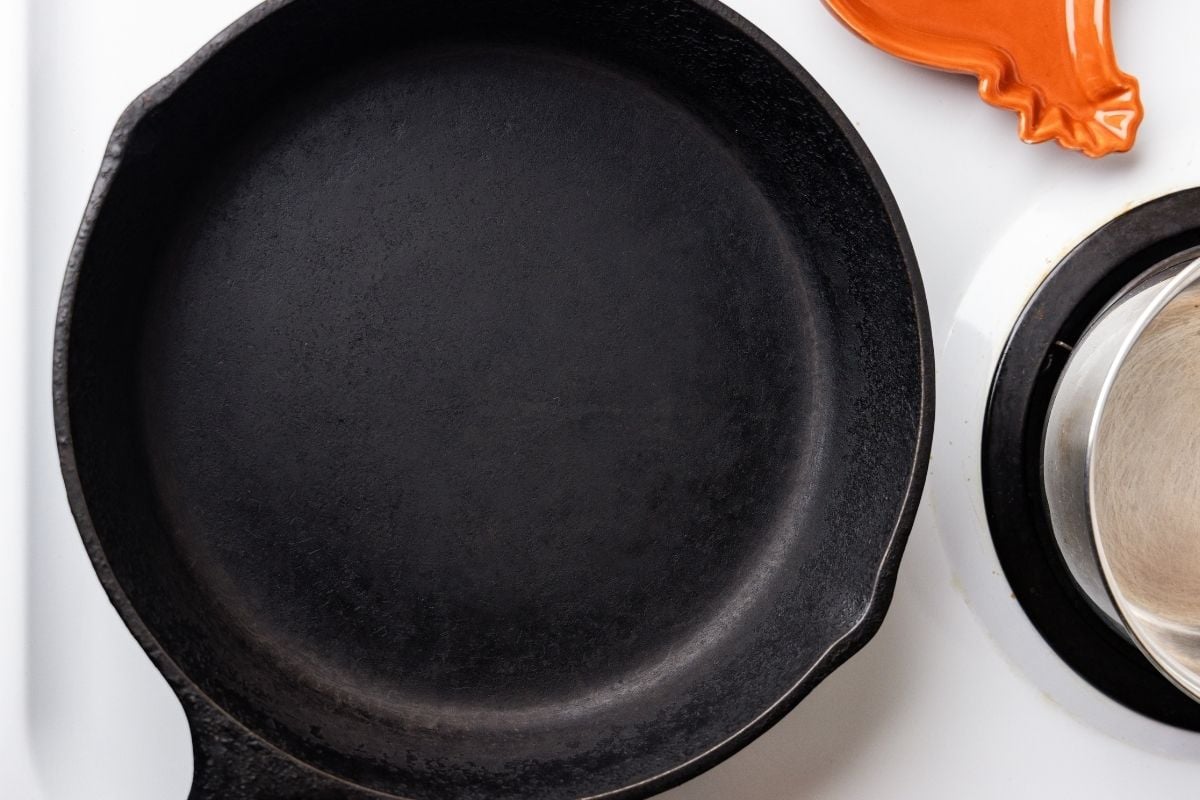
This is hardly my favorite chore, but it saves a lot of hassle when I take the time to take care of one of my favorite kitchen staples. Plus, a cast iron skillet just looks that much better when it’s nice and seasoned!
What You’ll Need
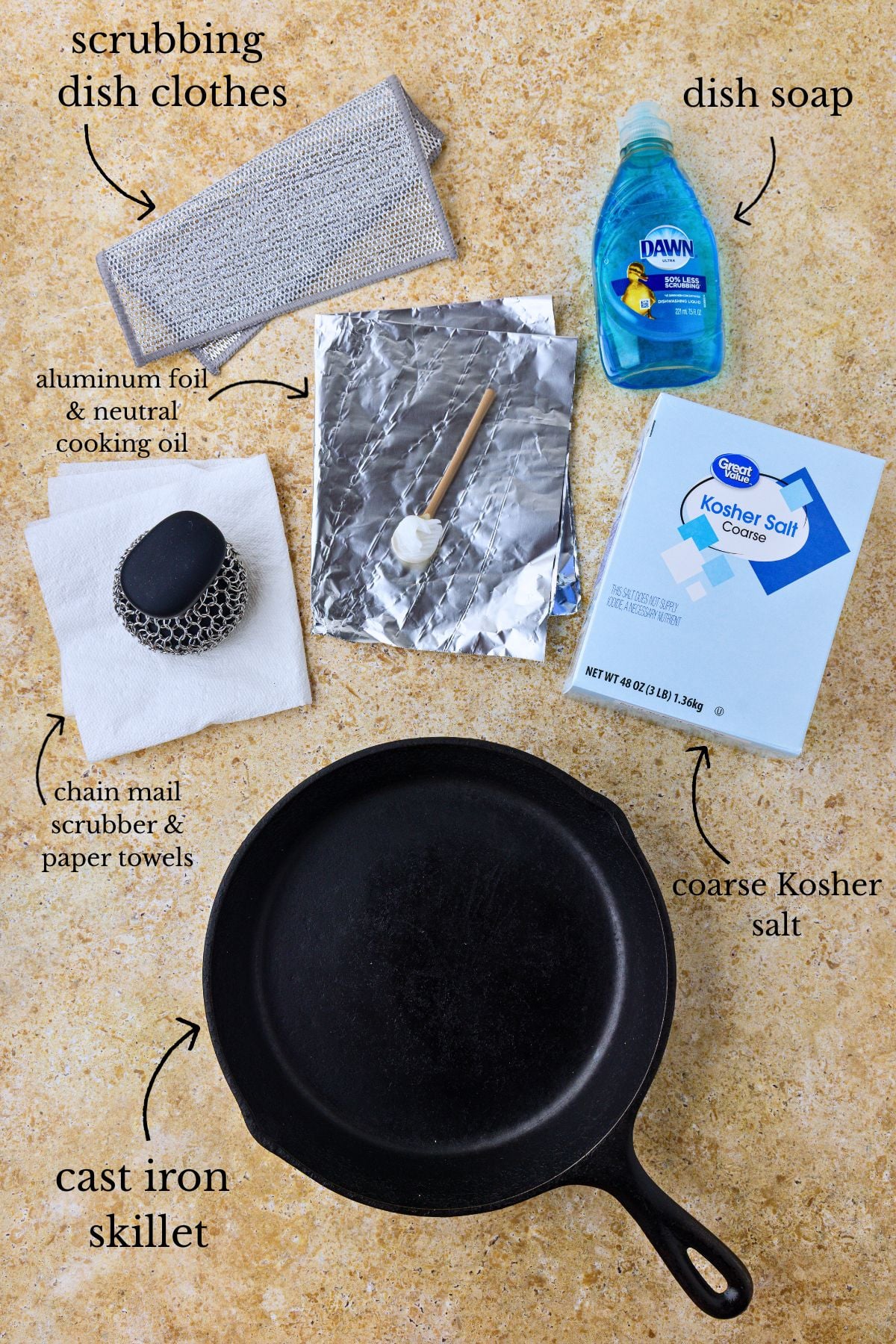
- Cast iron skillet
- Coarse Kosher salt
- Chain mail scrubber
- Scrubbing dishcloths
- Dish soap
- Warm water
- Neutral cooking oil with a high smoke point – you can use vegetable, grapeseed, avocado oils, or Crisco
- Paper towels
- Aluminum foil and/or a large sheet pan
Tools You’ll Need
- Large roasting pan – this is only needed if you’re going to scrub outside of a sink
- Oven
Instructions
First, let me show you the before! This isn’t TERRIBLE, but it’s sticky and rough in spots and just not the clean and shiny skillet of my dreams.
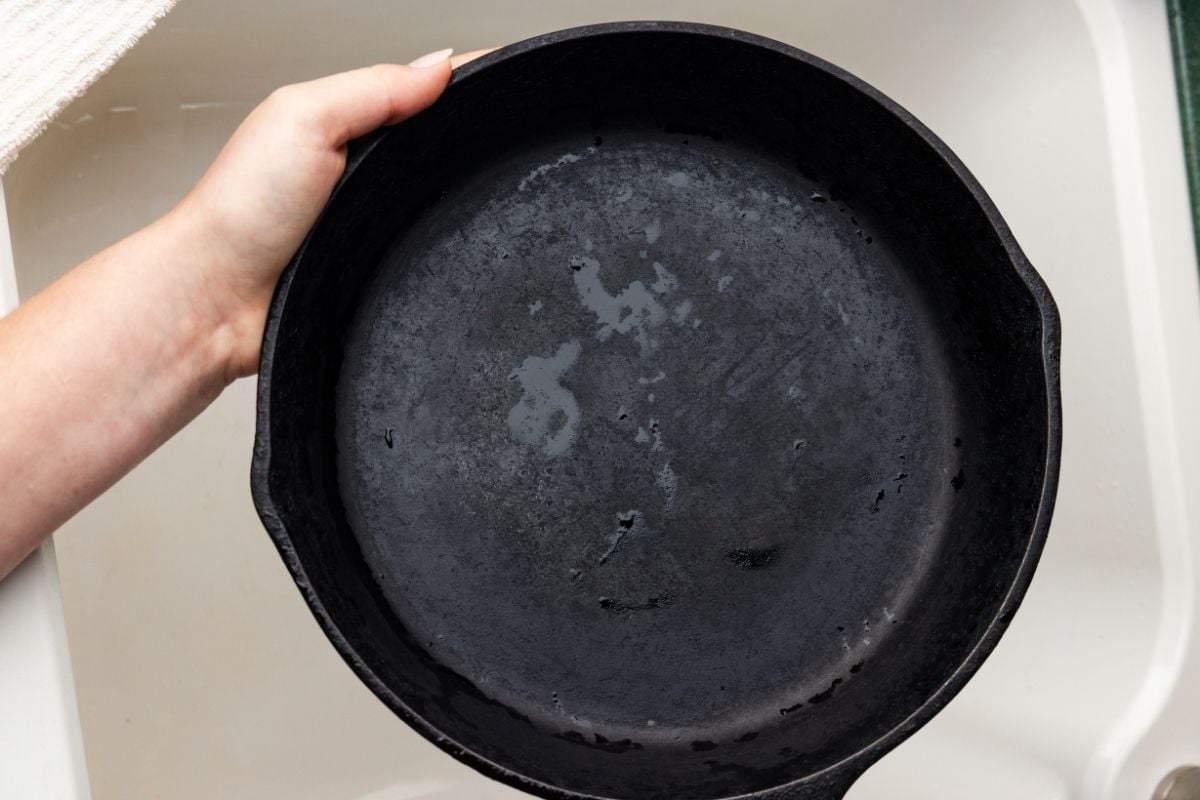
If your skillet IS terrible: rusty, super sticky, baked-on dirt, the SAME method will work. You’ll just have to scrub harder!
scrub with salt
Start by putting your skillet into your sink or the roasting pan, and then pour a generous amount of salt into the skillet. There’s no right or wrong salt amount. You just need enough that’s going to cover the pan and really help get the grime off.
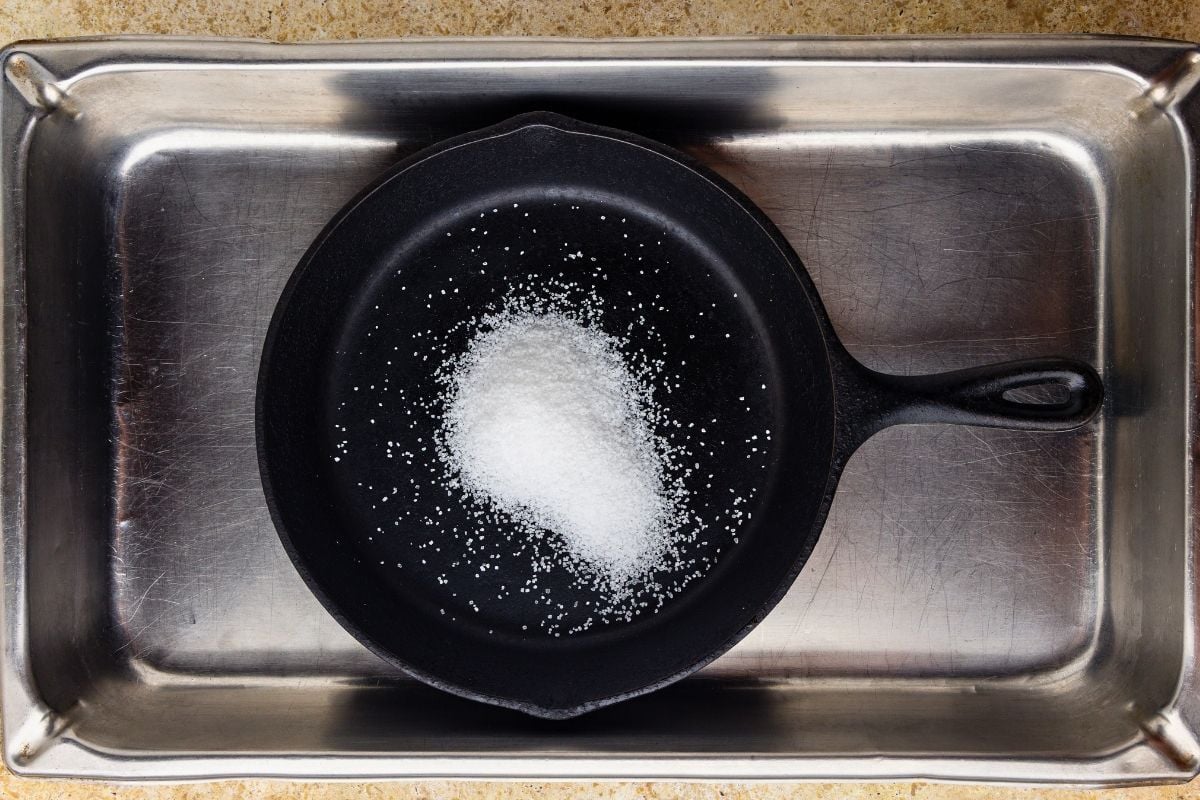
Now use your scrubber and work the salt into circular motions. You’ll notice the salt starts to change color and get a little darker. That’s exactly what we want. It means that all that grease and buildup is coming off the pan.
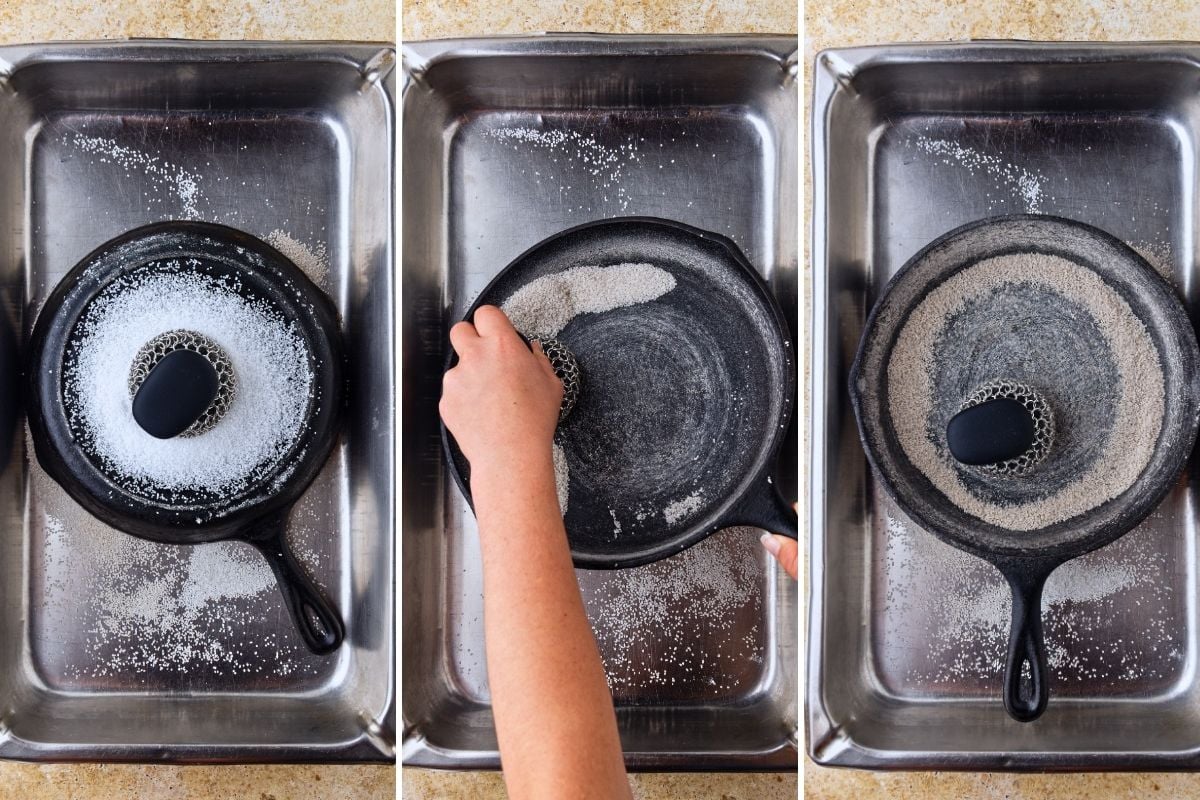
Really try to cover every nook and cranny here. Make it a workout!
flip over and repeat if necessary
It’s time to do the bottom. Flip it over and do the exact same thing.
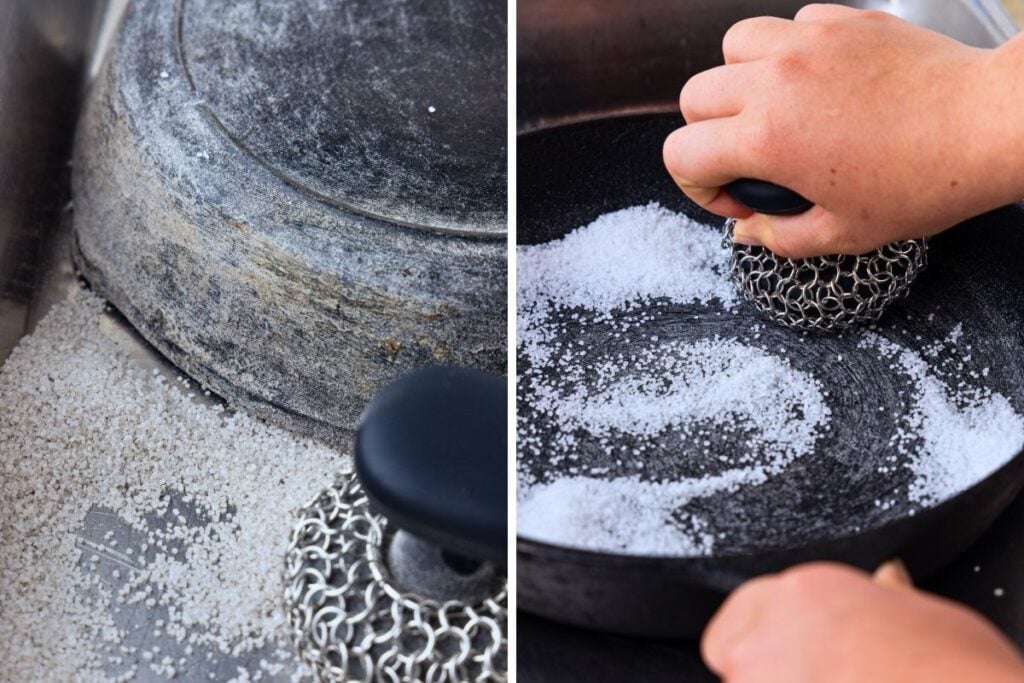
You can repeat this process as many times as you need (on both sides) until you feel like it’s completely clean. Just start over with new salt and scrub again until you’re done.
wash with soap
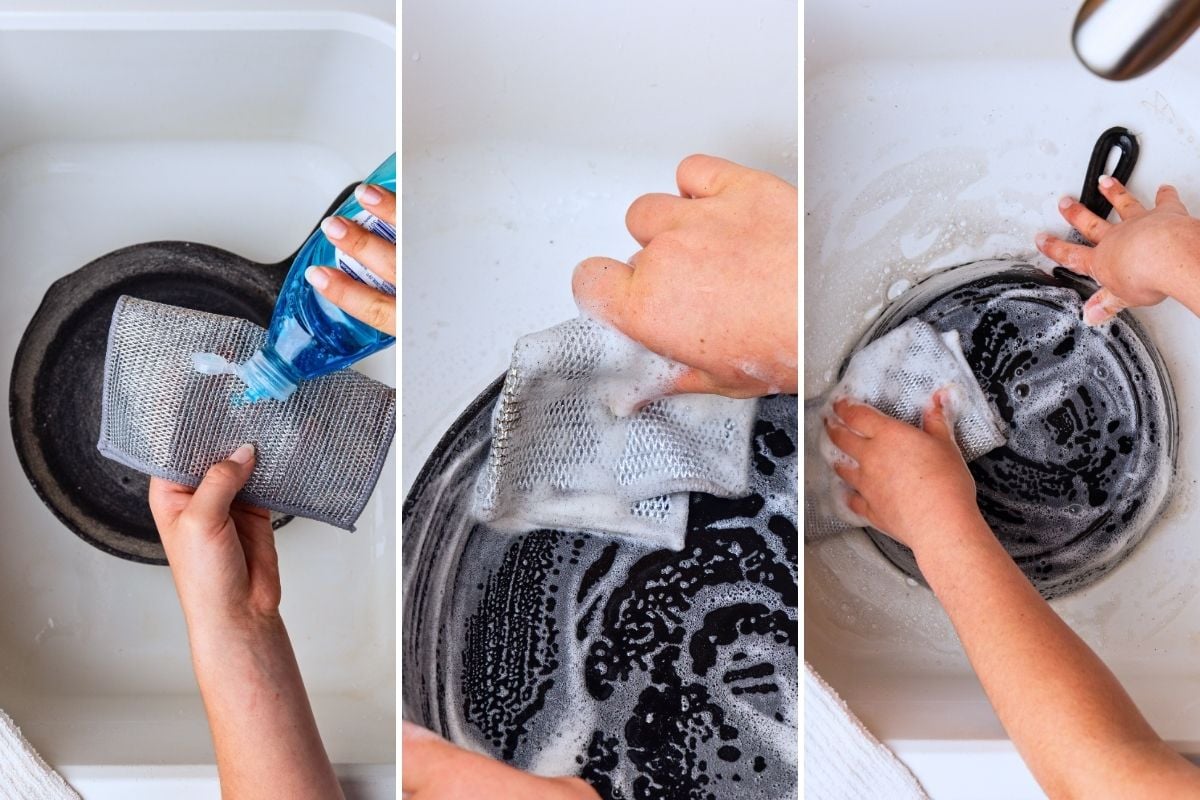
Bring your skillet to the sink and add a pea-sized amount of soap to the dishcloth. I know, I know, they say you’re not supposed to use soap with cast iron skillets, but honestly, a small amount isn’t going to do any harm, and it really helps get that extra grease off.
Save This Post
You'll join my email list which you will love. And if you don't, unsubscribe in one click. ❤️
This is when I really love using the scrubbing dishcloths. They really get in there to get that extra gunk off.
rinse
Rinse the skillet completely with warm water. Make sure you get all of the soap off.
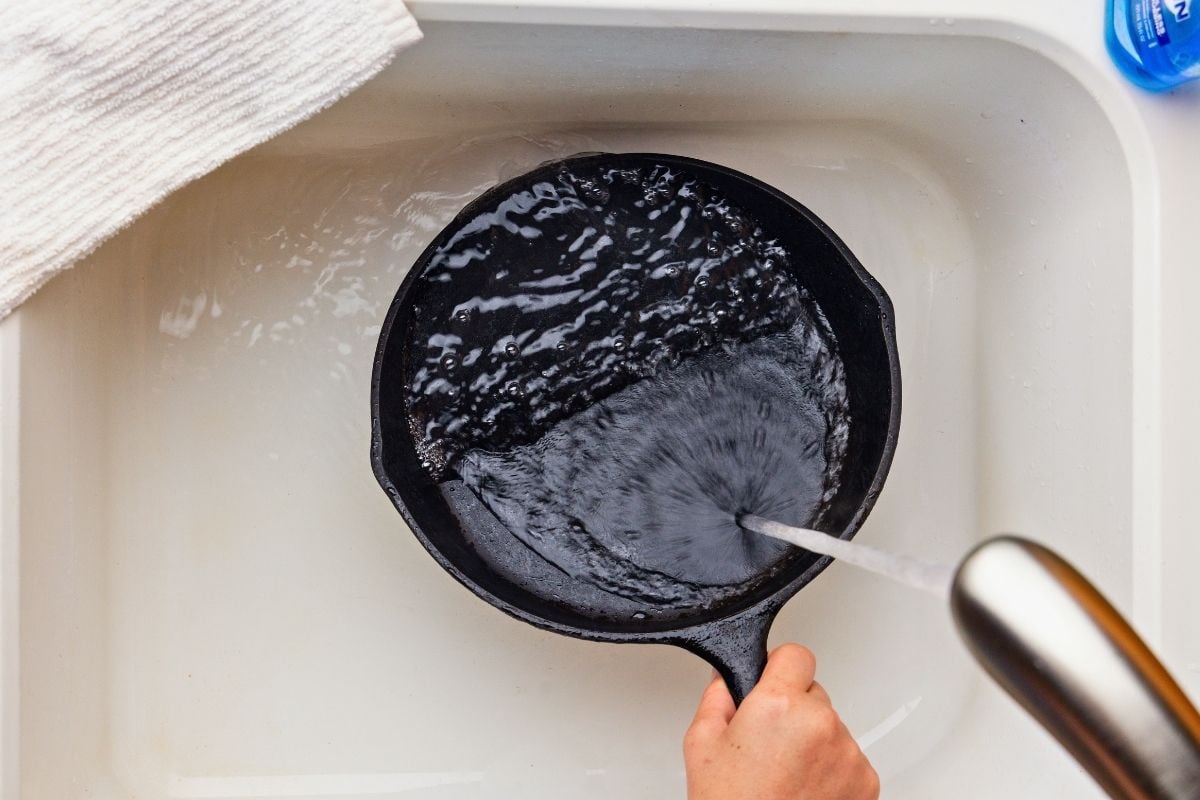
Warm water will do the trick, and run it over the pan until the it runs clear.
dry on the stovetop
Leave the skillet to drip-dry for a few minutes before we move it to the stove to dry.
Then place the pan on the stovetop and heat on low for a few minutes. You really need to get all of the moisture off the skillet for the curing process to work, so don’t skip this step!
Oil the skillet
Use an oven mitt and remove the skillet from the stove. Put the skillet on a heat-safe surface so that you can oil it properly.
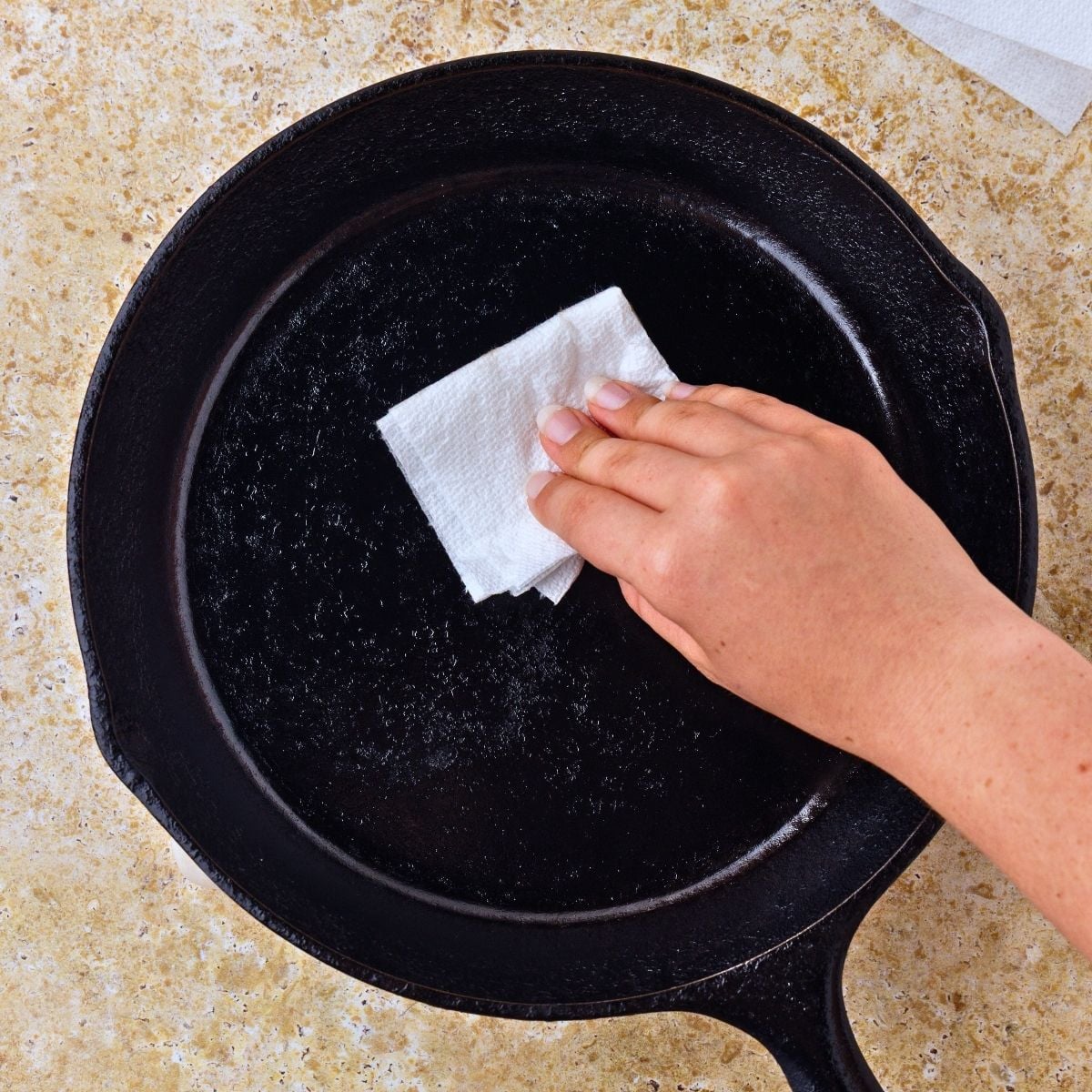
Take about a teaspoon of the cooking oil and your paper towel and rub it all over the skillet. Inside, outside, even the handle. Cover it up!
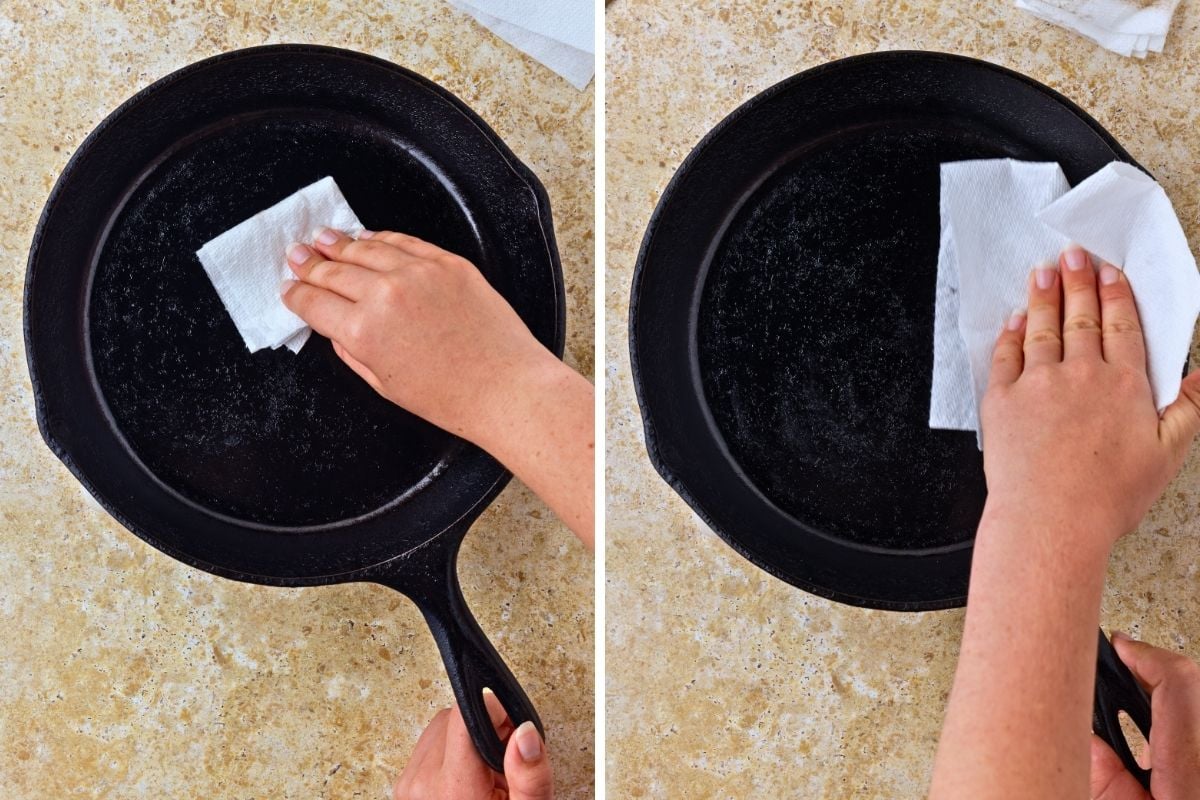
You don’t want too much oil, so if it looks a little glossy, take a clean paper towel and give it a good wipe. It shouldn’t look wet or greasy. It should actually look like it’s dry, believe it or not.
cure in the oven
Turn the oven on to 400°F and put your cast iron skillet on the rack. Then you’re going to set a timer for 1 hour.
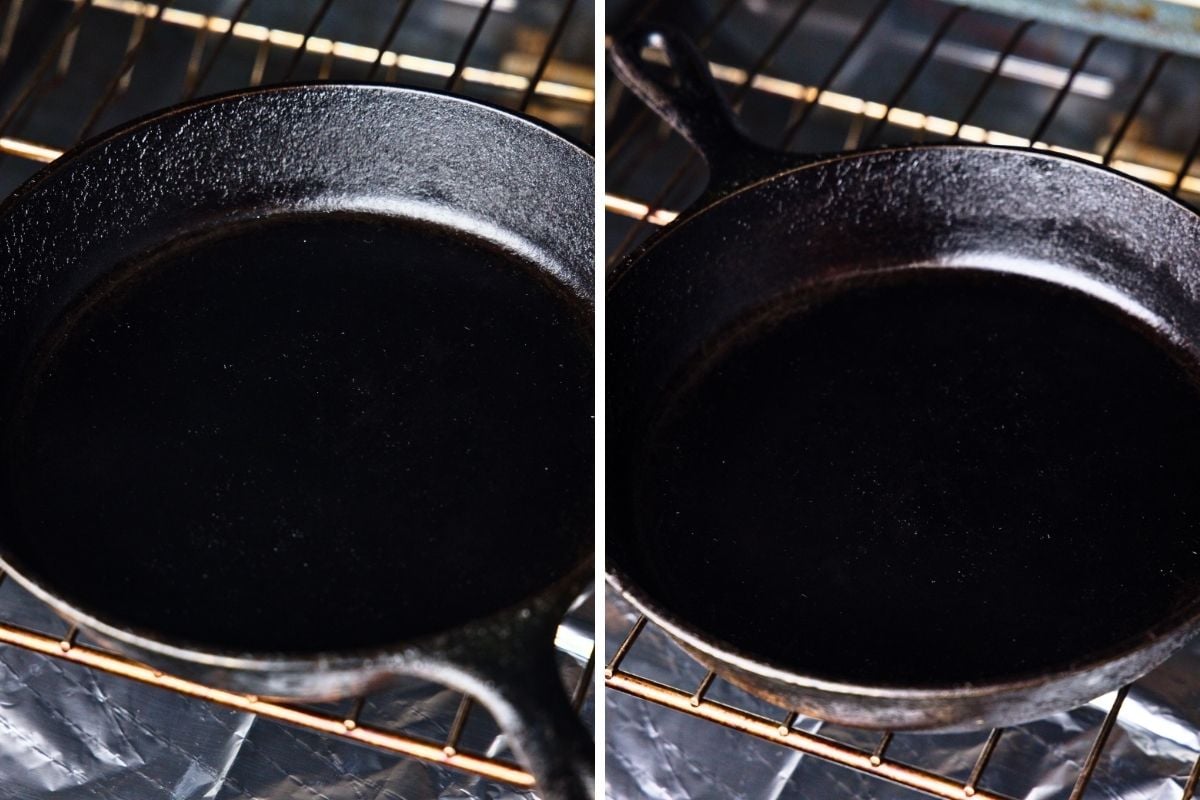
You might want to put your aluminum foil or a foil-lined sheet pan on the lower rack to catch any dripping oil that might fall.
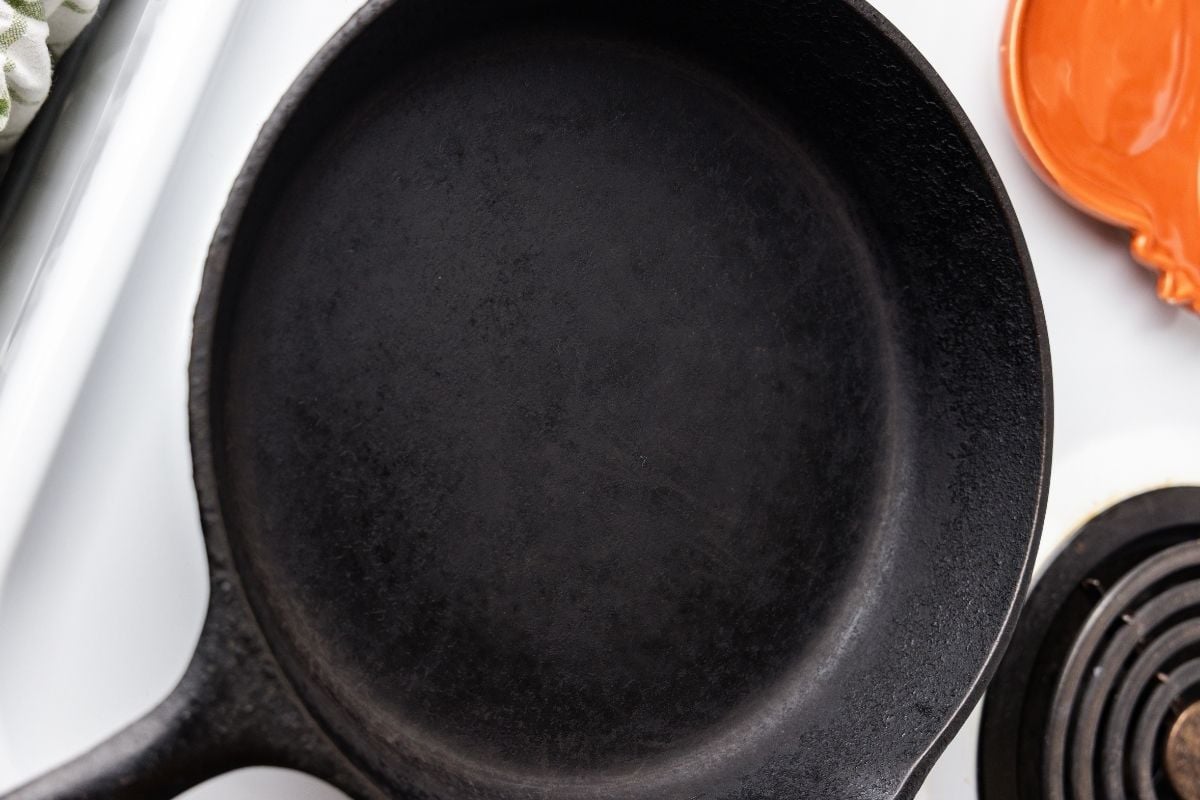
When the hour is done, turn off the oven and just leave the skillet in there until it’s room temperature. And then you’re done! Your skillet is ready to use and properly seasoned.
Questions and Troubleshooting
Yep, I promise, it’s totally fine. This was kind of a hard rule back when soaps were really intense and abrasive. If you just use a basic gentle dish soap (like Dawn), it’s a-ok.
Nope, only coarse salt here. The bigger flakes help break down the build-up. Table salt will not even come close.
Yes, they both mean the same and have the same steps!
Really, as often as you need, and that’s going to depend on how much you use it and how well you keep up with daily maintenance. To keep it in tip-top shape, every time you use it you should scrape away any food, rinse with water, and then dry on the stovetop. You can also add another thin layer of oil. If you do the deep clean every few months, you’ll be in good shape.
Recipes to make in your cast iron skillet
- Cast Iron Skillet Omelet with Bacon and Potatoes
- Cast Iron Skillet Home Fries (Crisp!)
- Cast Iron Skillet Burgers (Better Than Grilled!)
- Easy Cast Iron Skillet Pork Chops
- Cast Iron Skillet Roast Chicken
How to Deep Clean and Cure a Cast Iron Skillet
Equipment
- Chain mail scrubber
- Scrubbing dish cloths
- Hot pad
- oven
Ingredients
Salt scrub
- Cast iron skillet
- Coarse Kosher salt a generous amount — it doesn’t have to be precise
- Chain mail scrubber
- Large roasting pan or other large container optional, if working on the countertop
Wash & rinse
- Scrubbing dish cloths
- Dish soap a pea-size amount
- Warm water
Oil & oven cure
- Neutral cooking oil with a high smoke point or Crisco/shortening vegetable, avocado, grapeseed, etc. — about 1 teaspoon per side
- Paper towels
- Aluminum foil or a large sheet pan
- Oven
Instructions
Salt scrub
- Set up your work space. Place the skillet in a large sink, or in a large roasting pan or other large container if you’re working on the countertop.
- Pour in the salt. Add a generous amount of Kosher salt to the skillet — enough to scrub around and help remove stuck-on food and rust; the amount doesn’t have to be precise.
- Scrub the inside. Use the chain mail scrubber in circular motions, working the salt all around the sides, edges, and base; the salt will break down and darken as you work.
- Flip and scrub the bottom. Add a fresh batch of salt and scrub the bottom side, where food can build up by dripping down the sides.
- Repeat as needed. Scrub 1 to 2 more times with more salt and a lot of elbow grease, if desired.
Soap wash & rinse
- Wash with dish soap. Apply a pea-size amount of dish soap to a scrubbing dish cloth and wash the skillet, working down into the crevices to remove extra grease and built-up food.
- Rinse thoroughly. Rinse the skillet with warm water until the water runs clear.
Stovetop dry
- Dry the skillet completely. Let it drip-dry over the sink for a minute, then transfer it to the stovetop and dry over low heat for 5 to 7 minutes.
Oil & oven cure
- Oil the skillet. Carefully transfer the hot skillet to your work space with a hot pad, then add about 1 teaspoon of neutral cooking oil or Crisco and smooth it around with a clean paper towel.
- Wipe off the excess. If the inside looks shiny or greasy, wipe out extra oil with a fresh paper towel, then repeat the oiling and wiping on the bottom of the skillet.
- Bake at 400°F. Preheat the oven to 400°F, then place the skillet inside right-side up and bake it for one hour, with foil or a foil-lined sheet pan on a lower rack to catch any oil drips.
- Cool in the oven. After an hour, turn the oven off and let the skillet cool to room temperature inside.
Notes



















Thanks Katie! This has been on my list of things to do this fall. Now I have a printable reminder to put in my household binder.
hi rana! so glad it was helpful. i have 3 more skllets to do that are looking a little rough so i am working with you in spirit 🙂