

Every oil brings its own properties to a bar of soap, and finding the perfect soap recipe is all about balancing those properties. This recipe does it, with a blend of hard and soft oils for a long-lasting bar, plus castor oil for lots of big bubbles and moisture. This might have more oils than beginner soap recipes, but that’s okay. The process is exactly the same. It’s just a matter of opening a couple more bottles and measuring them. I know you have it in you.
If you’ve never made soap before, you can start with this recipe, but I’d recommend something a little bit simpler if you’re feeling nervous. At the very least, please read this blog post, which goes over the science and safety of soap making. It’s not hard, but there are rules, and you do need to know them.
what You’ll Need
Stocking a soap-making “pantry”, so to speak, is a little bit of an investment, but you can make recipes out of this for years. Most recipes are going to use the same things over and over, and the equipment will always be the same. If you’d like to start out with a single-oil recipe, try homemade Castile soap, which is 100% olive oil.
Equipment
Yes, a scale is an absolute must, as is a stick blender. I’m sorry!
Ingredients
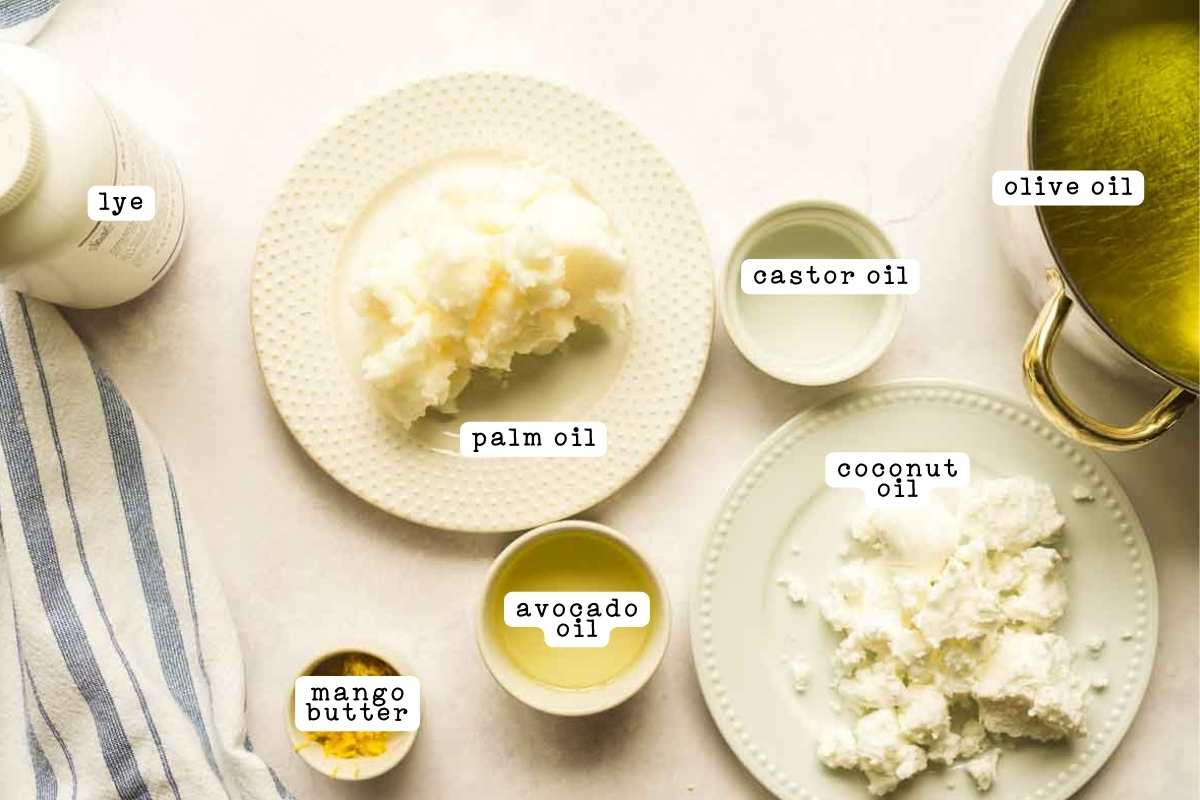
- 5.83 ounces lye (Make sure the bottle says 100% Sodium Hydroxide—do not use generic drain cleaners)
- 10 to 15 ounces water (Distilled water is best; tap water contains minerals that can create “soap scum” or odd colors)
- 11 ounces coconut oil
- 9 ounces palm oil (If you prefer not to use palm oil, you cannot just leave it out or swap it directly; you must run the new recipe through a soap calculator to get the safe lye amount. I have a popular soap recipe here that is palm-free.)
- 2 ounces mango butter
- 9 ounces olive oil
- 4 ounces castor oil
- 4 ounces avocado oil
- 2 ounces sweet almond oil
- 3 tablespoons fragrance oil (Make sure it is rated skin-safe for soap making)
- 2 teaspoons sodium lactate (Optional; this is a salt solution that makes the bar harder and easier to unmold)
- Mica or colorant (Optional)
Instructions
Remember:
The worst thing you can do when making soap is be really nervous or be in a rush. Stay calm, work slowly, and everything will be fine.
Step One: Measure Water and Lye
First measure your lye and water separately using a digital scale, then carefully combine them. Pour your water into a cup you don’t care much about, then add the lye to the water, stir it until it dissolves, and set it somewhere safe.
This is the most dangerous part of soap making because you now have a cup that looks like water but can blind someone, burn their skin, or become fatal if they drink it. Make sure everyone in your house understands not to mess with this cup and that it’s out of the way where it can’t accidentally be knocked over.
Step two: Measure, Melt, and Cool the Oils
Melt them on your stovetop, bringing the temperature up to around 140. Technically, these should be measured out separately and then added to one pot. I tend to just add them all at the same time, zeroing out the scale in between each oil.
Now everything needs to cool to about 110 to 120 degrees. It will take a few hours. Check with a thermometer.
If you’re using sodium lactate, add it now to the cooled lye water.
Step Three: Blend to Trace
Once your temperatures are right, it is time to combine. Pour the lye water into the pot of oils and stick blend.
Important: Before you do this, make sure any color and fragrance you want to add are ready to go, and that your mold is prepared. Things will move very quickly and you don’t want your soap batter hardening in the pot.
Until everything is combined and you have reached a thin “trace”. This means your soap had thickened up JUST a little. If you were to drizzle a bit of soap on top, it would stay instead of sinking in.
Step Four: Add color and fragrance if you’d like
Add color and fragrance and stir by hand or slowly with the stick blender.
Then pour everything into your prepared mold.
Step Five: Cure
Let the soap cure in a warm, draft-free place (such a turned-off oven that has been warmed to 140 degrees, then turned off), or wrapped in quilts.
The next morning or afternoon you take it out and cut it into bars. Let it cure for 3-5 weeks before using in the shower
Storage Instructions
Once fully cured, homemade soap should be stored in a dry, well-ventilated spot. I like to put it in shoe boxes in the closet with layers of newspaper in between the bars.
FAQs
A 10-inch silicone mold. It’s my favorite for most soaps.
If your soap is too soft, it might need more time to cure. Adding sodium lactate or using oils with higher stearic acid content can also help create a harder bar.
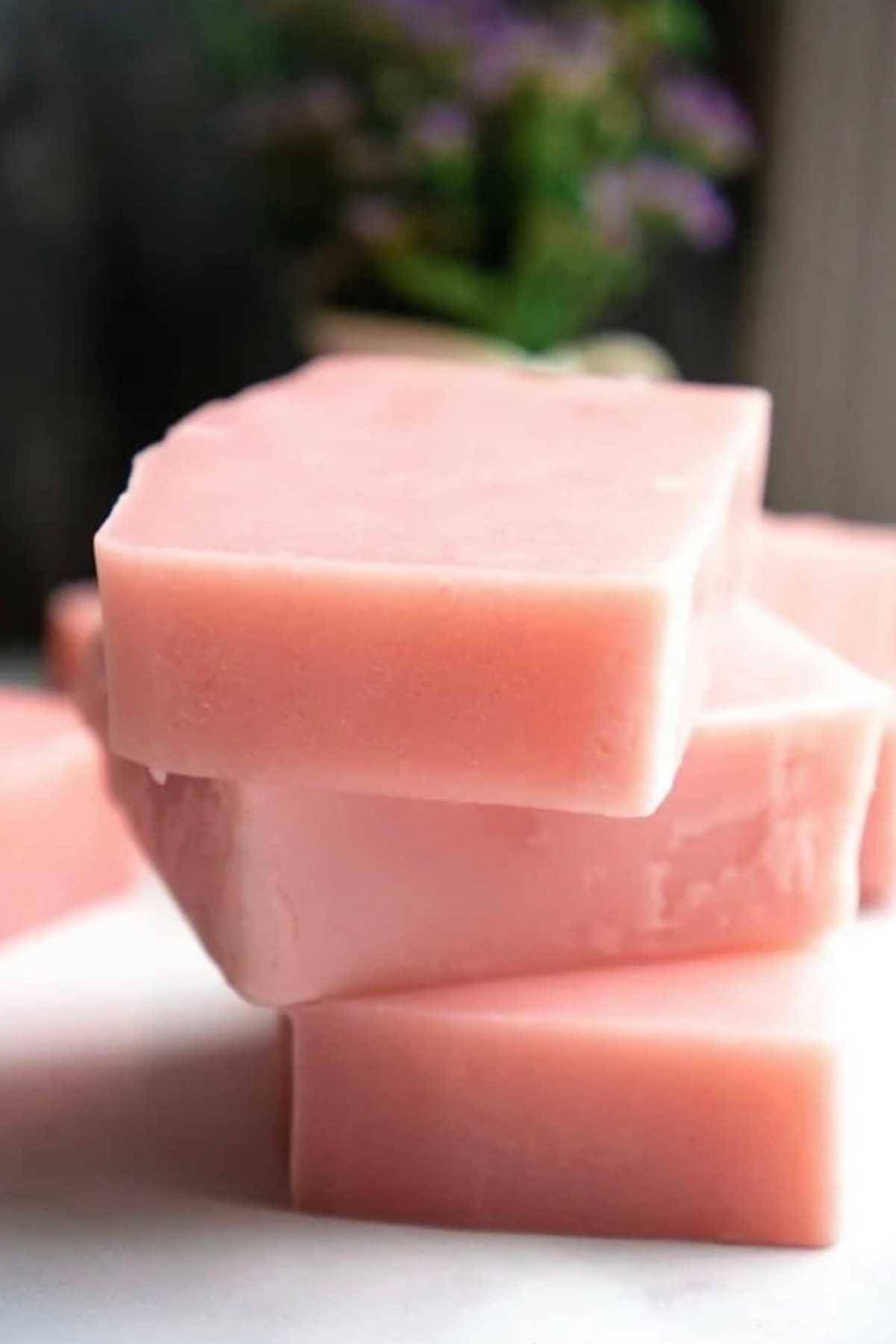
It is a pink mica from Nurture Soap. You can find it here.
Yes, absolutely. I’d recommend using sodium lactate since it can be a bit soft when unmolding it.
This is a 100% personal preference (except for the fact that florals are more difficult to work with). My personal favorites are Comfort and Joy from Nurture Soap and Mango Mango from Brambleberry.
Yes! I used to swirl it all the time before I got too lazy.
You sure can. You’ll need the following percentages:
Coconut Oil: 26.83%
Mango Butter: 4.88%
Olive Oil: 21.95%
Palm Oil: 21.95%
Sweet Almond Oil: 4.88%
Enter them into a soap calculator with the desired size of your batch and it will give you the correct amounts.
The gel phase is a part of the saponification process where the soap heats up and becomes translucent. This can help create a smoother, more uniform bar.
Yes, essential oils can be used as a natural alternative to fragrance oils. Just be sure to use skin-safe essential oils and follow recommended usage rates. The usage rates will be listed in ounces per pound of soap-making oils, and you will need to do a little math.
Printable Recipe

Big Bubbles Cold Process Soap

Equipment
- Safety equipment (gloves, goggles, apron)
Ingredients
- 11 ounces coconut oil
- 9 ounces olive oil
- 9 ounces palm oil
- 2 ounces sweet almond oil
- 4 ounces castor oil
- 4 ounces avocado oil
- 2 ounces mango butter
- 5.83 ounces lye
- 10-15 ounces water
- 3 tablespoons fragrance oil for a strong scent, vary this to your preferences
- 2 teaspoons sodium lactate optional, for a harder bar
- colorant or mica optional
Save This Recipe
You'll join my email list which you will love. And if you don't, unsubscribe in one click. ❤️
Instructions
- Make lye water. Using a digital scale, measure out the lye and water in separate glass containers. Combine them by adding the lye to the water. (Remember: snow floats on the lake.). Stir until the lye dissolves. The temperature will shoot up. Place this in a safe place to cool.

- Melt oils and butters. While the lye solution is cooling, measure out the oils and butters and combine them in a large stainless pot. Melt them over low heat and heat them up to 130-140 degrees. Set them aside to cool.
- Let cool. After 2 hours, check the temperature of both solutions. They should be around 110 degrees. (A range of 100-120 is fine.). If not, allow them to cool longer.
- Prep for mixing. Prepare your mold and measure out any fragrance or color you will be adding. (For best blending of colors, mix some color into a few drops of melted oils.). If using sodium lactate, add it to the lye water at this time.
- Blend to trace. Pour the water and lye solution into the pot with the melted oils. Blend with a stick blender until thin trace is reached. The soap batter will noticeable thicken and a trail of soap will sit on top of the liquid rather than immediately sinking in. (This will take about 1 minute.). Add the color and fragrance and stir by hand.
- Pour in mold. Immediately pour the soap batter into the mold. Place in a turned-off oven or wrap with blankets to insulate the soap.
- Cut bars and let cure. After 24 hours of curing, unmold and cut into bars. The bars may seem slightly soft but will harden considerably during the curing process. Allow to cure at least 3 weeks in a well-ventilated place.


Video
Notes



Hey KAtie! this recipe looks really good and i want to get better at soap making.
However I want re scale the ingredients. Can you tell me what’s the superfattening and lye concentration in this recipe?
Thanks a lot!!!!
Hi
I’m wondering if you need to count the colour amount in your calculation or can you just add a colour .
Thank you
I’ve been exploring soap making – research stage – and your videos and posts are incredibly helpful!! Quick question please: After you cut the soap and are waiting the weeks to use it, how best does it need to be stored? Each bar separated and laying flat or can they be stacked? Covered/wrapped or open air?
I am hoping to make it in one location, but will be moving to another for the winter, so want to know if or how I can transport the bars. Thank you!
Hi Lorna! I typically lay them flat for the first few days: on an old tea towel laid on top of a baking sheet so I can move them out of the way if needed. Then I put them in a cardboard box in between layers of newspaper. They need some air.
Hi Kate, can you recommend a good scent for this pretty pink soap? I am new at this and was wondering what you used.
Thank you for sharing, I am so excited to try it.
My favorite fragrance is called Mango Mango from Brambleberry: sweet and fruity. If you like florals, they have a nice lilac, and for fresh scents, a lemony one called energy.
Hi Katie in the recipe it says 3T of fragrance is that Teaspoons? Sorry if this sounds silly I’ve got everything but sweet almond oil to try this recipe thank you😌
tablespoons 🙂 sounds like a lot but it fades as it cures.
Hi Katie,
How much sodium lactate do we use?
Thanks
Karen
HI Katie – I’m excited to try this recipe. Would this work if I used a soap base and not lye directly?
Thanks
hi karen, no this is just for cold process soap. 🙂 you could definitely add the color and your favorite fragrance to a soap base though!
Hi! I as wondering why it says to cure the poured batter in a warm place rather than the freezer? Also, can I substitute the water with goat’s milk?
goats milk is fine: i do a warm place to force gel phase, but this is optional. freezer is fine!
Does it matter what temp the water is before adding the lye?
just not too hot… room temp is good
I want to say thank you for helping us future soap makers. to help us learn how to make soap the Right way! God Bless
Hi Katie, i just want to make sure your superfat for this recipe is 5%
Thanks.
Kani
yes, 5%! 🙂
Hi Katie
Can you tell me what you used to get this beautiful pink color. I make bars that are not swirls of color and this picture is what I would like to achieve. Thanks
Hi Eileen this is hot pink mica from Brambleberry. You don’t need much, it’s very vibrant!
I’m sure you’re soaps are amazing,but I’m not willing to try anyone’s recipe that contains palm oil, with your experience can you recommend something else please. Thanks.
hi diane, try babbasou or a blend of 60% olive and 40% shea to replace the weight of the palm. run it through a lye calculator first 🙂
Hello, thank you very much for this lovely recipe. What is the exact amount of water that we need to put please? I can see in the reicep that it says 10-15 oz water.
I want to do a very small batch because I am so new and I am afraid of messing it up. However when I am resizing on soap calc it is asking for the superfat amount and lye concentration amount. Could you please enlighten me on those. I am too excited to try your recipe.
I had tried another basic recipe from the net and it turned out not too well for me unfortunately.
Where I live I get palm olein oil instead of palm oil. Is it ok to use? Is it almost the same.
Thank you SO much.
Edit: I went to your recommended lye calculator and was able to find the lye amount. But still confused as to how much water exactly I should use if I would like a 5% superfat.
Thank you again
hi sam- the lye amount and oils are what determines the superfat. so it will 5% no matter what amount of water you use. the water will affect how quickly the soap batter comes to trace and how fast it cures. so it’s really personal preference and doesn’t affect the finished bar, just the process. i’ve never used palm olein oil so i’m not sure how it would change the recipe.
HI Katie If I want to make a very large batch of this soap (like 6 or 7 loafs) then any pointers or advice you can give me? and how do I know how much to put when entering info in the lye calculator? and which lye calculator do you recommend>?
hi lisa! my favorite lye calculator is from thee sage: https://www.the-sage.com/lyecalc/. I’ve never made a batch of this beyond doubling it. When I did that, i simply doubled the amounts in the reccipe I iddn’t recalculate anything. wish i could be of more help!
What can I use in place of palm oil?
Can you do multiple colors to do a swirl loaf with this recipe?
yes! i do it all the time.
Please I want to know the quantity of lye & the quantity of oil
hi abisha, the recipe has all of those listed. 🙂
Can I use different types of oils with the same ratios in the recipe? Will it still work?
No, every oil has its own properties and amount of lye that is needed to turn it into soap. At that point you would simply be creating your own recipe that you would run through a lye calculator. if the the calculation work, you will get a bar of soap that will “work” but it will be different than this recipe. there’s nothing wrong with that, of course, it’s just a new creation. 🙂
May I substitute shae butter for the mango?
yes it should be fine! just run through a lye calculator 🙂