
Giardiniera for Canning

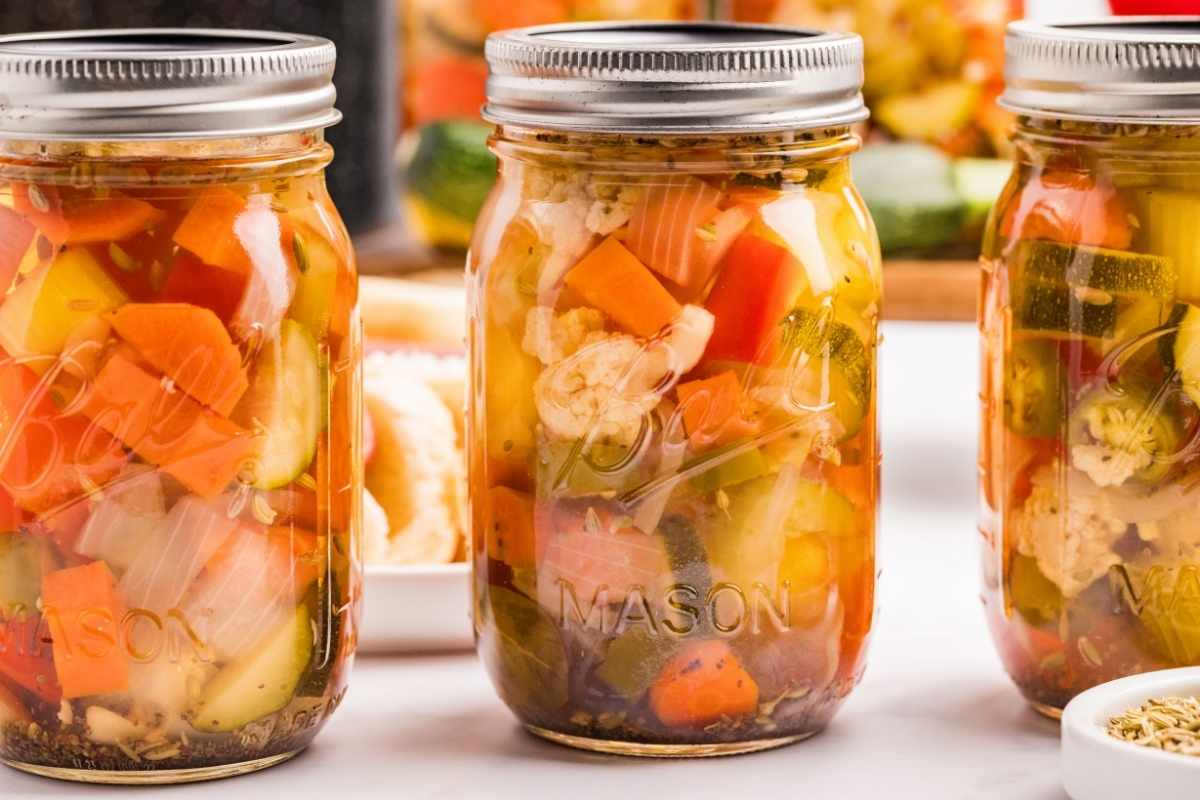
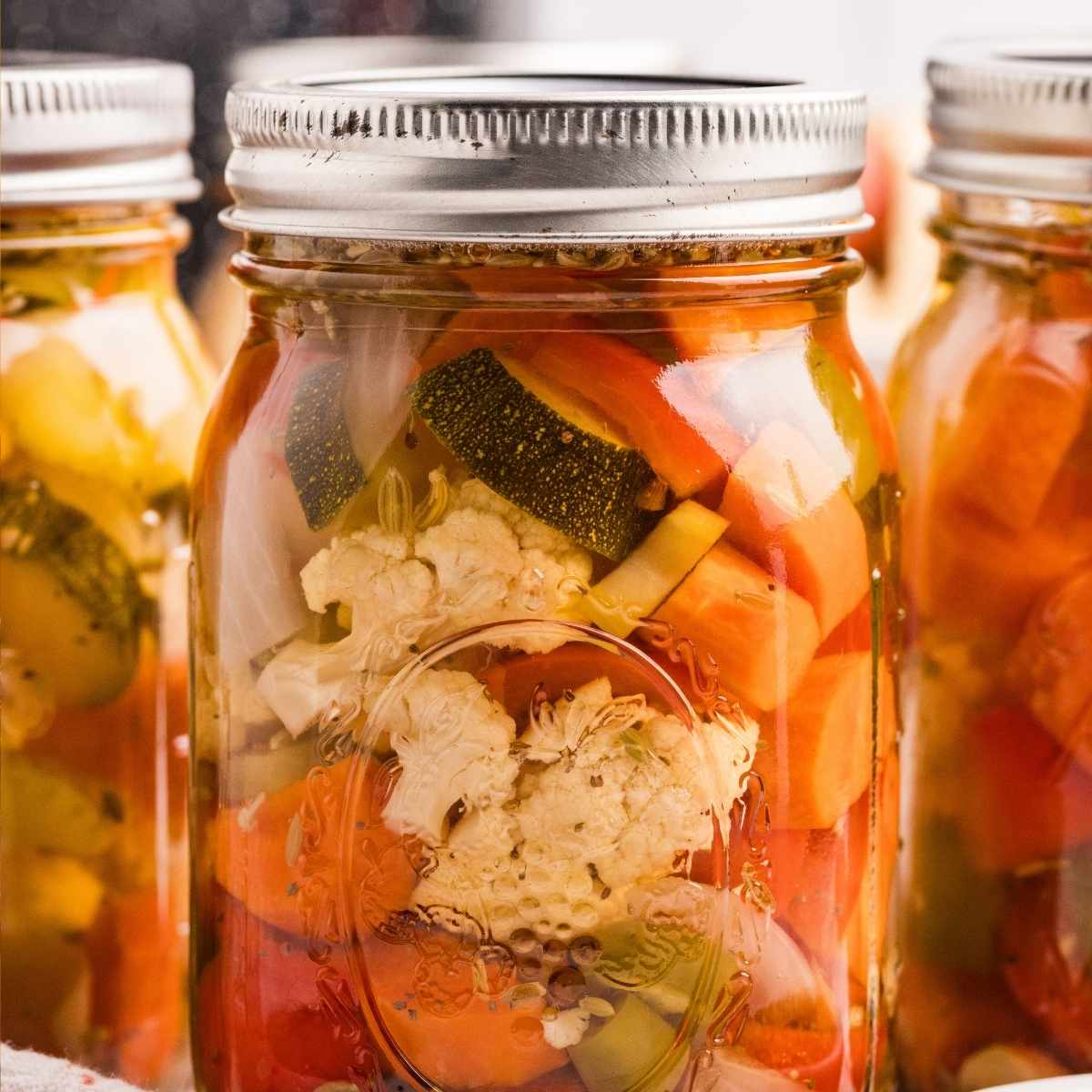
A magical jar of pickled, slightly hot veggies that will make all your homemade sandwiches super delicious. I know the vegetables themselves don’t FEEL like they should be delicious. A jar of carrots and cauliflower might not sound exciting, but you WILL love this.
What You’ll Need
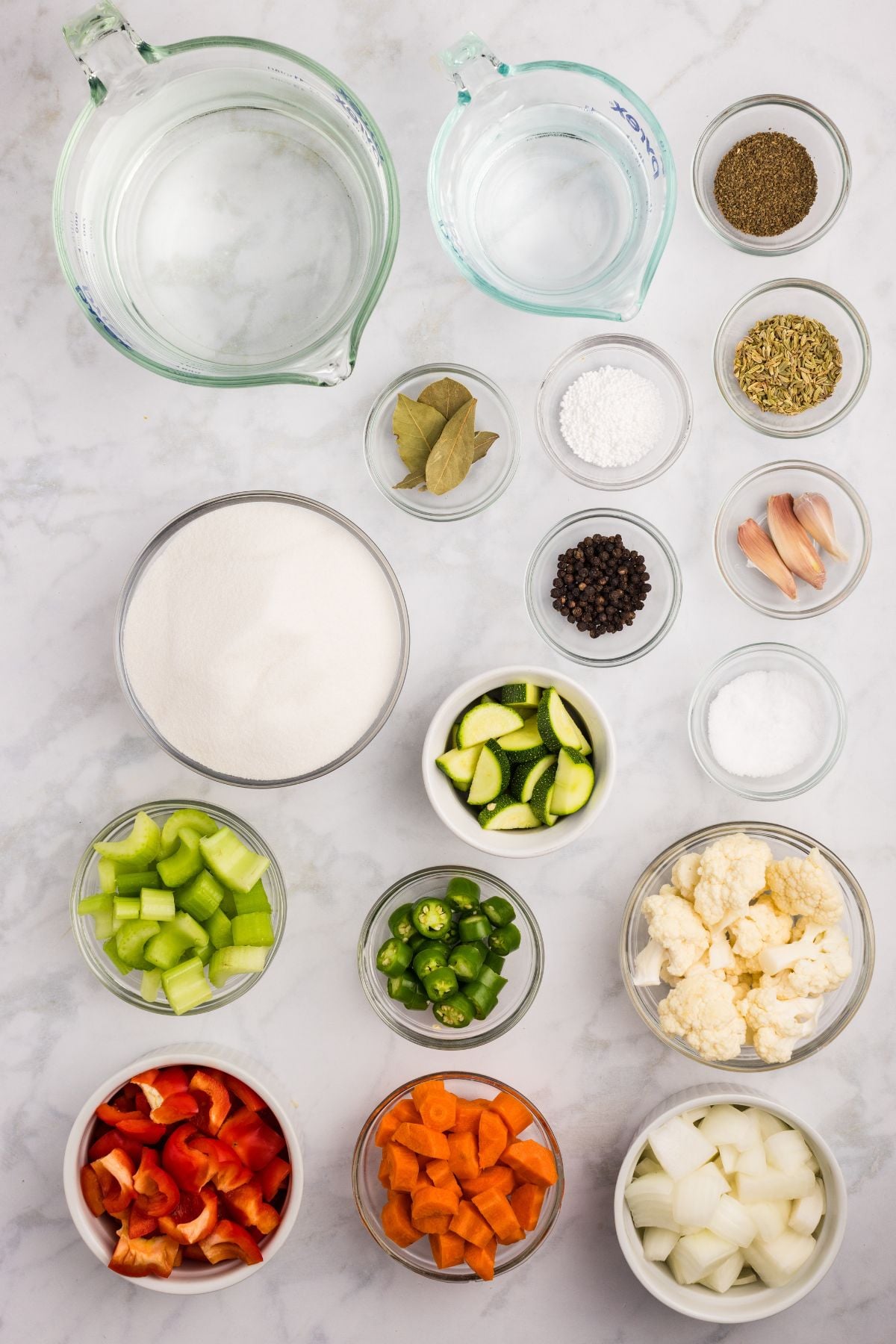
- 8 bay leaves, separated
- ½ tablespoon whole black peppercorns
- 4 cups white vinegar. Check the label for 5% acidity — anything weaker isn’t safe for canning.
- 2 cups water
- 2 cups granulated sugar.
- 1 tablespoon pickling salt. If you have something in a brine and you don’t want it cloudy, use canning/pickling salt.
- 1 small head cauliflower, cut into florets (about 3-4 cups)
- 1 medium yellow onion, chopped into ½ inch squares
- 3 celery stalks, cut into ¼ inch slices
- 4 large carrots, peeled and cut into disks or half moons
- 1 small zucchini, cut into ¼ inch slices
- 1 large red bell pepper, chopped
- 2 serrano peppers, sliced (seeds removed for milder version)
- 5 cloves garlic
- 2 ½ teaspoons celery seed
- 2 ½ teaspoons fennel seed
- 1 ¼ teaspoons pickle crisp (optional). Look for it with the canning supplies at your local grocery store. Optional, but the vegetables stay noticeably firmer with it.
Equipment You’ll Need
- Water bath canner
- 5 pint canning jars with new lids and rings
- Jar lifter
- Canning funnel. You don’t NEED one, but ladling hot brine into pint jars without it gets messy fast.
- Spice bag or cheesecloth with kitchen string
- Bubble remover. A wooden chopstick does the exact same job.
Instructions
Remember, if you are a beginner to canning and feeling overwhelmed, you are just making a recipe, putting it into jars, and boiling the jars. There are a lot of pots, but it will all make perfect sense in the end.
Get the jars ready
Wash your five pint jars with hot, soapy water, then set them in the water bath canner filled with water and keep them hot while you work. Hot brine going into a cold jar is how jars crack, so don’t skip the warm-up.
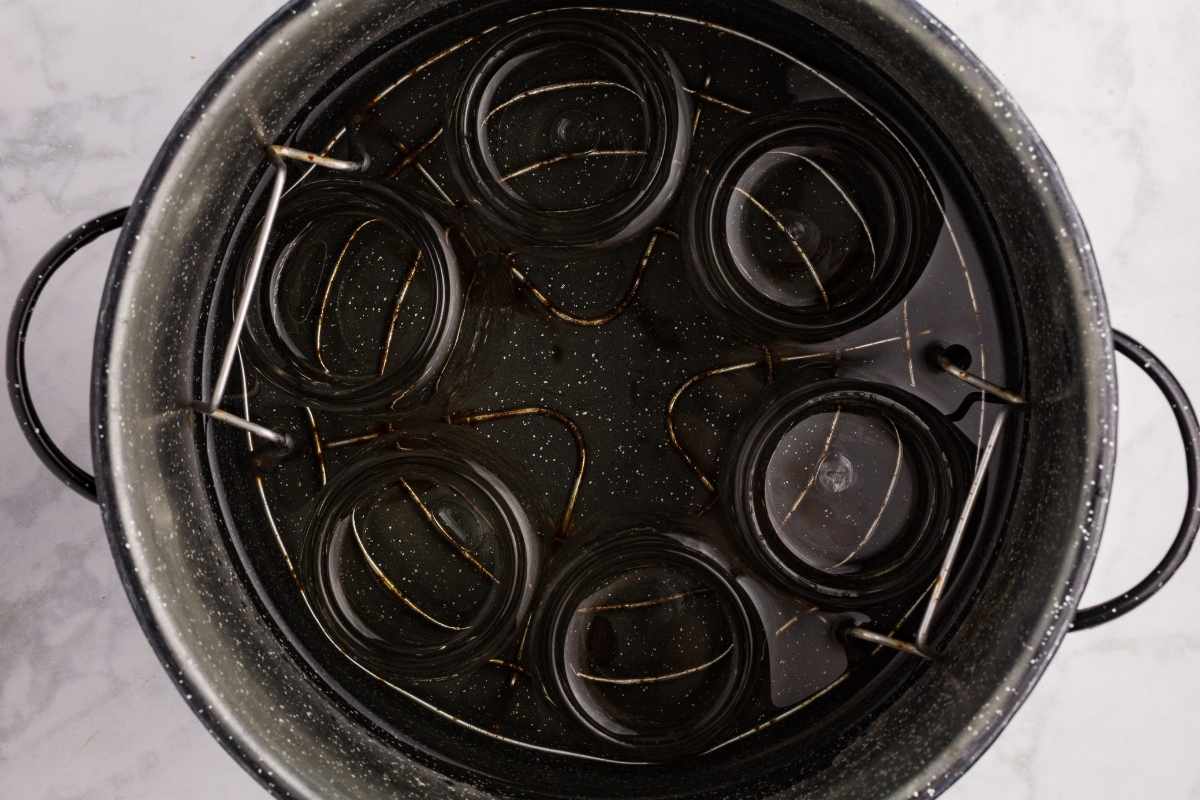
Wash the lids and rings too, and set them aside somewhere you won’t lose them. That’s it for this part.
Make the brine
Tie 3 bay leaves and the peppercorns up in a spice bag or a square of cheesecloth knotted with kitchen string. Then combine the vinegar, water, sugar, pickling salt, and the spice bag in a large stockpot and bring it to a boil over medium heat. Cover it, drop the heat, and let it simmer for 5 minutes.
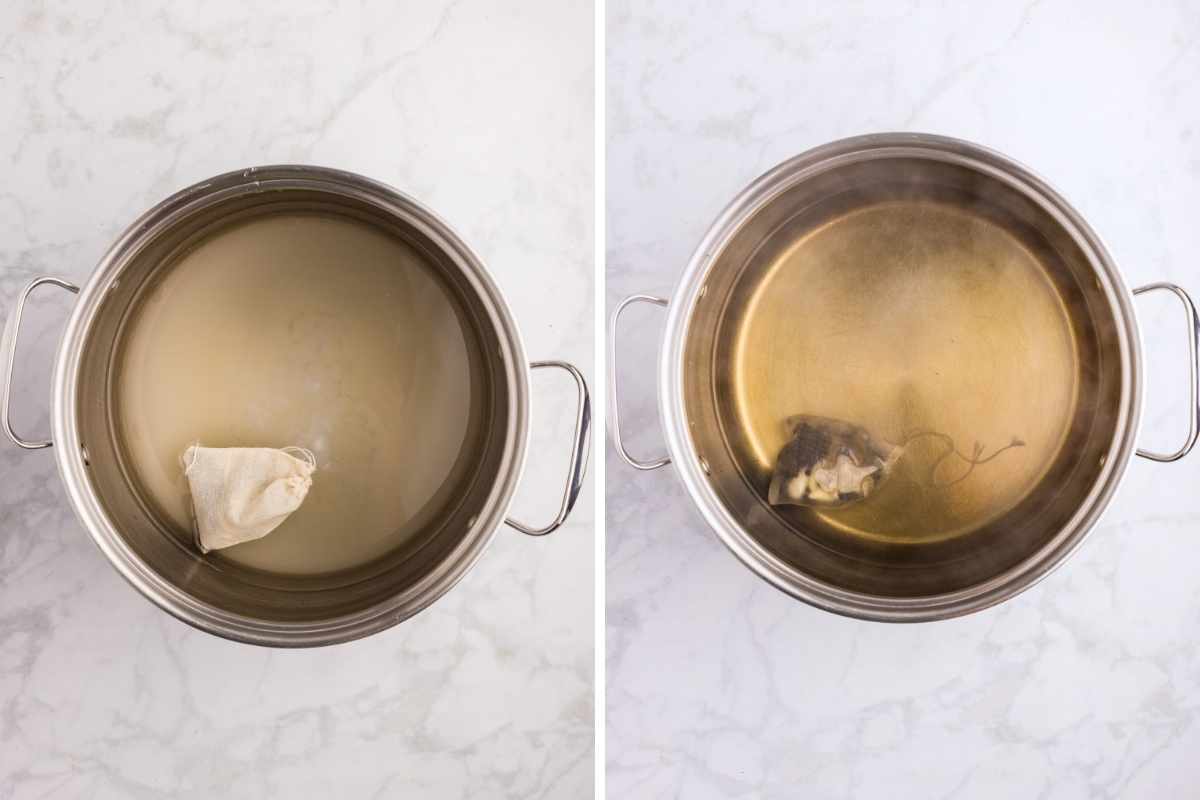
You really do want pickling salt here, not table salt. Table salt has anti-caking additives that will turn your beautiful brine cloudy, and half the fun of giardiniera is how pretty the jars look on the shelf.
Simmer the vegetables
Add the cauliflower, onion, celery, carrots, and zucchini to the pot and bring it back to a boil, then reduce to a simmer for 5 more minutes and pull it off the heat. Five minutes will feel too short, the vegetables will still seem raw. That’s exactly right, because they’ll keep cooking in the canner, and overcooked giardiniera is just sad, mushy vegetables in vinegar.
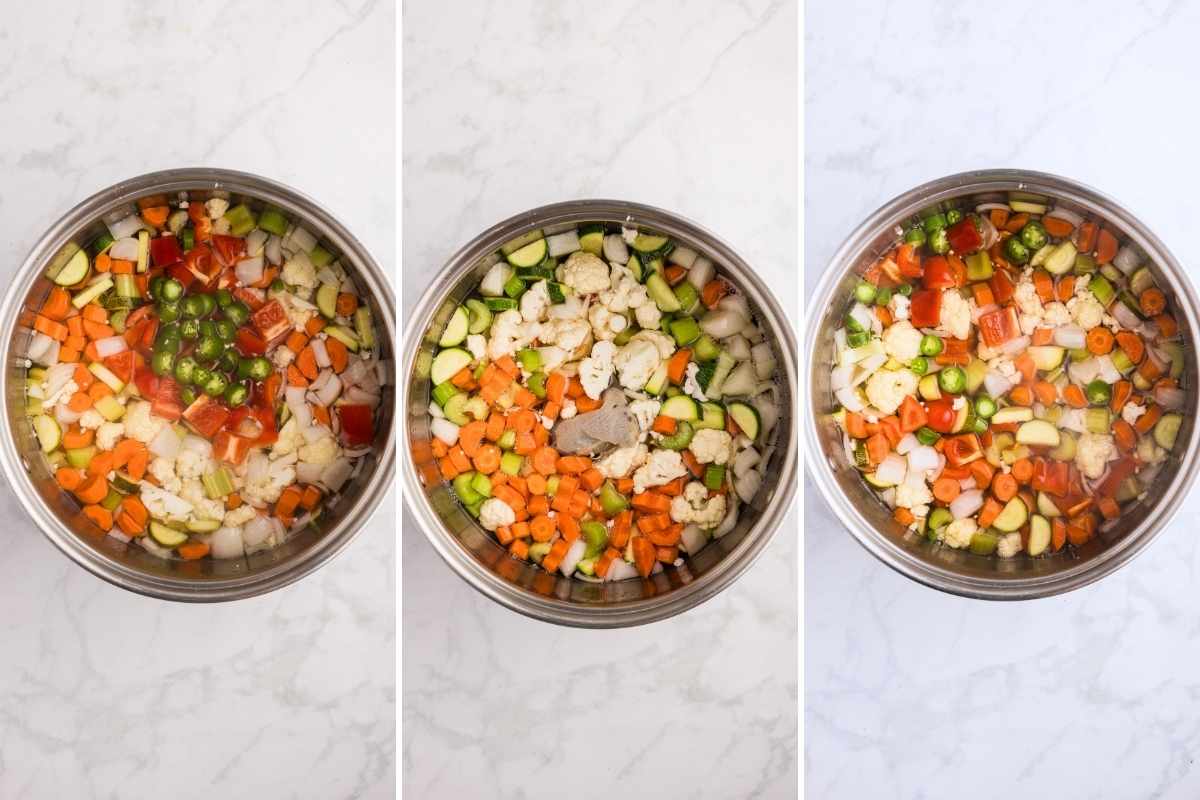
Fish out the spice bag and toss it. Then stir in the red bell pepper and the serranos off the heat. The peppers stay brighter and crisper this way.
Pack the jars
Pull the hot jars from the canner and drop 1 bay leaf, 1 garlic clove, ½ teaspoon celery seed, and ½ teaspoon fennel seed into each one. Then ladle in the vegetables, leaving ½ inch of headspace, and follow with the hot brine to that same ½ inch.
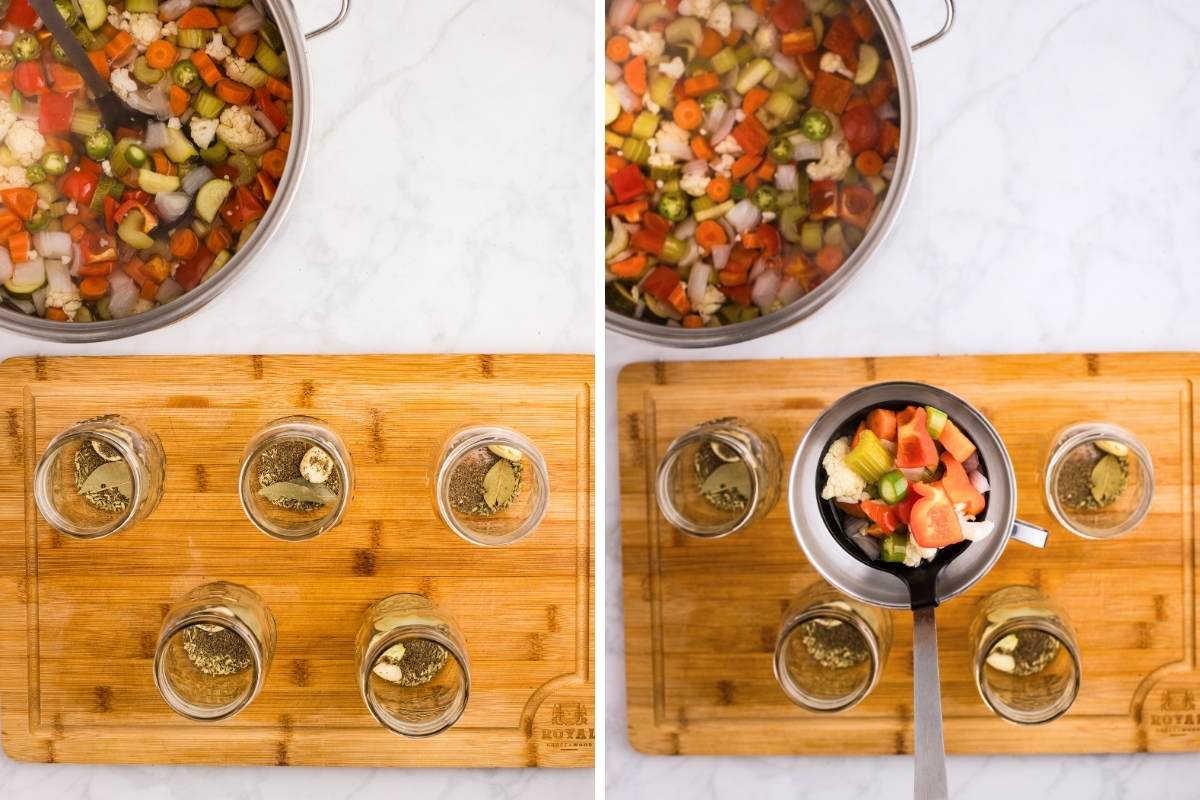
Pack the vegetables in snugly without crushing them. If the jars are too loosely filled, the brine won’t cover everything the way it should. Get them in there!
Run a bubble remover or a chopstick down the sides of each jar to release trapped air, and top off with brine if the level drops.
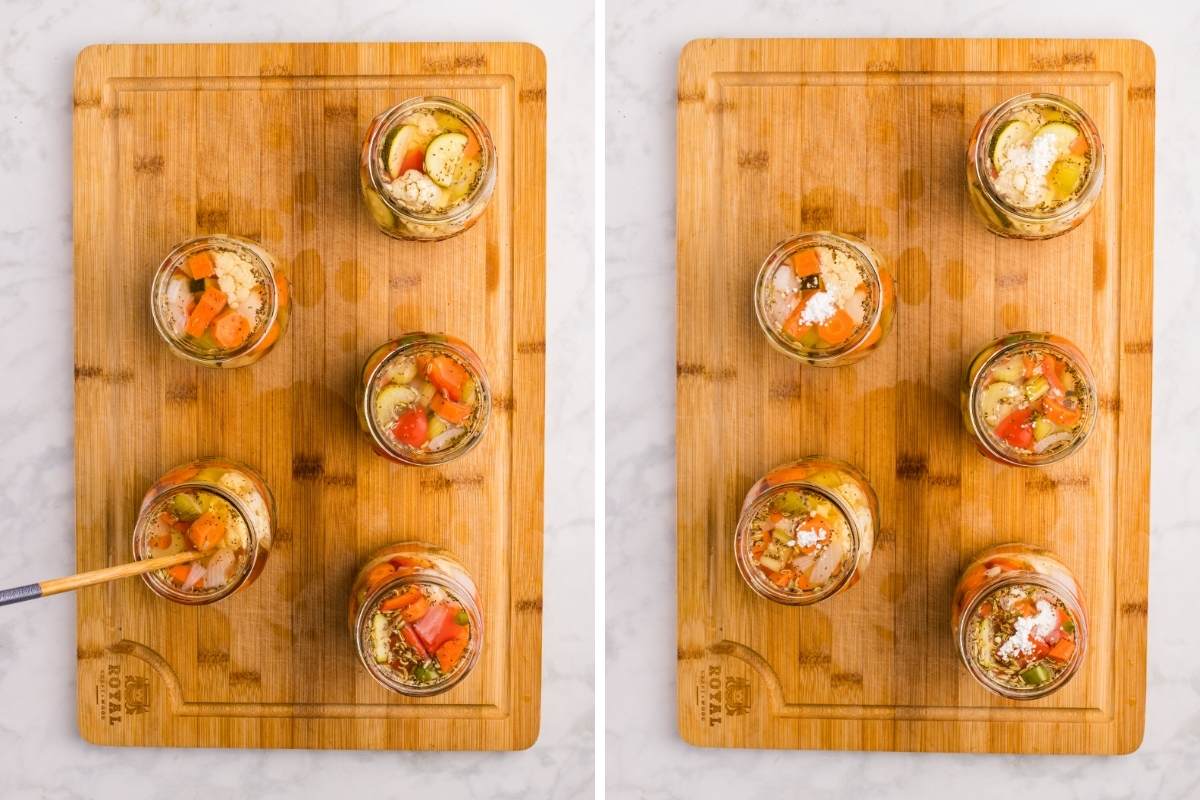
Add ¼ teaspoon Pickle Crisp to each jar if you’re using it. If you’re used to the taste of store-bought giardinera, you’ll want it.
Wipe the rims with a clean, damp cloth and tighten the lids and rings until they’re fingertip-tight.
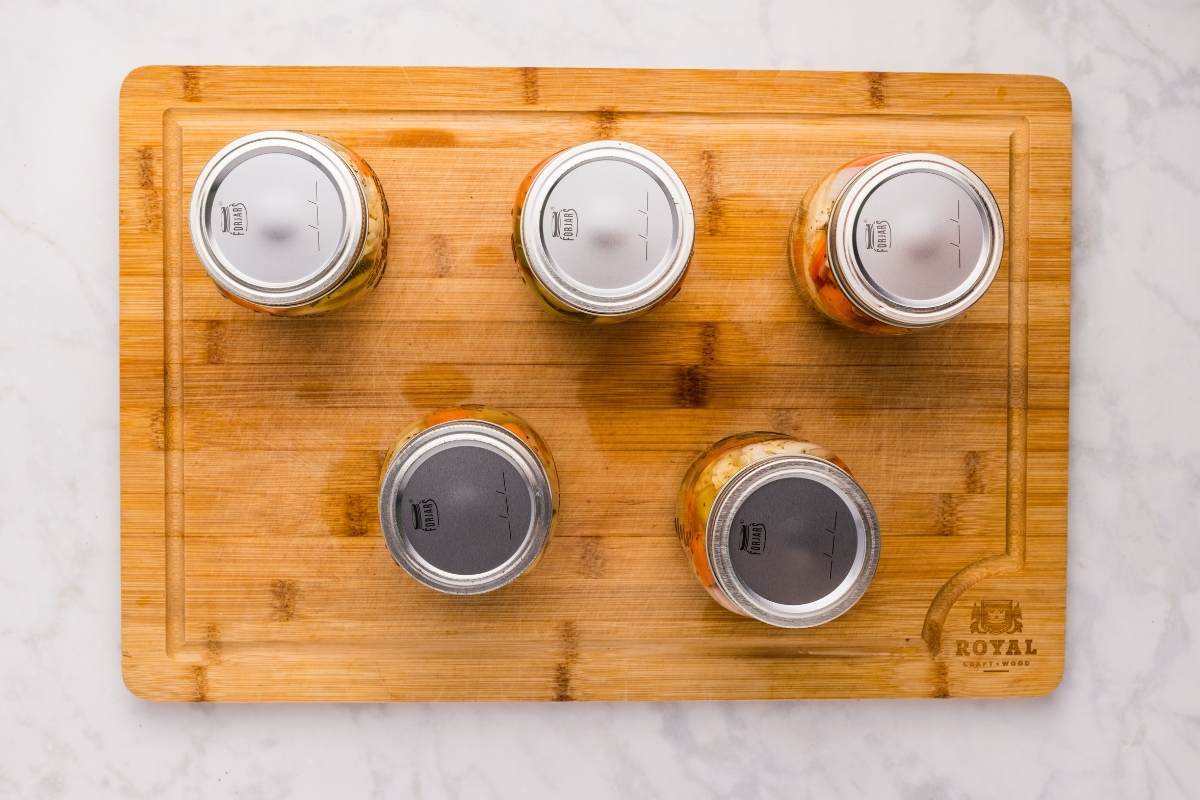
Fingertip tight means snug, not cranked down hard. Air needs to escape during processing.
Process in the canner
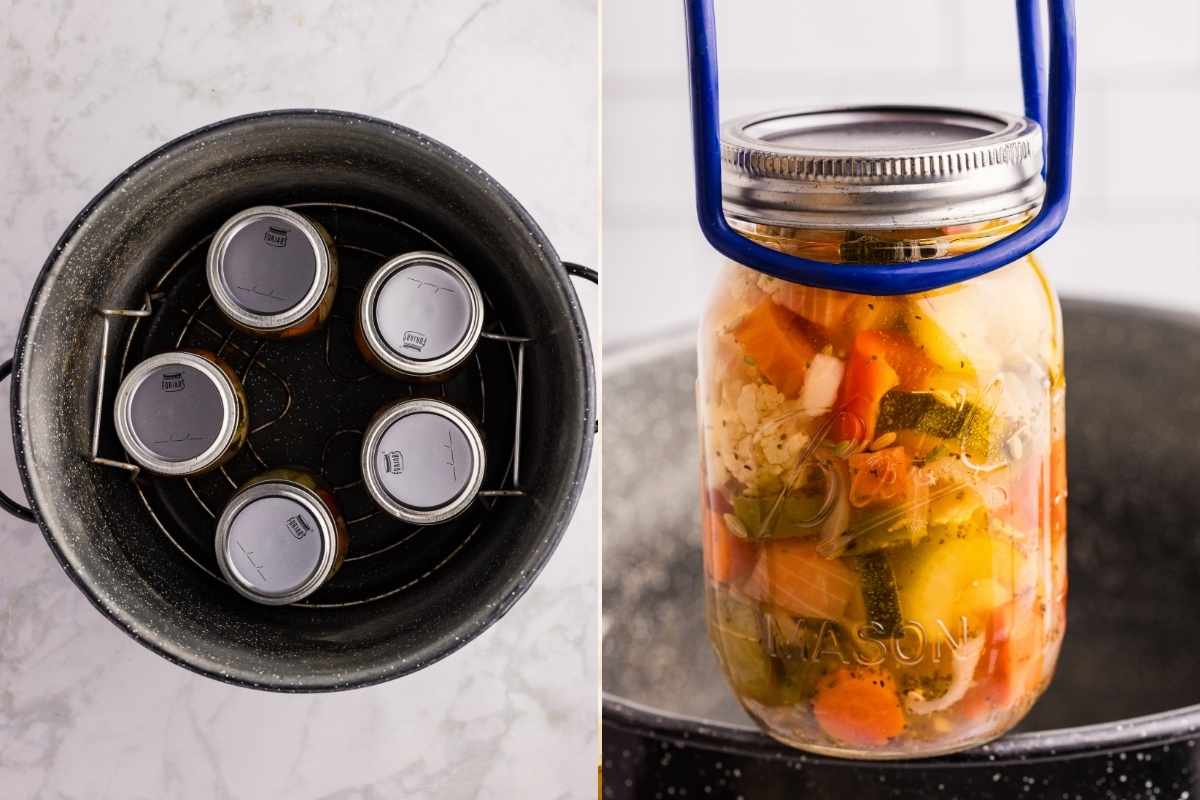
Lower the jars into the canner, making sure there’s at least an inch of water covering the tops. Bring the water back to a full rolling boil and process for 10 minutes, adjusting for your altitude if you’re above 1,000 feet.
Save This Post
You'll join my email list which you will love. And if you don't, unsubscribe in one click. ❤️
When the time is up, turn off the heat, remove the canner lid, and let the jars sit for 5 minutes before lifting them out. This pause matters more than it seems. Yanking jars straight from a boiling canner is the main reason people lose brine to siphoning.
Cool and check the seals
Set the jars on a towel or another heat-safe surface and leave them completely alone for 12 to 24 hours. You’ll hear the lids ping as they seal, which is one of the best sounds in the kitchen.
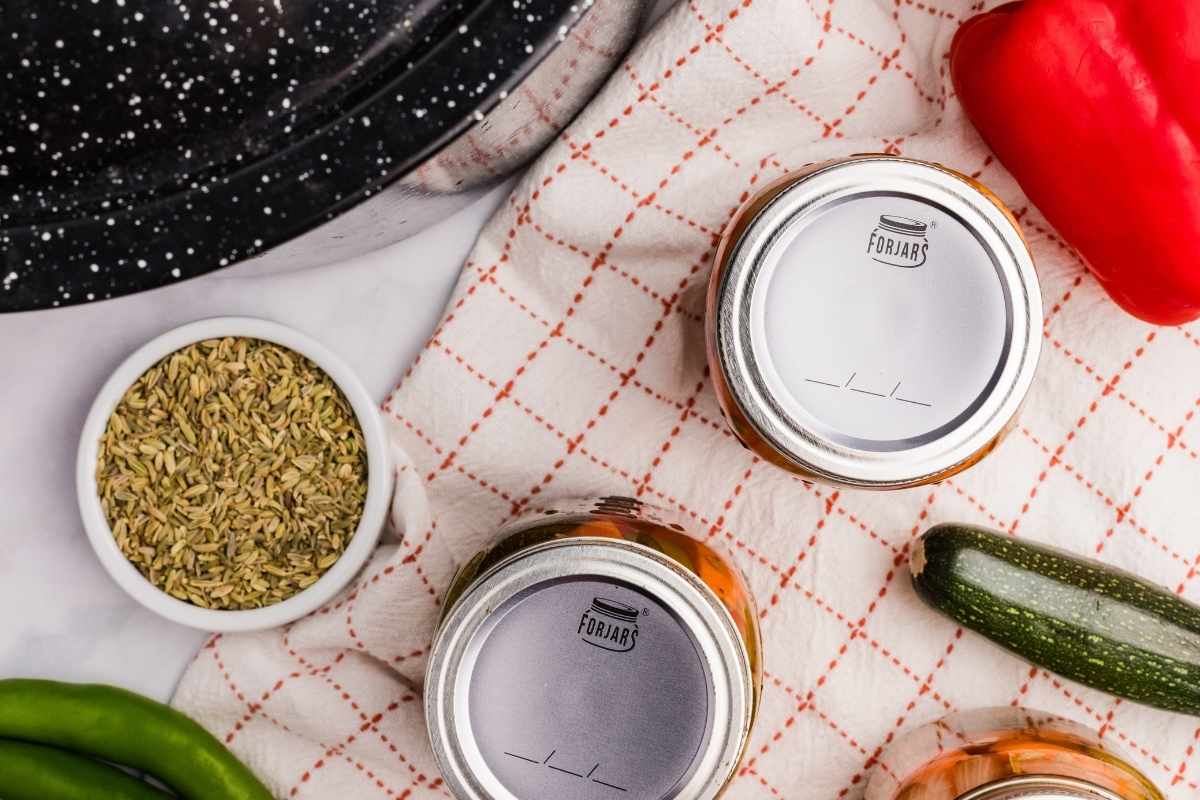
Once they’re cool, check that each lid is concave and doesn’t flex when you press the center. Sealed jars go to a cool, dark spot.
Storage Instructions
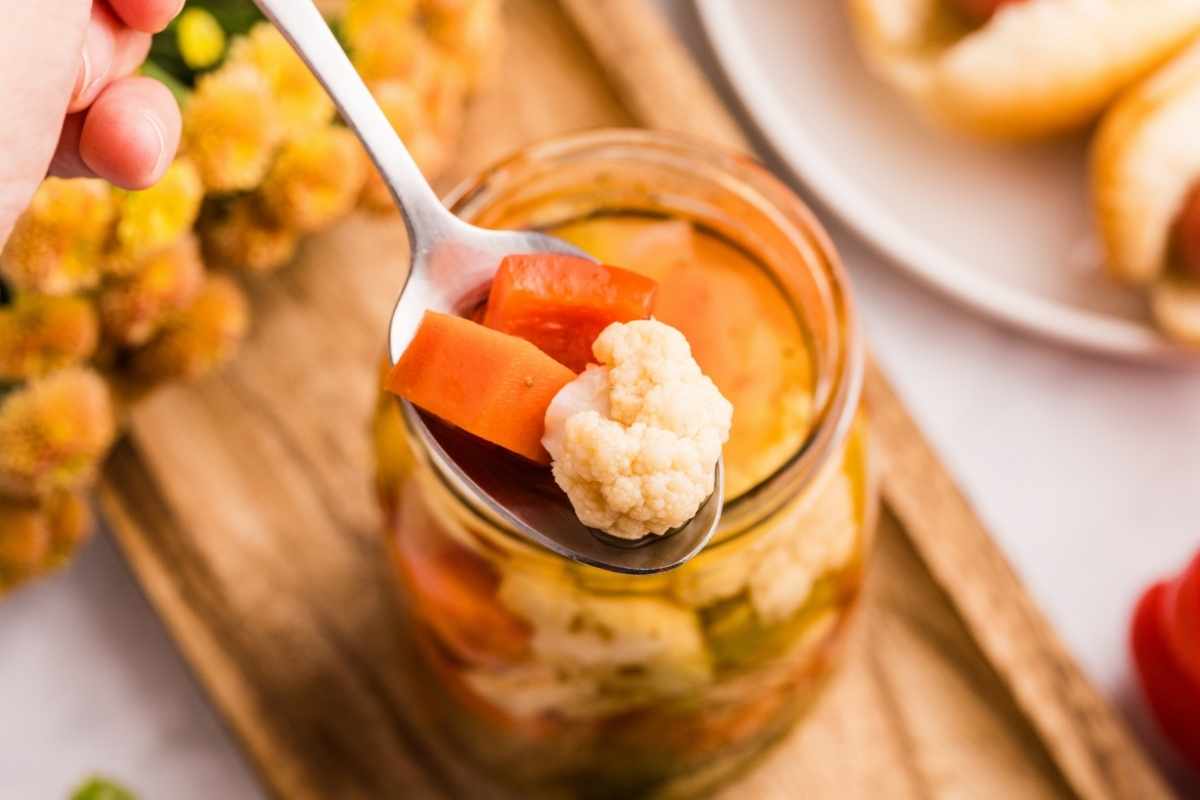
Sealed jars keep in a cool, dark place for 12 to 18 months. Try to hold off on opening them for at least 2 weeks. The vegetables need that time to soak up the brine. They’ll look done way before they taste done. Giardiniera eaten too early tastes more like plain vegetables in vinegar.
If a jar didn’t seal, don’t panic and don’t reprocess it. Just stick it in the fridge and treat it as an opened jar. Use it within 3 to 4 weeks.
Once you open a sealed jar, refrigerate it and use it within 3 to 4 weeks. Keep the vegetables covered by the brine as the jar empties. If a jar smells off, has mold, or the seal is broken, toss it.
Variations
This is a tested canning recipe, so the vinegar-to-water ratio and the total amount of vegetables stay exactly as written. BUT! Here’s what you CAN safely change:
- Pearl onion version: swap pearl onions for the yellow onion. They look beautiful in the jars.
- Spicier: leave the serrano seeds in, or substitute hotter peppers, but do not increase the total volume of peppers.
- Milder: skip the serranos entirely. It’s still delicious without them.
That’s it. Don’t swap in different vegetables or fiddle with the brine. The acidity is what makes this safe to can, and I’d like us to stay friends.
Ways to Eat Giardiniera
- Pile it on Italian beef sandwiches. This is classic.
- Put out a little bowl on a charcuterie or antipasto board.
- Load it onto hot dogs. (Yes, this is actually quite good!)
- Stir it into pasta salad, brine and all. A spoonful of the liquid in the dressing? SO good.
Questions and Troubleshooting
Can I swap in different vegetables?
Not really. This is a tested canning recipe, so the vegetable proportions matter for safety. If you want to play around with green beans or mushrooms, make a refrigerator version instead.
Can I skip the water bath and just refrigerate the jars?
Yes! Pour the hot brine over the vegetables, let the jars cool, and refrigerate. You’ll lose the shelf stability, but the vegetables will be even crisper. Just eat them within a month.
Can I use quart jars instead of pints?
No. The processing time was tested for pints. Quarts would need longer, and there’s no tested time for this recipe. Stick with pints.
Why didn’t my jar seal?
Usually it’s a bit of food on the rim or a ring screwed on too tight. Don’t panic. Just put the unsealed jar in the fridge and eat that one first.
Why are my vegetables soft?
You probably cooked them too long. The vegetables only simmer for 5 minutes before they hit the jars, and they cook more during processing, so don’t add extra time “just to be safe.” Fresh, firm produce and the Pickle Crisp help too.
More pickled vegetables to can
- Crispy and spicy pickled jalapeños
- Pickled banana peppers (another great sandwich addition)
- Of course, no one complains about a classic dill pickle.
Canning Giardiniera
Equipment
- Water Bath Canner
- 5 pint canning jars with new lids and rings
- large stockpot
- Jar lifter
- Canning funnel
- Ladle
- Bubble remover or wooden chopstick
- spice bag or cheesecloth with kitchen string
Ingredients
For the brine
- 8 bay leaves divided
- ½ tablespoon whole black peppercorns
- 4 cups white vinegar at least 5% acidity
- 2 cups water
- 2 cups granulated sugar
- 1 tablespoon pickling salt
Vegetables
- 1 small head cauliflower cut into florets, about 3-4 cups
- 1 medium yellow onion chopped into ½ inch squares
- 3 celery stalks cut into ¼ inch slices
- 4 large carrots peeled and cut into disks or half moons
- 1 small zucchini cut into ¼ inch slices
- 1 large red bell pepper chopped
- 2 serrano peppers sliced, seeds removed for a milder giardiniera
- 5 cloves garlic
Seasonings
- 2½ teaspoons celery seed
- 2½ teaspoons fennel seed
- 1¼ teaspoons pickle crisp optional
Instructions
- Prepare the jars. Wash the jars with hot, soapy water, then place them in a water bath canner filled with water and keep them hot. Wash the lids and rings with hot, soapy water and set aside.
- Make the spice bag. Place 3 bay leaves and the whole black peppercorns into a spice bag or cheesecloth tied securely with kitchen string.
- Make the brine. In a large stockpot, combine the white vinegar, water, granulated sugar, pickling salt, and spice bag. Bring to a boil over medium heat, then cover, reduce the heat, and simmer for 5 minutes.
- Cook the vegetables. Add the cauliflower, onion, celery, carrots, and zucchini to the pot and bring to a boil. Reduce the heat, simmer for 5 more minutes, then remove from heat.
- Add the peppers. Remove and discard the spice bag, then stir in the chopped red bell pepper and serrano peppers.
- Season the jars. Remove the hot jars from the canner. Add one bay leaf, one garlic clove, ½ teaspoon celery seed, and ½ teaspoon fennel seed to each pint jar.
- Fill the jars. Pack the vegetables into the prepared jars with a ladle, leaving ½ inch headspace. Ladle the hot brine over the vegetables, maintaining the same ½ inch headspace.
- Remove air bubbles. Run a bubble remover or chopstick around each jar to release trapped air. Add additional brine if needed to maintain proper headspace.
- Add the pickle crisp. Add ¼ teaspoon to each jar, if using.
- Seal the jars. Wipe the jar rims with a clean damp cloth, then apply the lids and rings until fingertip tight.
- Process the jars. Place the jars in the canner with at least one inch of water covering them. Bring the water back to a full boil and process for 10 minutes, adjusting for your altitude if necessary.
- Rest in the canner. Turn off the heat, remove the canner lid, and let the jars sit for 5 minutes.
- Cool the jars. Remove the jars to a heat-safe surface and let cool undisturbed for 12-24 hours.
- Check the seals. Confirm each lid has sealed before storing.
Notes
Nutrition

Related Articles
See ALL
15 Practical Canning Tips for Every Level
Spiced Christmas Jam (Canning Recipe)
Homemade Caramelitas
Apple Pie On The Rocks
25 Fall Homemaking Rituals
Strawberry Butter (Canning Recipe)
Cozy Fall Dinner Recipes: Comfort Food For Chilly Nights
Creamy White Chicken Chili
Barbecue-Glazed Meatloaf
Homemade Blackberry Lemonade
18 Ways to Have an Old Fashioned Summer to Remember
Dill Pickle Relish (Canning Recipe)
See all
Related Articles
Apple Crumble Pie
23 Fall and Holiday Drinks for a Crowd (Sangria + Punch + Cider)
Fresh Tomato Tart with Homemade Crust
Corn Chowder
Canning Plum Jam (A Pretty Recipe for a Late Summer Day)
Grandma’s Buttermilk Blueberry Waffles
Slow Cooker Pork Chops with Cinnamon Apples
Old-Fashioned Raspberry Jam (With Canning Instructions)
Raspberry Syrup for Canning (Easy)